
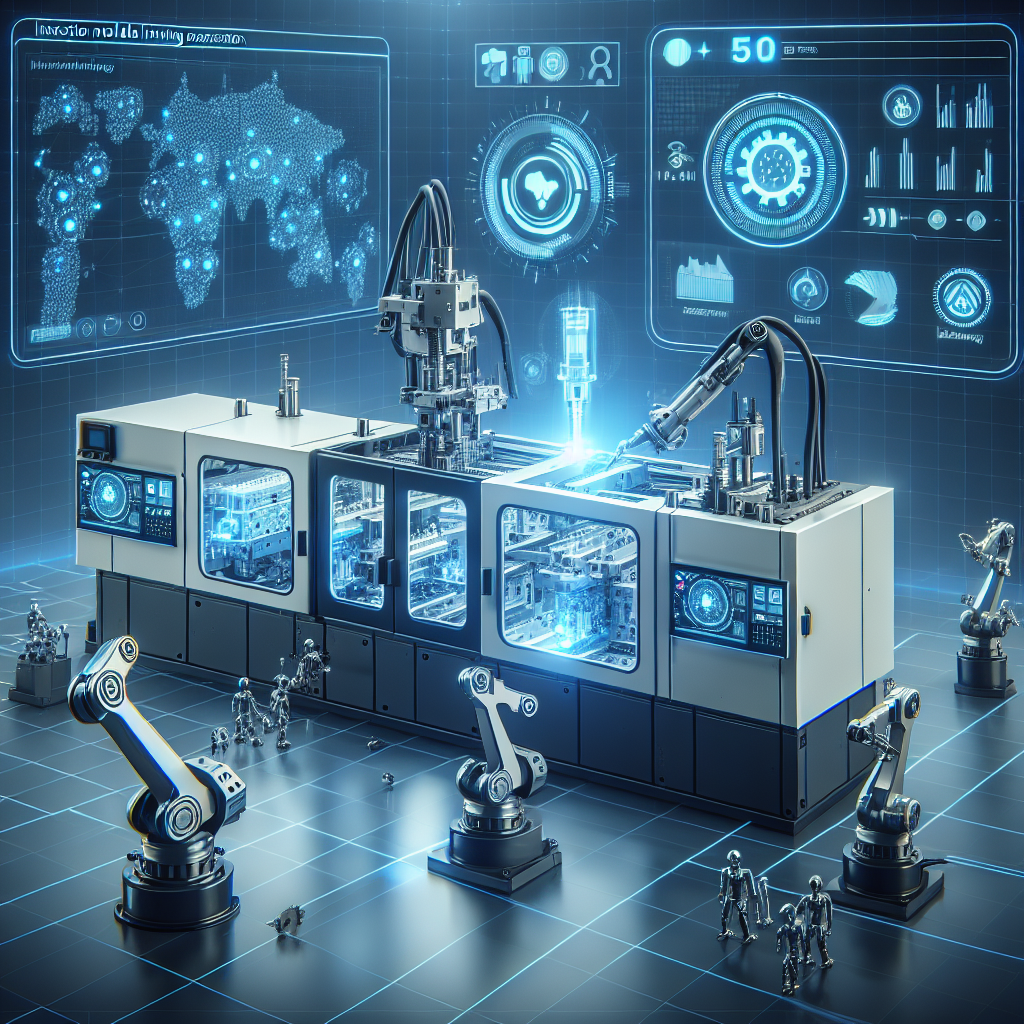
Injection molding machines are essential equipment in the manufacturing industry, used to produce a wide range of plastic products such as automotive parts, electronic components, and packaging materials. These machines are complex and require regular maintenance to ensure they operate efficiently and produce high-quality products. Traditional maintenance methods are often reactive, leading to unexpected downtime, increased costs, and decreased productivity. However, with the advent of Artificial Intelligence (AI)-powered predictive maintenance, manufacturers can now predict and prevent potential machine failures before they occur, saving time and money.
AI-powered predictive maintenance uses advanced algorithms and machine learning to analyze data collected from sensors installed on injection molding machines. These sensors monitor various parameters such as temperature, pressure, vibration, and energy consumption, providing real-time insights into the machine’s performance. By analyzing this data, AI algorithms can identify patterns and trends that indicate potential issues or anomalies. This allows manufacturers to take proactive measures to address these issues before they escalate into serious problems.
One of the key benefits of AI-powered predictive maintenance is its ability to accurately predict when a machine is likely to fail. By analyzing historical data and patterns, AI algorithms can forecast the remaining useful life of critical components and recommend maintenance actions to prevent failures. This proactive approach helps manufacturers schedule maintenance tasks more efficiently, reducing downtime and increasing overall equipment effectiveness.
Another advantage of AI-powered predictive maintenance is its ability to optimize maintenance schedules and reduce costs. Traditional maintenance methods often rely on fixed schedules or reactive interventions, leading to unnecessary maintenance tasks and increased downtime. AI algorithms, on the other hand, can analyze data in real-time and recommend the most cost-effective maintenance strategies based on the actual condition of the machine. This helps manufacturers prioritize maintenance tasks, reduce unnecessary interventions, and optimize the use of resources.
In addition to improving maintenance efficiency and reducing costs, AI-powered predictive maintenance can also enhance the overall performance and reliability of injection molding machines. By detecting potential issues early on, manufacturers can address them before they impact the quality of the products. This leads to fewer defects, higher production yields, and increased customer satisfaction. Furthermore, by continuously monitoring machine performance and analyzing data, manufacturers can identify opportunities for process optimization and performance improvement, leading to higher productivity and profitability.
Despite the numerous benefits of AI-powered predictive maintenance, some manufacturers may have concerns about implementing this technology. Below are some frequently asked questions about AI-powered predictive maintenance for injection molding machines:
1. How does AI-powered predictive maintenance work?
AI-powered predictive maintenance uses advanced algorithms and machine learning to analyze data collected from sensors installed on injection molding machines. These sensors monitor various parameters such as temperature, pressure, vibration, and energy consumption, providing real-time insights into the machine’s performance. By analyzing this data, AI algorithms can identify patterns and trends that indicate potential issues or anomalies.
2. What are the key benefits of AI-powered predictive maintenance?
Some of the key benefits of AI-powered predictive maintenance include:
– Accurately predicting when a machine is likely to fail
– Optimizing maintenance schedules and reducing costs
– Enhancing the performance and reliability of injection molding machines
– Improving product quality and customer satisfaction
– Identifying opportunities for process optimization and performance improvement
3. How can manufacturers implement AI-powered predictive maintenance?
To implement AI-powered predictive maintenance, manufacturers need to install sensors on their injection molding machines to collect real-time data. This data is then analyzed using AI algorithms to predict potential issues and recommend maintenance actions. Manufacturers can work with AI solution providers or develop their own AI capabilities to implement predictive maintenance.
4. What are the challenges of implementing AI-powered predictive maintenance?
Some of the challenges of implementing AI-powered predictive maintenance include:
– Data quality and availability: Ensuring that the data collected from sensors is accurate and reliable.
– Integration with existing systems: Integrating AI algorithms with existing maintenance systems and processes.
– Skills and expertise: Having the necessary skills and expertise to develop and implement AI solutions.
– Cost and investment: Investing in sensors, AI technology, and training to implement predictive maintenance.
5. What is the return on investment (ROI) of AI-powered predictive maintenance?
The ROI of AI-powered predictive maintenance can vary depending on the size of the manufacturing operation, the complexity of the injection molding machines, and the specific maintenance challenges. However, in general, manufacturers can expect to see a significant return on investment in terms of reduced downtime, lower maintenance costs, improved product quality, and increased productivity.
In conclusion, AI-powered predictive maintenance is a game-changer for the manufacturing industry, offering numerous benefits such as improved efficiency, reduced costs, enhanced performance, and increased reliability. By leveraging AI algorithms and real-time data analysis, manufacturers can predict and prevent potential machine failures, leading to higher productivity and profitability. While there are challenges to implementing AI-powered predictive maintenance, the long-term benefits far outweigh the initial investment, making it a worthwhile investment for manufacturers looking to stay ahead in today’s competitive market.