
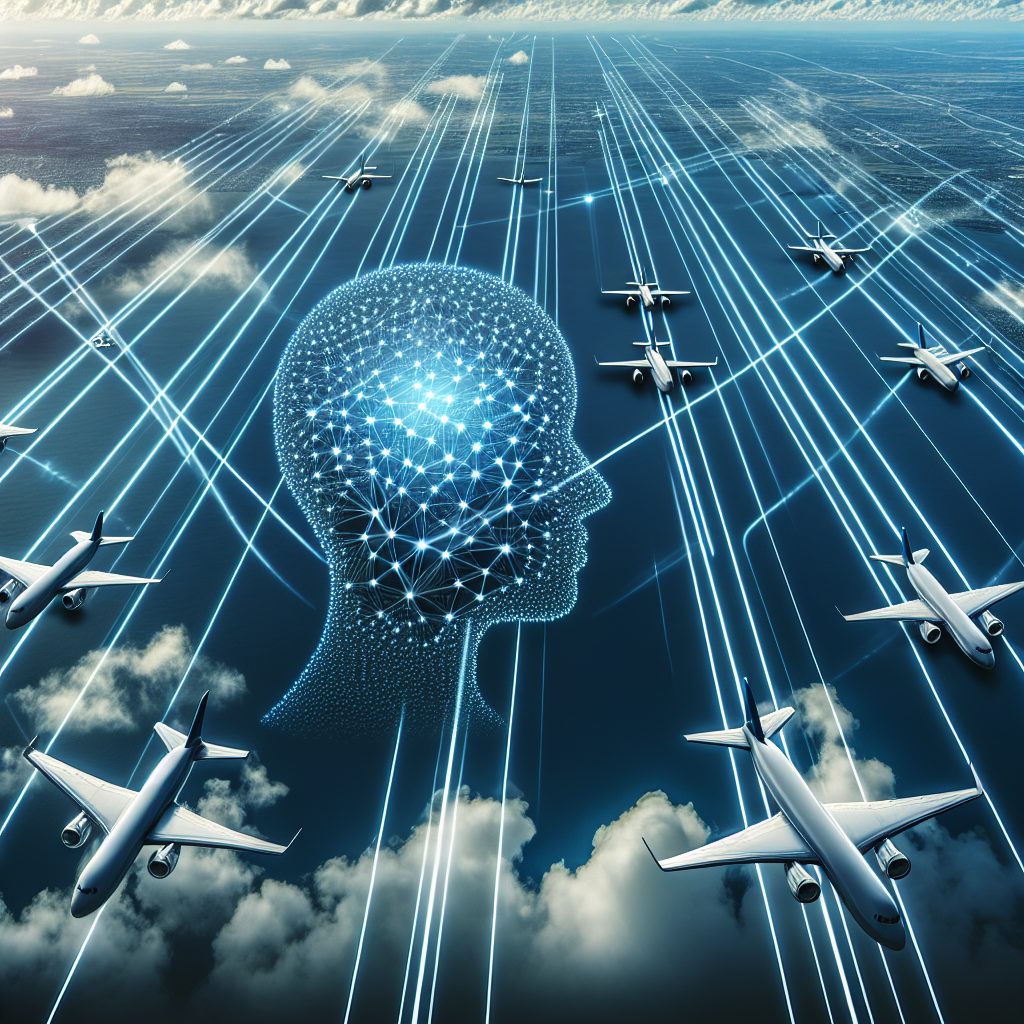
Air traffic management is a critical component of the aviation industry, responsible for ensuring the safe and efficient movement of aircraft in the sky. With the increasing volume of air traffic worldwide, there is a growing need for innovative solutions to improve air traffic management and enhance safety.
One of the most promising technologies that can transform air traffic management is artificial intelligence (AI). AI has the potential to revolutionize how air traffic is managed, enabling more efficient routing of aircraft, reducing delays, and improving overall safety. In this article, we will explore the various AI solutions that are being developed to enhance air traffic management.
AI Solutions for Air Traffic Management
1. Predictive Maintenance: One of the key applications of AI in air traffic management is predictive maintenance. By analyzing data from aircraft sensors and systems, AI algorithms can predict when maintenance is required before a component fails. This can help airlines avoid costly downtime and improve overall safety.
2. Air Traffic Flow Management: AI can also be used to optimize air traffic flow management, ensuring that flights are routed in the most efficient way possible. By analyzing real-time data on weather, airspace congestion, and airport capacity, AI algorithms can recommend the best routes for aircraft to take, reducing delays and fuel consumption.
3. Collision Avoidance Systems: AI-powered collision avoidance systems can help prevent mid-air collisions by analyzing data from radar and other sensors to detect potential conflicts. These systems can alert pilots to take evasive action, reducing the risk of accidents.
4. Automated Air Traffic Control: AI can also be used to automate certain air traffic control functions, such as monitoring aircraft movements and issuing instructions to pilots. By using AI to assist air traffic controllers, the efficiency and accuracy of air traffic management can be improved.
5. Weather Forecasting: AI algorithms can analyze vast amounts of weather data to predict how weather patterns will impact air traffic. By providing more accurate and timely weather forecasts, AI can help airlines and air traffic controllers make better decisions about flight routing and scheduling.
6. Airport Operations: AI can also be used to optimize airport operations, such as runway scheduling, gate assignments, and baggage handling. By analyzing data on airport traffic and resource availability, AI algorithms can help airports operate more efficiently and reduce delays.
FAQs
1. How is AI used in air traffic management?
AI is used in air traffic management to optimize flight routing, predict maintenance needs, prevent collisions, automate air traffic control functions, improve weather forecasting, and optimize airport operations.
2. What are the benefits of using AI in air traffic management?
The benefits of using AI in air traffic management include increased efficiency, reduced delays, improved safety, and cost savings. By leveraging AI technologies, airlines and air traffic controllers can make better decisions and operate more effectively.
3. Are there any challenges to implementing AI in air traffic management?
There are several challenges to implementing AI in air traffic management, including data privacy concerns, regulatory issues, and the need for specialized training for personnel. However, as AI technologies continue to advance, these challenges can be overcome.
4. What are some of the AI solutions currently being developed for air traffic management?
Some of the AI solutions currently being developed for air traffic management include predictive maintenance systems, collision avoidance systems, automated air traffic control systems, weather forecasting algorithms, and airport operations optimization tools.
5. How will AI impact the future of air traffic management?
AI is expected to have a significant impact on the future of air traffic management by improving efficiency, safety, and overall performance. As AI technologies continue to evolve, we can expect to see more advanced solutions that will transform how air traffic is managed around the world.
In conclusion, AI solutions have the potential to revolutionize air traffic management by improving efficiency, safety, and overall performance. By leveraging AI technologies, airlines, air traffic controllers, and airports can make better decisions and operate more effectively. As AI continues to advance, we can expect to see even more innovative solutions that will transform how air traffic is managed in the future.