
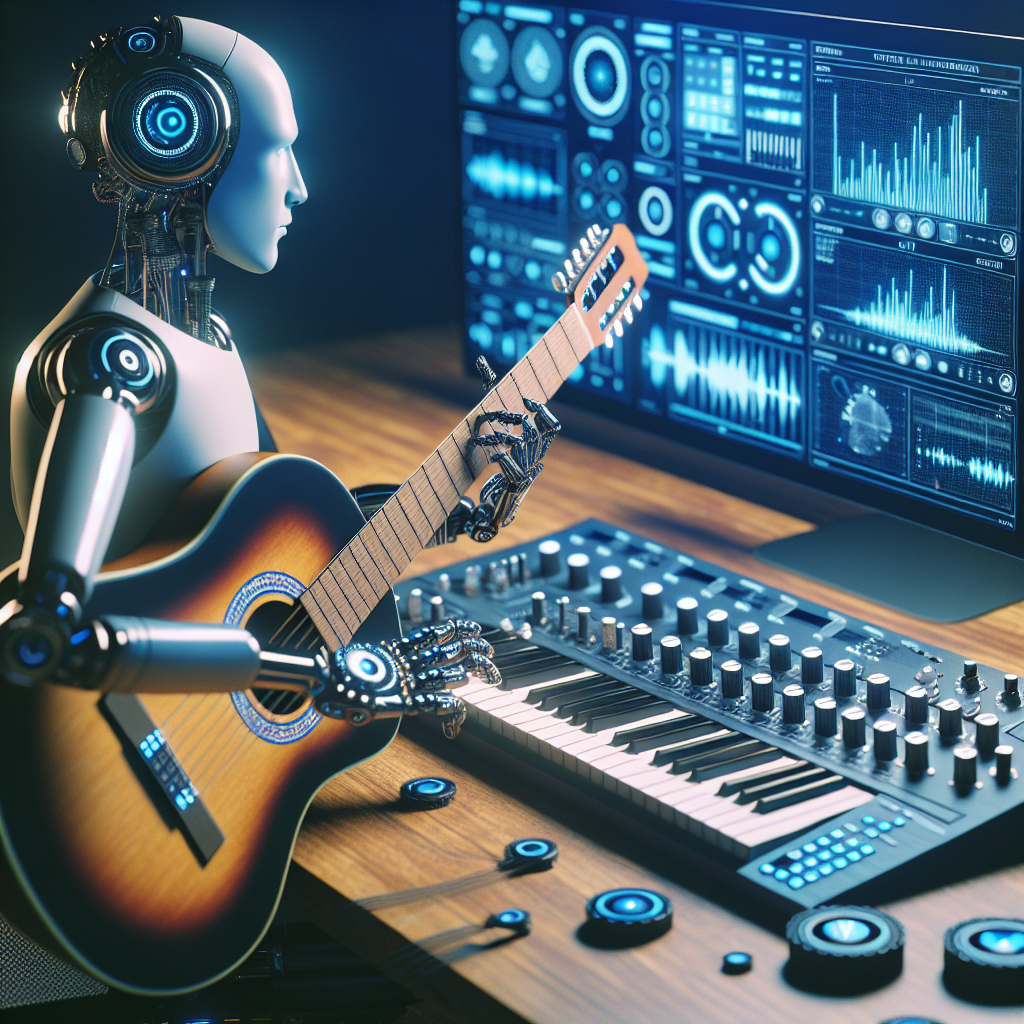
Artificial Intelligence (AI) has made significant advancements in recent years, with applications ranging from self-driving cars to virtual assistants. One area that has seen growing interest is AI in the field of music. The question on many people’s minds is, can AI replace musicians?
While AI has shown impressive capabilities in creating music, the question of whether it can truly replace human musicians is a complex one. In this article, we will explore the current state of AI in music production, the advantages and limitations of AI in this field, and whether AI can truly replace musicians.
AI in Music Production
AI in music production involves the use of algorithms and machine learning techniques to compose, produce, and even perform music. One of the most well-known examples of AI in music production is the use of deep learning algorithms to generate music. These algorithms analyze vast amounts of data to learn patterns in music, and then generate new compositions based on these patterns.
AI has also been used in music recommendation systems, such as Spotify’s Discover Weekly playlist, which uses machine learning algorithms to recommend music based on a user’s listening habits. AI has also been used in music transcription, where it can automatically transcribe audio recordings into sheet music.
Advantages of AI in Music Production
One of the key advantages of AI in music production is its ability to analyze vast amounts of data and learn patterns in music that human musicians may not be able to discern. This can lead to the creation of new and innovative compositions that push the boundaries of traditional music genres.
AI can also help musicians with the creative process by providing inspiration and suggestions for compositions. For example, AI can generate musical ideas based on a given melody or chord progression, which musicians can then develop further.
Furthermore, AI can help automate certain aspects of music production, such as mixing and mastering, which can save time and resources for musicians.
Limitations of AI in Music Production
Despite its advantages, AI in music production also has limitations. One of the main limitations is the lack of emotional intelligence in AI-generated music. Music is a deeply emotional and expressive art form, and AI may struggle to capture the subtle nuances and emotions that human musicians can convey through their music.
Additionally, AI-generated music may lack the creativity and originality that human musicians bring to their compositions. While AI can learn patterns in music and generate new compositions based on these patterns, it may struggle to create truly innovative and groundbreaking music that pushes the boundaries of the art form.
Can AI Replace Musicians?
The question of whether AI can replace musicians is a complex one, and the answer may depend on one’s perspective. While AI has shown impressive capabilities in music production, it is unlikely that AI will completely replace human musicians in the near future.
Human musicians bring a unique and irreplaceable quality to music that AI may struggle to replicate. The emotional intelligence, creativity, and expressiveness that human musicians bring to their compositions are difficult for AI to emulate.
Furthermore, music is a deeply personal and subjective art form, and the human connection that audiences feel with musicians is an important aspect of music that AI may struggle to replicate.
That being said, AI can certainly augment and enhance the capabilities of musicians. AI can help musicians with the creative process, provide inspiration and suggestions for compositions, and automate certain aspects of music production. AI can also help musicians reach new audiences and explore new creative possibilities.
Ultimately, the relationship between AI and musicians is likely to be a collaborative one, where AI and human musicians work together to create innovative and exciting music.
FAQs
Q: Can AI compose music on its own?
A: Yes, AI can compose music on its own using deep learning algorithms and machine learning techniques. AI can analyze vast amounts of data to learn patterns in music and generate new compositions based on these patterns.
Q: Can AI replace human musicians?
A: While AI has shown impressive capabilities in music production, it is unlikely that AI will completely replace human musicians in the near future. Human musicians bring a unique and irreplaceable quality to music that AI may struggle to replicate.
Q: How can AI help musicians?
A: AI can help musicians with the creative process by providing inspiration and suggestions for compositions. AI can also automate certain aspects of music production, such as mixing and mastering, which can save time and resources for musicians.
Q: Can AI create emotionally expressive music?
A: AI may struggle to create emotionally expressive music that captures the subtle nuances and emotions that human musicians can convey through their music. Music is a deeply emotional and expressive art form, and AI may struggle to replicate this aspect of music.
Q: What is the future of AI in music?
A: The future of AI in music is likely to be a collaborative one, where AI and human musicians work together to create innovative and exciting music. AI can help musicians reach new audiences, explore new creative possibilities, and push the boundaries of traditional music genres.