
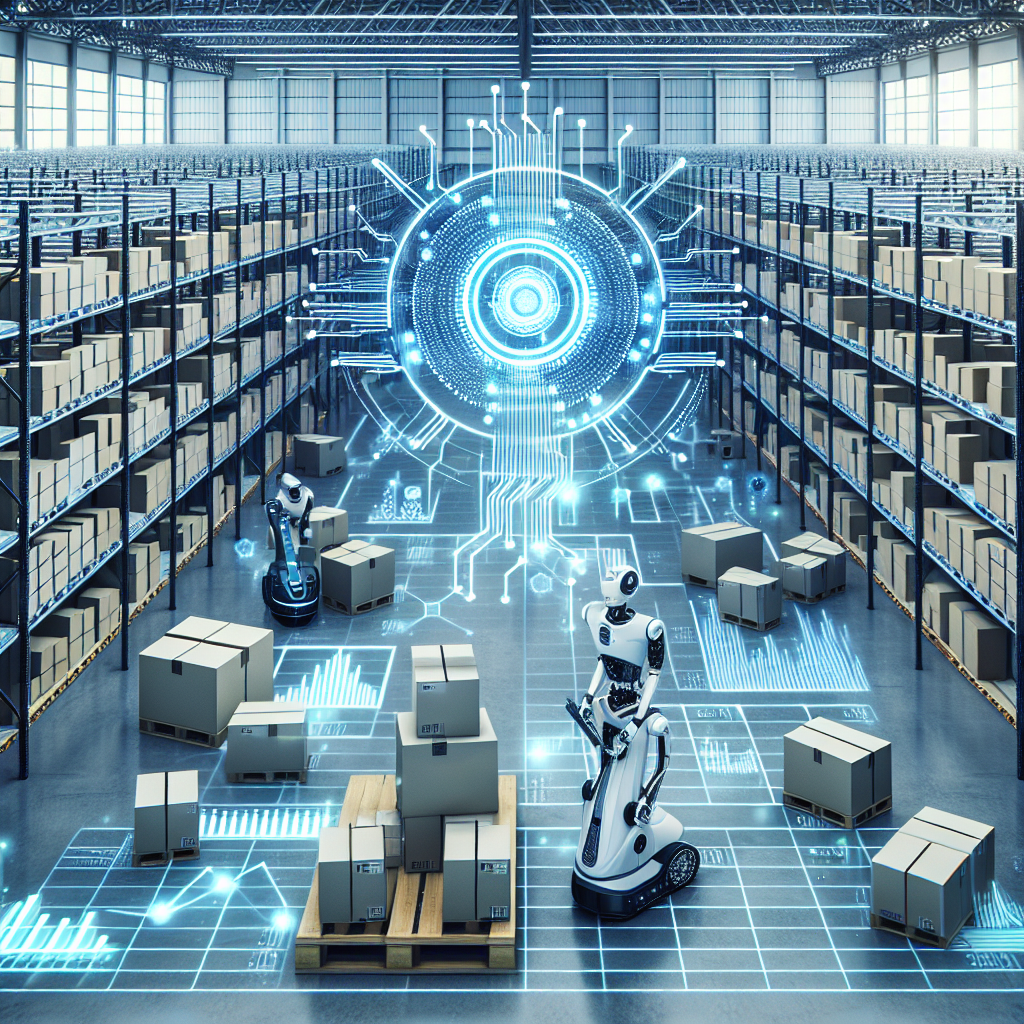
In today’s fast-paced business environment, effective warehouse management is essential for optimizing operations and maximizing productivity. With the rise of e-commerce and the increasing demand for faster order fulfillment, many companies are turning to artificial intelligence (AI) to enhance their warehouse management processes. AI technology can help streamline inventory management, improve order accuracy, and increase overall efficiency. In this article, we will explore how AI is transforming warehouse management and the benefits it can bring to businesses.
AI technology has the potential to revolutionize warehouse management by automating routine tasks and providing valuable insights into inventory levels, order processing, and supply chain operations. By leveraging machine learning algorithms and predictive analytics, AI systems can analyze vast amounts of data in real-time to optimize warehouse operations and improve decision-making processes.
One of the key areas where AI can make a significant impact is in inventory management. Traditional inventory management systems rely on manual data entry and periodic stock checks, which can be time-consuming and prone to human error. AI-powered inventory management systems, on the other hand, can automatically track inventory levels, predict demand trends, and optimize reorder points to ensure that the right products are in stock at the right time.
AI can also help improve order accuracy and reduce fulfillment times by optimizing picking, packing, and shipping processes. By analyzing historical order data and customer preferences, AI systems can predict which products are likely to be ordered together and optimize warehouse layouts and workflows to minimize the time it takes to pick and pack orders. This can help reduce errors and improve customer satisfaction by ensuring that orders are shipped quickly and accurately.
Another area where AI can add value to warehouse management is in demand forecasting and supply chain optimization. By analyzing historical sales data, market trends, and external factors such as weather conditions or economic indicators, AI systems can predict future demand levels and optimize inventory levels and supply chain operations accordingly. This can help reduce stockouts, minimize excess inventory, and improve overall supply chain efficiency.
In addition to improving operational efficiency, AI technology can also help enhance warehouse safety and security. By using sensors, cameras, and other IoT devices to monitor warehouse conditions in real-time, AI systems can detect potential safety hazards, such as spills or obstructions in aisles, and alert warehouse staff to take corrective action. AI can also help prevent theft and unauthorized access by monitoring access points and detecting suspicious behavior.
Overall, AI has the potential to transform warehouse management by automating routine tasks, optimizing operations, and providing valuable insights into inventory levels, order processing, and supply chain operations. By leveraging AI technology, businesses can improve efficiency, reduce costs, and enhance customer satisfaction.
FAQs:
Q: How can AI help improve inventory management in warehouses?
A: AI can help improve inventory management by automatically tracking inventory levels, predicting demand trends, and optimizing reorder points to ensure that the right products are in stock at the right time.
Q: What are some of the benefits of using AI in warehouse management?
A: Some benefits of using AI in warehouse management include improved operational efficiency, reduced costs, enhanced customer satisfaction, and increased safety and security.
Q: How can AI help improve order accuracy and reduce fulfillment times?
A: AI can help improve order accuracy and reduce fulfillment times by analyzing historical order data, predicting which products are likely to be ordered together, and optimizing warehouse layouts and workflows to minimize picking and packing times.
Q: How can AI help enhance warehouse safety and security?
A: AI can help enhance warehouse safety and security by using sensors, cameras, and other IoT devices to monitor warehouse conditions in real-time, detect potential safety hazards, and prevent theft and unauthorized access.
Q: What are some of the challenges of implementing AI in warehouse management?
A: Some challenges of implementing AI in warehouse management include the initial cost of implementation, the need for skilled data scientists and IT professionals, and potential resistance from employees to adopting new technologies.