
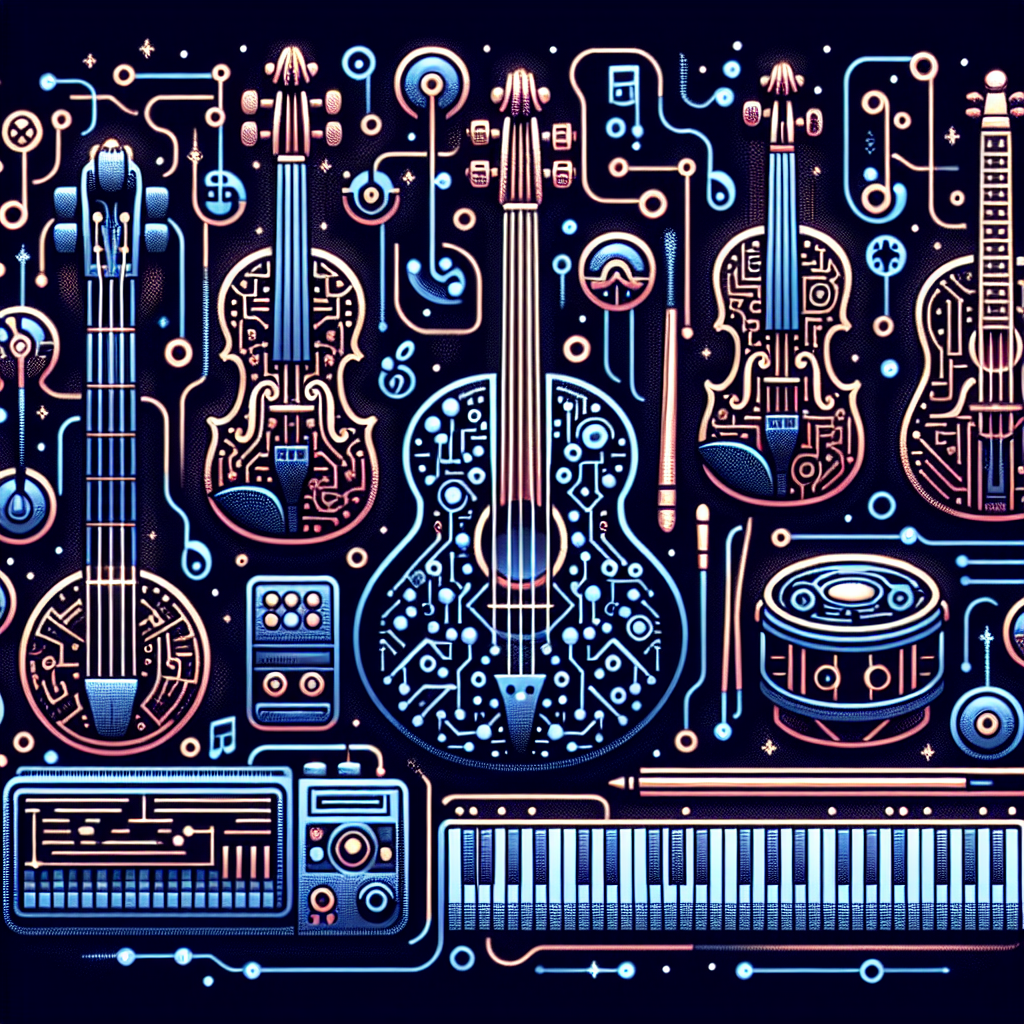
Music has always been an integral part of human culture, serving as a means of expression, communication, and entertainment. Over the centuries, musicians have developed a wide array of instruments that allow them to create beautiful melodies and harmonies that resonate with listeners. In recent years, advancements in technology have given rise to AI-enhanced music instruments, which are revolutionizing the way music is created and performed.
AI-enhanced music instruments leverage artificial intelligence algorithms to enhance the capabilities of traditional instruments or create entirely new instruments that push the boundaries of what is possible in music composition and performance. These instruments are capable of analyzing and interpreting musical data in real-time, allowing musicians to generate complex compositions with ease and precision.
One of the key advantages of AI-enhanced music instruments is their ability to augment the creative process for musicians. By providing intelligent suggestions and insights based on the musical data being input, these instruments can help musicians explore new ideas and unlock their full creative potential. Additionally, AI-enhanced instruments can adapt to the unique playing style of each musician, allowing for a more personalized and expressive performance.
Another benefit of AI-enhanced music instruments is their versatility and flexibility. These instruments can be programmed to mimic the sound of traditional instruments, such as pianos, guitars, and drums, or to create entirely new sounds that push the boundaries of conventional music genres. This flexibility allows musicians to experiment with different sounds and styles, leading to the creation of innovative and groundbreaking music.
AI-enhanced music instruments are also revolutionizing the way music is performed live. By leveraging real-time data analysis and processing capabilities, these instruments can generate dynamic and interactive performances that engage audiences in new and exciting ways. Musicians can now interact with their instruments in ways that were previously impossible, creating immersive and captivating musical experiences for listeners.
In addition to enhancing the creative and performance capabilities of musicians, AI-enhanced music instruments also have the potential to democratize music production and composition. By providing accessible tools and technologies that simplify the music-making process, these instruments can empower aspiring musicians and composers to create professional-quality music without the need for expensive equipment or formal training. This democratization of music production can lead to a more diverse and inclusive music industry, where talent and creativity are the primary factors driving success.
Despite the numerous benefits of AI-enhanced music instruments, there are also challenges and concerns that need to be addressed. One of the main concerns is the potential impact of AI on the creative process itself. Some critics argue that relying too heavily on AI algorithms to generate music compositions may stifle creativity and undermine the authenticity of the artistic expression. It is important for musicians to strike a balance between leveraging AI technology to enhance their creative process and maintaining their unique artistic vision and voice.
Another challenge is the ethical implications of using AI algorithms in music composition and performance. As AI technology becomes more advanced, there is a growing concern about the potential misuse of algorithms to manipulate or control the music-making process. It is essential for musicians and technology developers to prioritize ethical considerations and ensure that AI-enhanced music instruments are used responsibly and ethically.
In conclusion, AI-enhanced music instruments are revolutionizing the way music is created, performed, and experienced. By leveraging artificial intelligence algorithms, these instruments are pushing the boundaries of creativity and innovation in music composition and performance. From enhancing the creative process for musicians to democratizing music production, AI-enhanced music instruments have the potential to transform the music industry and shape the future of music. As technology continues to advance, it will be exciting to see how AI-enhanced music instruments continue to evolve and inspire musicians to create new and groundbreaking music.
FAQs:
Q: What are some examples of AI-enhanced music instruments?
A: Some examples of AI-enhanced music instruments include the Google Magenta project, which uses machine learning algorithms to generate music compositions, and the Artiphon INSTRUMENT 1, a versatile instrument that can mimic the sound of various traditional instruments using AI technology.
Q: How can AI-enhanced music instruments benefit musicians?
A: AI-enhanced music instruments can benefit musicians by enhancing the creative process, providing intelligent suggestions and insights, adapting to the unique playing style of each musician, and enabling dynamic and interactive performances.
Q: What are some concerns about using AI in music composition and performance?
A: Some concerns about using AI in music composition and performance include the potential impact on the creative process, ethical implications of AI algorithms, and the risk of misuse or manipulation of technology.
Q: How can musicians strike a balance between using AI technology and maintaining their artistic vision?
A: Musicians can strike a balance between using AI technology and maintaining their artistic vision by leveraging AI algorithms to enhance their creative process while prioritizing their unique artistic voice and expression.
Q: What is the future of AI-enhanced music instruments?
A: The future of AI-enhanced music instruments is bright, with continued advancements in technology leading to more innovative and versatile instruments that push the boundaries of music composition and performance. It will be exciting to see how AI technology continues to evolve and shape the future of music.