
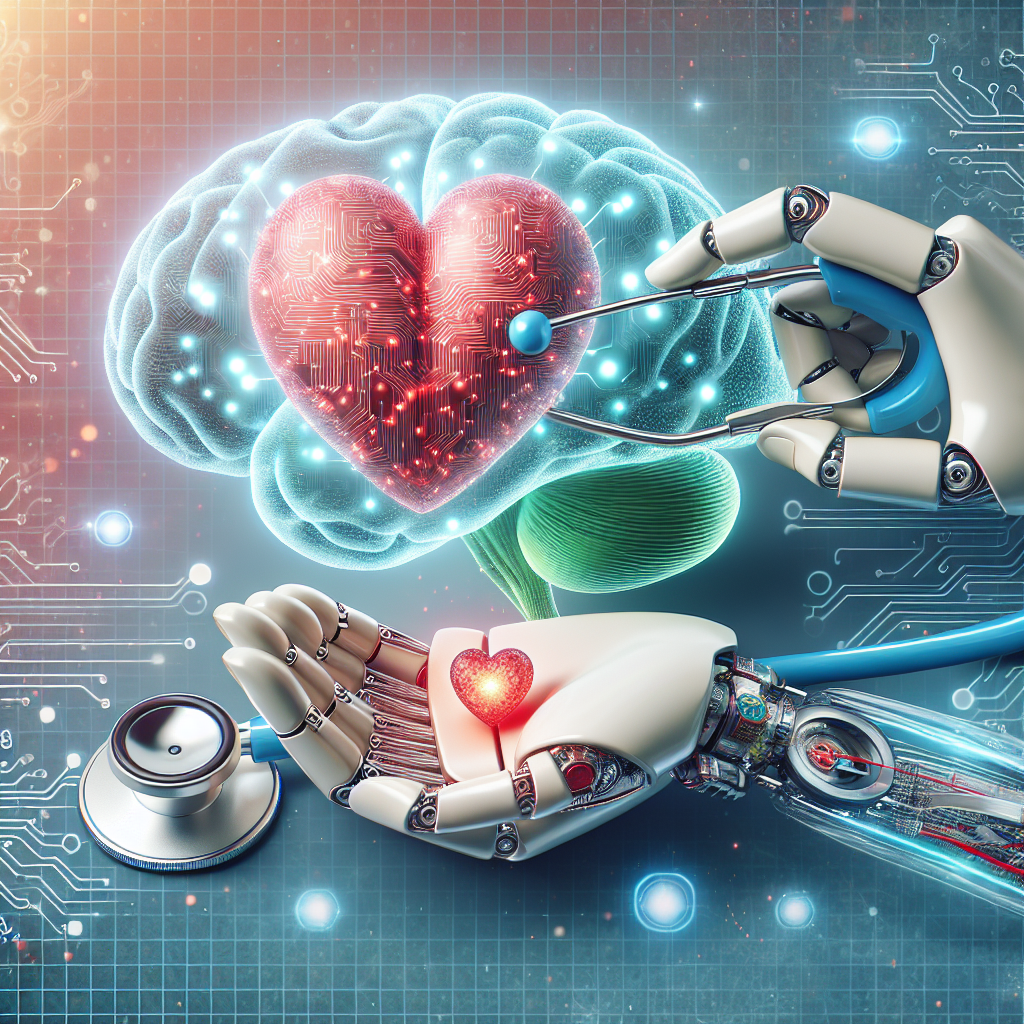
Artificial intelligence (AI) has become a game-changer in the healthcare industry, revolutionizing the way medical professionals diagnose, treat, and manage patient care. AI platforms are increasingly being used to streamline processes, improve accuracy, and enhance patient outcomes. From predictive analytics to personalized medicine, AI is paving the way for a more efficient and effective healthcare system.
One of the key ways in which AI platforms are improving healthcare is through the use of predictive analytics. By analyzing vast amounts of patient data, AI algorithms can identify patterns and trends that may indicate potential health risks or conditions. This allows healthcare providers to intervene earlier and provide more proactive care, ultimately leading to better outcomes for patients.
Additionally, AI platforms are being used to improve diagnostic accuracy. For example, AI-powered imaging systems can analyze medical images such as X-rays, MRIs, and CT scans with a level of precision that far exceeds human capabilities. This not only helps to speed up the diagnostic process but also reduces the risk of errors and misdiagnoses.
AI is also being used to personalize treatment plans for patients. By analyzing a patient’s genetic makeup, medical history, and other relevant data points, AI algorithms can recommend the most effective treatments and therapies tailored to the individual. This personalized approach to medicine can lead to better outcomes and reduced side effects for patients.
Furthermore, AI platforms are helping to improve patient engagement and adherence to treatment plans. Through the use of virtual assistants and chatbots, patients can receive real-time support and guidance, leading to better compliance with medication regimens and lifestyle changes. This ultimately results in improved health outcomes and reduced healthcare costs.
Another area where AI is making a significant impact is in drug discovery and development. By analyzing vast amounts of molecular and clinical data, AI algorithms can identify potential drug candidates more quickly and accurately than traditional methods. This has the potential to speed up the drug development process and bring new treatments to market faster.
Overall, AI platforms are transforming healthcare in numerous ways, from improving diagnostic accuracy to personalizing treatment plans and speeding up drug discovery. As the technology continues to advance, we can expect even more innovative applications of AI in healthcare that will further enhance patient care and outcomes.
FAQs:
1. What are some examples of AI platforms being used in healthcare?
– Some examples of AI platforms being used in healthcare include predictive analytics for identifying health risks, AI-powered imaging systems for diagnostic accuracy, personalized medicine algorithms for treatment plans, and virtual assistants for patient engagement.
2. How is AI improving diagnostic accuracy in healthcare?
– AI-powered imaging systems can analyze medical images with a level of precision that far exceeds human capabilities, leading to faster and more accurate diagnoses. AI algorithms can also analyze patient data to identify patterns and trends that may indicate potential health risks or conditions, helping healthcare providers to intervene earlier.
3. How is AI being used in drug discovery and development?
– AI algorithms can analyze vast amounts of molecular and clinical data to identify potential drug candidates more quickly and accurately than traditional methods. This can help to speed up the drug development process and bring new treatments to market faster.
4. How are AI platforms personalized treatment plans for patients?
– By analyzing a patient’s genetic makeup, medical history, and other relevant data points, AI algorithms can recommend the most effective treatments and therapies tailored to the individual. This personalized approach to medicine can lead to better outcomes and reduced side effects for patients.
5. How can AI platforms improve patient engagement and adherence to treatment plans?
– Through the use of virtual assistants and chatbots, patients can receive real-time support and guidance, leading to better compliance with medication regimens and lifestyle changes. This ultimately results in improved health outcomes and reduced healthcare costs.