
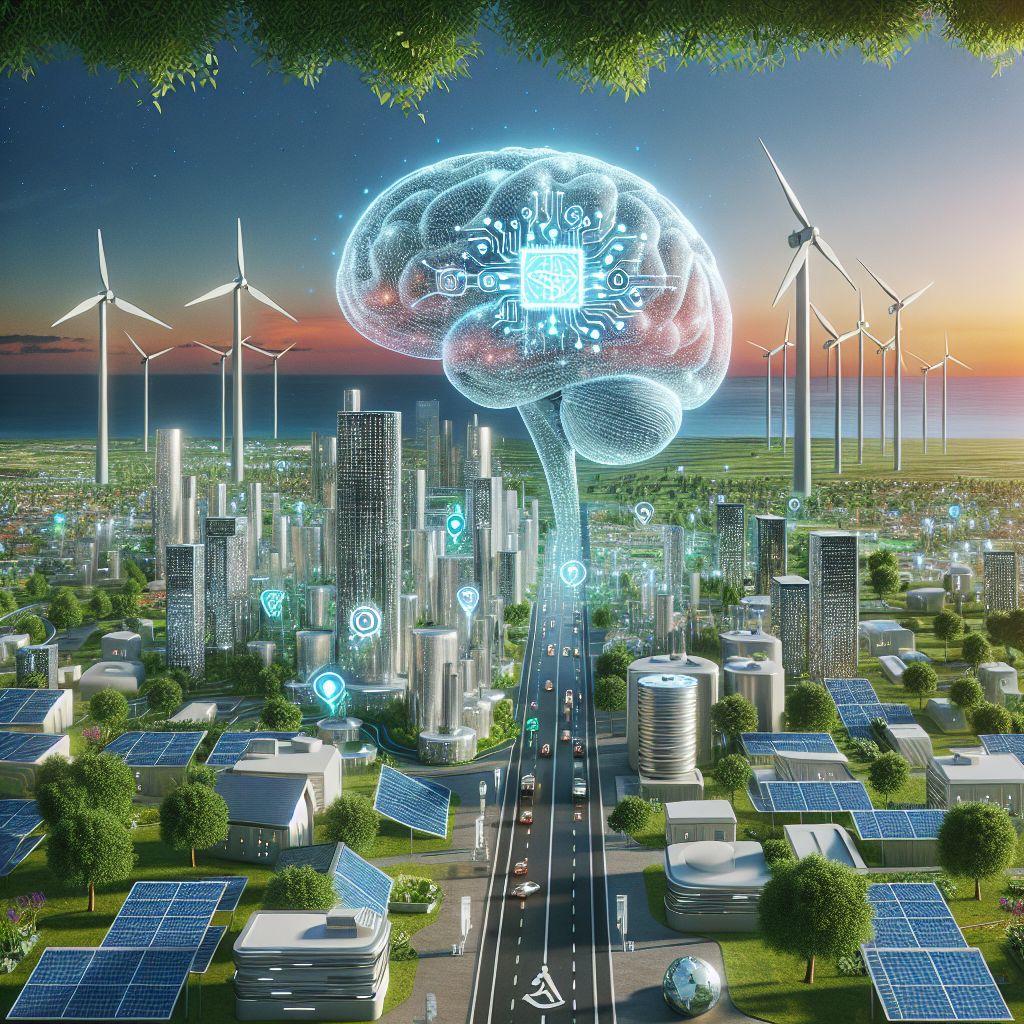
Integrating AI into Sustainable Development Goals
Artificial Intelligence (AI) has the potential to revolutionize the way we approach sustainable development goals. By harnessing the power of AI, we can better understand complex environmental challenges, identify innovative solutions, and track progress towards achieving a more sustainable future. In this article, we will explore how AI can be integrated into the Sustainable Development Goals (SDGs) and the benefits it can bring to our efforts to create a more sustainable world.
What are the Sustainable Development Goals?
The Sustainable Development Goals are a set of 17 global goals adopted by the United Nations in 2015. These goals aim to address the most pressing social, economic, and environmental challenges facing the world today, including poverty, hunger, inequality, climate change, and environmental degradation. The goals are interconnected and aim to create a more sustainable and equitable world by 2030.
How can AI be integrated into the Sustainable Development Goals?
AI can be integrated into the Sustainable Development Goals in a number of ways, including:
1. Data analysis: AI can be used to analyze vast amounts of data to identify trends, patterns, and insights that can inform decision-making and policy development. This can be particularly useful in tracking progress towards achieving the SDGs and identifying areas where additional action is needed.
2. Predictive modeling: AI can be used to develop predictive models that can forecast future trends and outcomes, helping policymakers and organizations anticipate and mitigate potential challenges before they occur. This can be particularly useful in addressing issues like climate change, where early intervention is critical.
3. Resource optimization: AI can be used to optimize the use of resources, such as energy, water, and land, to reduce waste and improve efficiency. This can help organizations reduce their environmental impact and achieve their sustainability goals more effectively.
4. Decision support: AI can provide decision-makers with real-time insights and recommendations to inform their choices and actions. This can help organizations make more informed and strategic decisions that align with the SDGs and drive progress towards achieving them.
5. Innovation and creativity: AI can be used to drive innovation and creativity in the development of sustainable solutions. By leveraging AI technologies like machine learning and natural language processing, organizations can generate new ideas, products, and services that contribute to achieving the SDGs.
What are the benefits of integrating AI into the Sustainable Development Goals?
There are several benefits to integrating AI into the Sustainable Development Goals, including:
1. Improved decision-making: AI can provide decision-makers with valuable insights and recommendations to inform their choices and actions. This can help organizations make more informed decisions that are aligned with the SDGs and drive progress towards achieving them.
2. Enhanced efficiency: AI can optimize the use of resources, reduce waste, and improve efficiency, helping organizations achieve their sustainability goals more effectively. This can lead to cost savings, increased productivity, and reduced environmental impact.
3. Innovation and creativity: AI can drive innovation and creativity in the development of sustainable solutions. By leveraging AI technologies, organizations can generate new ideas, products, and services that contribute to achieving the SDGs.
4. Increased transparency: AI can help organizations track and monitor their progress towards achieving the SDGs in a transparent and accountable manner. This can help build trust with stakeholders and demonstrate a commitment to sustainability.
5. Scalability: AI technologies can be scaled across different sectors and regions, making it easier to replicate successful approaches and solutions. This can accelerate progress towards achieving the SDGs on a global scale.
FAQs:
1. Can AI replace human decision-making in sustainable development?
While AI can support and enhance human decision-making in sustainable development, it cannot replace it entirely. Human judgment, values, and ethical considerations are still essential in setting goals, making choices, and taking action towards achieving sustainability. AI should be seen as a tool to complement and augment human capabilities, rather than a substitute for human decision-making.
2. How can AI help address climate change and environmental degradation?
AI can help address climate change and environmental degradation by analyzing large amounts of data to identify trends, patterns, and solutions that can inform policy development and action. AI can also be used to develop predictive models that can forecast future climate scenarios and help policymakers anticipate and mitigate the impacts of climate change. Additionally, AI can optimize the use of resources, reduce waste, and improve efficiency to reduce environmental impact.
3. Are there any ethical considerations when integrating AI into sustainable development goals?
Yes, there are several ethical considerations that need to be taken into account when integrating AI into sustainable development goals. These include issues related to data privacy, bias in algorithms, transparency in decision-making, accountability, and the impact of AI on society and the environment. It is important to ensure that AI technologies are used ethically and responsibly to avoid unintended consequences and harm to individuals and communities.
4. How can organizations leverage AI to achieve the Sustainable Development Goals?
Organizations can leverage AI to achieve the Sustainable Development Goals by investing in AI technologies, building capacity and expertise in AI, collaborating with partners and stakeholders, and integrating AI into their decision-making processes and operations. By harnessing the power of AI, organizations can drive innovation, efficiency, and sustainability in their efforts to achieve the SDGs.
In conclusion, integrating AI into the Sustainable Development Goals has the potential to accelerate progress towards achieving a more sustainable and equitable world. By harnessing the power of AI to analyze data, develop predictive models, optimize resources, support decision-making, and drive innovation, we can address the most pressing social, economic, and environmental challenges facing the world today. It is important to ensure that AI technologies are used ethically and responsibly to maximize their benefits and minimize their risks. By working together and leveraging the potential of AI, we can create a more sustainable future for all.