
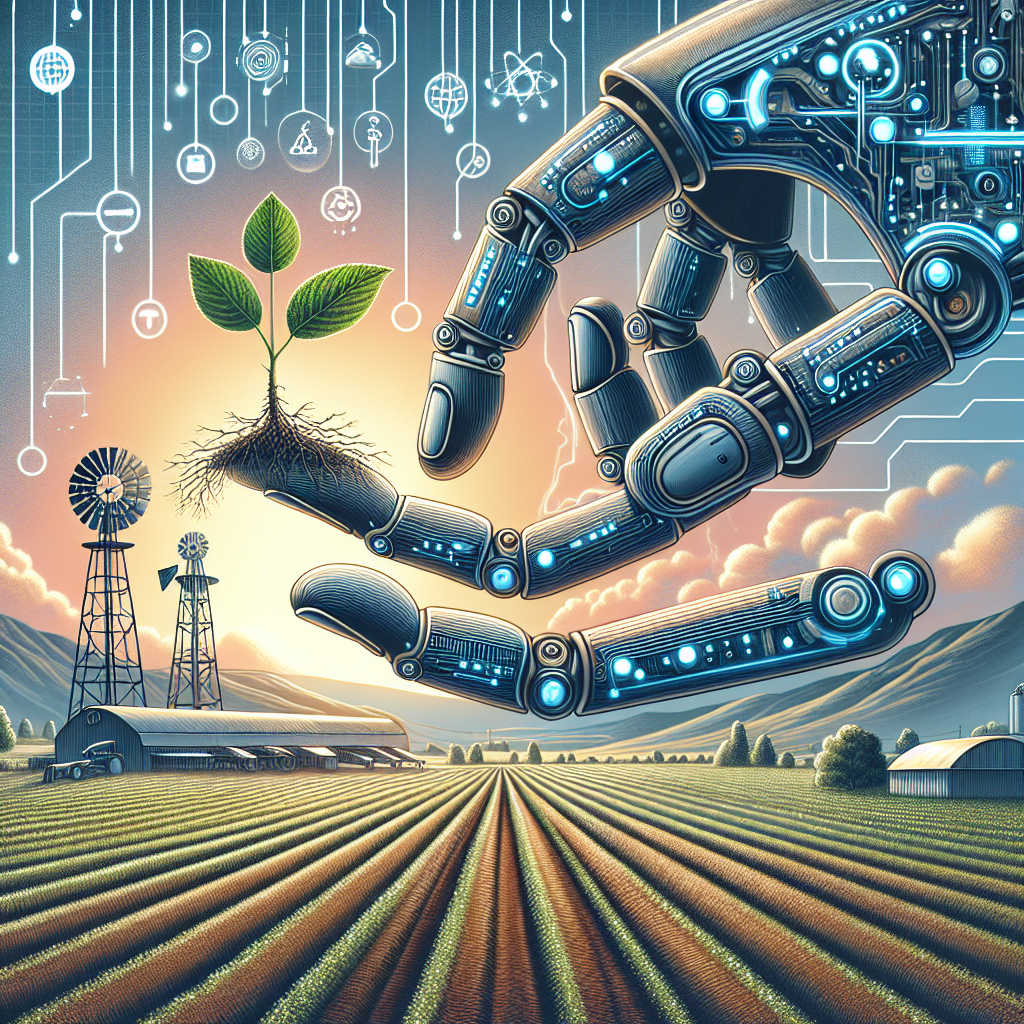
Leveraging AI for Precision Agriculture Practices
Introduction
Precision agriculture, also known as precision farming or precision ag, is a farming management concept that uses technology to optimize the efficiency, productivity, and sustainability of agricultural practices. By leveraging data, sensors, and other technologies, precision agriculture aims to minimize waste, improve crop yields, and make farming operations more environmentally friendly. One of the key technologies driving precision agriculture forward is artificial intelligence (AI).
AI refers to the simulation of human intelligence processes by computer systems, including learning, reasoning, problem-solving, perception, and language understanding. In the context of precision agriculture, AI can be used to analyze data from various sources, such as satellite imagery, sensors, and weather forecasts, to provide farmers with valuable insights and recommendations on how to manage their crops more effectively.
Benefits of Leveraging AI for Precision Agriculture
There are several key benefits to leveraging AI for precision agriculture practices:
1. Improved Decision-Making: AI algorithms can analyze vast amounts of data in real-time to provide farmers with valuable insights on crop health, soil conditions, weather patterns, and more. This information can help farmers make more informed decisions about when to plant, irrigate, fertilize, or harvest their crops.
2. Increased Efficiency: By using AI-powered tools and technologies, farmers can optimize their farming operations to reduce waste, save time, and improve productivity. For example, AI can help farmers identify areas of their fields that need more or less water or fertilizer, leading to more efficient resource allocation.
3. Enhanced Sustainability: Precision agriculture practices enabled by AI can help farmers reduce their environmental impact by minimizing the use of chemicals, water, and other resources. By optimizing crop management practices, farmers can improve soil health, reduce erosion, and promote biodiversity on their land.
4. Better Crop Yields: By leveraging AI to analyze data on crop health, pest infestations, and other factors, farmers can take proactive measures to protect their crops and maximize yields. AI-powered tools can help farmers predict and prevent crop diseases, identify nutrient deficiencies, and optimize planting schedules for optimal growth.
5. Cost Savings: By optimizing farming practices with AI, farmers can reduce input costs, such as water, fertilizer, and pesticides, while increasing the yield and quality of their crops. This can lead to significant cost savings and improved profitability for farmers.
AI Technologies for Precision Agriculture
There are several AI technologies that are commonly used in precision agriculture practices, including:
1. Machine Learning: Machine learning algorithms can analyze large datasets to identify patterns, correlations, and anomalies that can help farmers make better decisions about their crops. For example, machine learning can be used to predict crop yields, detect crop diseases, and optimize irrigation schedules.
2. Computer Vision: Computer vision technology uses cameras and sensors to capture images of crops and analyze them for signs of diseases, pests, or nutrient deficiencies. By using computer vision, farmers can quickly identify crop problems and take corrective action before they escalate.
3. Natural Language Processing (NLP): NLP technology can analyze text data, such as weather forecasts, soil reports, and pest alerts, to provide farmers with valuable insights and recommendations. By using NLP, farmers can stay informed about the latest agricultural trends and make data-driven decisions about their farming practices.
4. Internet of Things (IoT): IoT devices, such as sensors and drones, can collect real-time data on soil moisture, temperature, humidity, and other environmental factors. By integrating IoT devices with AI algorithms, farmers can monitor their fields remotely and make adjustments to their farming practices as needed.
FAQs
Q: How can AI help farmers reduce their environmental impact?
A: AI-powered tools can help farmers optimize their use of resources, such as water, fertilizer, and pesticides, to minimize waste and reduce their environmental impact. By using AI to analyze data on soil conditions, weather patterns, and crop health, farmers can make more sustainable decisions about their farming practices.
Q: What are some examples of AI applications in precision agriculture?
A: Some examples of AI applications in precision agriculture include using machine learning to predict crop yields, computer vision to detect crop diseases, natural language processing to analyze weather forecasts, and IoT devices to monitor soil conditions.
Q: How can farmers implement AI technologies in their farming operations?
A: Farmers can implement AI technologies in their farming operations by working with technology providers, consultants, or research institutions that specialize in precision agriculture. These experts can help farmers select and deploy the right AI tools and technologies for their specific needs.
Q: What are the potential challenges of using AI in precision agriculture?
A: Some potential challenges of using AI in precision agriculture include the high cost of technology adoption, data privacy and security concerns, and the need for specialized skills and training to use AI effectively. However, with the right support and resources, farmers can overcome these challenges and reap the benefits of AI-powered precision agriculture practices.
Conclusion
AI technologies have the potential to revolutionize precision agriculture practices by providing farmers with valuable insights, recommendations, and predictions about their crops. By leveraging AI to analyze data from various sources, farmers can optimize their farming operations to improve efficiency, sustainability, and profitability. As AI continues to advance, the future of precision agriculture looks promising, with new opportunities for innovation and growth in the agricultural industry.