
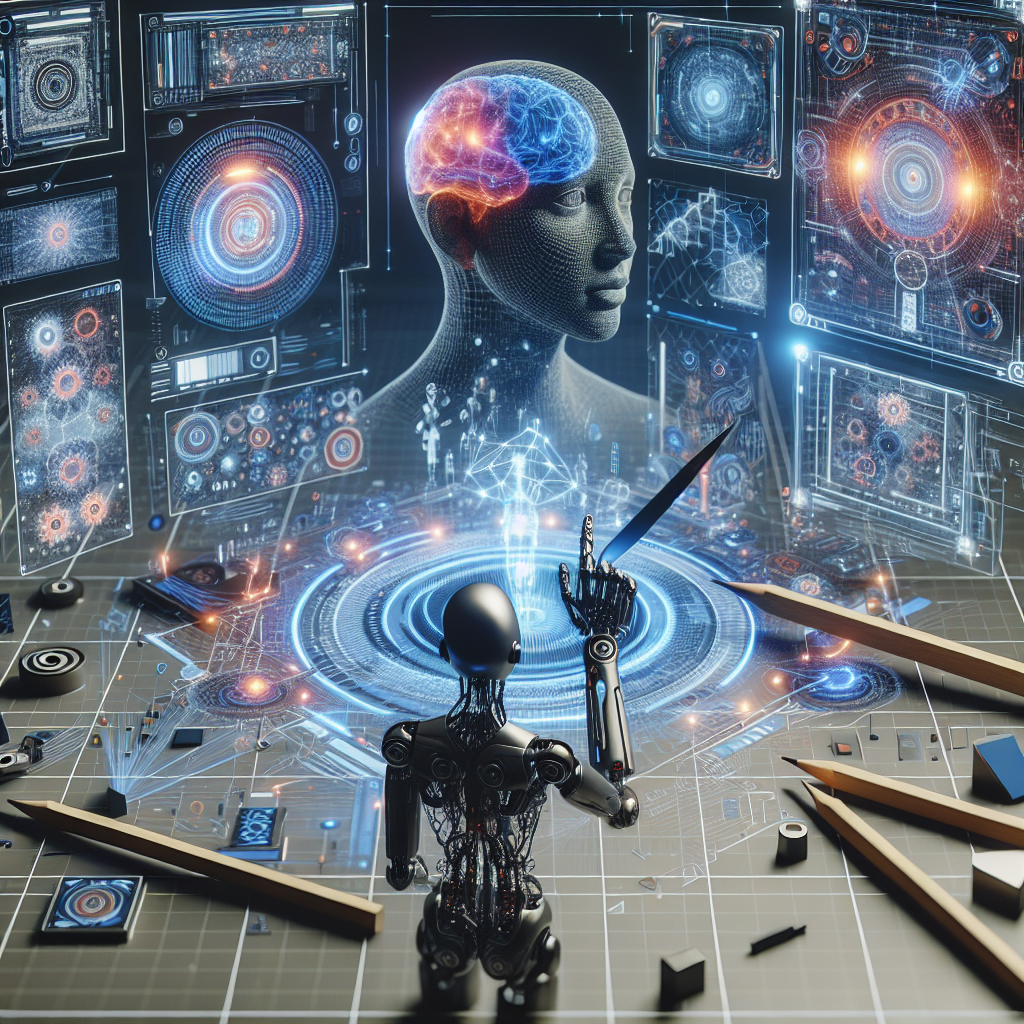
Design has always been a crucial aspect of human society, shaping the way we interact with the world around us. From architecture to graphic design, the choices we make in the design process have a significant impact on our daily lives. With the rapid advancements in technology, the future of design is being reshaped by the emergence of generative artificial intelligence (AI).
Generative AI refers to algorithms that can autonomously create new designs based on a set of parameters or inputs. These algorithms are trained on vast amounts of data, allowing them to generate unique and innovative designs that humans may not have considered. This technology has the potential to revolutionize the design industry, offering new possibilities and pushing the boundaries of creativity.
One of the key benefits of generative AI in design is its ability to automate repetitive tasks, allowing designers to focus on more creative and strategic aspects of their work. For example, in graphic design, generative AI can quickly generate multiple variations of a logo design based on a few initial concepts, saving designers time and effort. This can lead to faster turnaround times and more efficient design processes.
Generative AI also has the potential to democratize design, making it more accessible to a wider range of people. With the help of AI tools, individuals with no formal design training can create professional-looking designs for their projects. This can empower small businesses and entrepreneurs to create high-quality marketing materials without the need to hire a professional designer.
Furthermore, generative AI can assist designers in exploring new design possibilities and pushing the boundaries of creativity. By generating a wide range of design options, AI can inspire designers to think outside the box and experiment with unconventional ideas. This can lead to the development of innovative and groundbreaking designs that may not have been possible through traditional design methods.
Despite its potential benefits, generative AI in design also raises some concerns and challenges. One of the main concerns is the fear that AI will replace human designers, leading to job losses in the industry. While it is true that AI can automate certain tasks, such as generating design variations, it is unlikely to completely replace human designers. Design is a highly creative and subjective process that requires human input and decision-making. AI can assist designers in their work, but it cannot replicate the intuition, creativity, and emotional intelligence that humans bring to the design process.
Another concern is the ethical implications of using AI in design. AI algorithms are trained on large datasets, which may contain biases and stereotypes that can be perpetuated in the designs generated by the AI. Designers must be aware of these biases and take steps to mitigate them, such as ensuring diverse representation in the training data and actively challenging stereotypes in their designs.
In order to address these concerns and maximize the potential of generative AI in design, it is important for designers to approach AI as a tool to enhance their creativity and efficiency, rather than a replacement for human talent. By working collaboratively with AI, designers can leverage its capabilities to explore new design possibilities, automate repetitive tasks, and create innovative and impactful designs.
As generative AI continues to evolve and mature, it is likely to play an increasingly important role in the future of design. Designers who embrace AI as a valuable tool in their toolkit will be well-positioned to take advantage of the opportunities and possibilities that this technology offers.
FAQs:
Q: Will generative AI replace human designers?
A: While generative AI can automate certain tasks in the design process, it is unlikely to completely replace human designers. Design is a highly creative and subjective process that requires human input and decision-making. AI can assist designers in their work, but it cannot replicate the intuition, creativity, and emotional intelligence that humans bring to the design process.
Q: How can generative AI benefit the design industry?
A: Generative AI can benefit the design industry by automating repetitive tasks, enabling designers to focus on more creative and strategic aspects of their work. It can also democratize design, making it more accessible to a wider range of people, and inspire designers to explore new design possibilities and push the boundaries of creativity.
Q: What are the ethical implications of using AI in design?
A: One of the main ethical implications of using AI in design is the potential perpetuation of biases and stereotypes present in the training data. Designers must be aware of these biases and take steps to mitigate them, such as ensuring diverse representation in the training data and actively challenging stereotypes in their designs.