
The Impact of AI on Agricultural Labor Productivity
Introduction
Artificial Intelligence (AI) has been making significant strides in various industries, and agriculture is no exception. With the increasing demand for food and the challenges posed by climate change, AI has the potential to revolutionize the agricultural sector and boost productivity. One of the key areas where AI is making a significant impact is in agricultural labor productivity.
AI in Agriculture
AI technologies such as machine learning, computer vision, and robotics are being increasingly used in agriculture to optimize various processes and tasks. These technologies have the potential to automate repetitive and labor-intensive tasks, thereby reducing the reliance on human labor and increasing productivity.
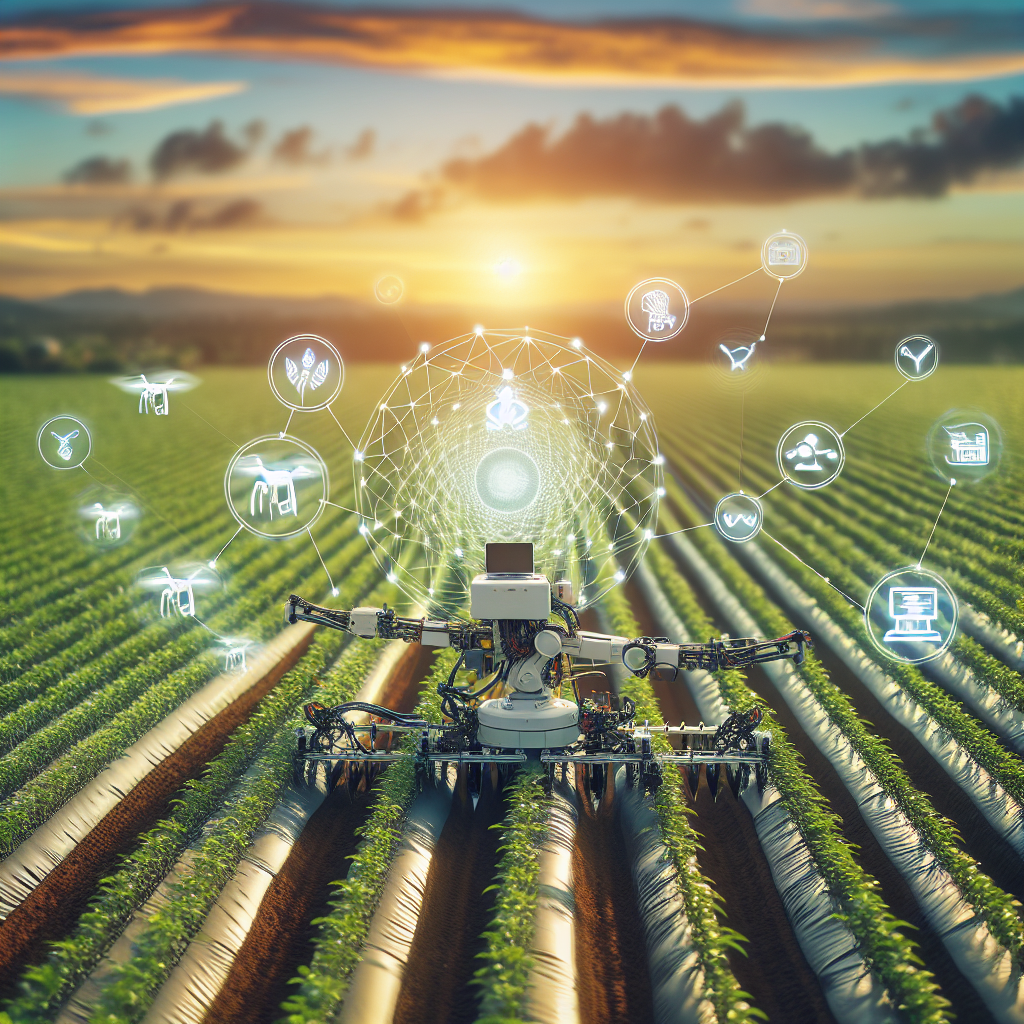
One of the main ways AI is impacting agricultural labor productivity is through precision agriculture. Precision agriculture involves the use of AI and other technologies to monitor and manage crop production in a more efficient and precise manner. For example, AI-powered drones can be used to monitor crop health and detect pests and diseases early on, allowing farmers to take timely action to protect their crops. This not only reduces the need for manual labor in monitoring crops but also improves crop yields and reduces the use of pesticides.
AI-powered robots are also being used in agriculture to automate tasks such as planting, weeding, and harvesting. These robots can work around the clock and with great precision, leading to higher productivity and reduced labor costs. For example, a robot developed by a company called FarmWise can autonomously weed fields, reducing the need for manual labor and increasing efficiency.
Another area where AI is impacting agricultural labor productivity is in predictive analytics. By analyzing large amounts of data, AI can help farmers make better decisions about when to plant, irrigate, and harvest crops. This can lead to higher yields and reduced labor costs, as farmers can optimize their operations based on data-driven insights.
Overall, AI is revolutionizing the agricultural sector by increasing labor productivity, reducing costs, and improving crop yields. However, there are also challenges and concerns associated with the widespread adoption of AI in agriculture.
Challenges and Concerns
One of the main concerns about the impact of AI on agricultural labor productivity is the potential displacement of human workers. As AI technologies become more advanced and capable of performing a wider range of tasks, there is a risk that farmers and agricultural workers could lose their jobs. This could lead to social and economic upheaval in rural communities that rely on agriculture for their livelihoods.
Another concern is the cost of implementing AI technologies in agriculture. While AI has the potential to increase productivity and reduce costs in the long run, the initial investment required to adopt these technologies can be prohibitive for small-scale farmers. This could widen the gap between large-scale commercial farms that can afford AI technologies and smaller farms that cannot, leading to further consolidation in the agricultural sector.
There are also concerns about data privacy and security in agriculture. As AI technologies collect and analyze large amounts of data, there is a risk that this data could be misused or compromised. Farmers need to ensure that their data is stored securely and that they have control over how it is used.
Despite these challenges and concerns, the potential benefits of AI in agriculture are substantial. By increasing labor productivity, reducing costs, and improving crop yields, AI has the potential to help farmers feed a growing global population in a more sustainable and efficient manner.
FAQs
1. How is AI being used in agriculture?
AI is being used in agriculture in various ways, such as precision agriculture, robotics, and predictive analytics. These technologies can help farmers optimize their operations, increase productivity, and reduce costs.
2. What are the benefits of AI in agriculture?
The benefits of AI in agriculture include increased labor productivity, reduced costs, improved crop yields, and more sustainable farming practices. AI technologies can help farmers make better decisions and optimize their operations for maximum efficiency.
3. What are the challenges of AI in agriculture?
Some of the challenges of AI in agriculture include the potential displacement of human workers, the cost of implementing AI technologies, and concerns about data privacy and security. Farmers need to carefully consider these challenges when adopting AI technologies.
4. How can farmers adopt AI in agriculture?
Farmers can adopt AI in agriculture by investing in AI technologies that are suited to their specific needs and operations. They can also seek guidance from experts in AI and agriculture to help them navigate the challenges and opportunities of integrating AI into their farming practices.
5. What is the future of AI in agriculture?
The future of AI in agriculture looks promising, with continued advancements in AI technologies and their applications in farming. As AI becomes more sophisticated and affordable, it is likely to play an increasingly important role in boosting agricultural productivity and sustainability.