
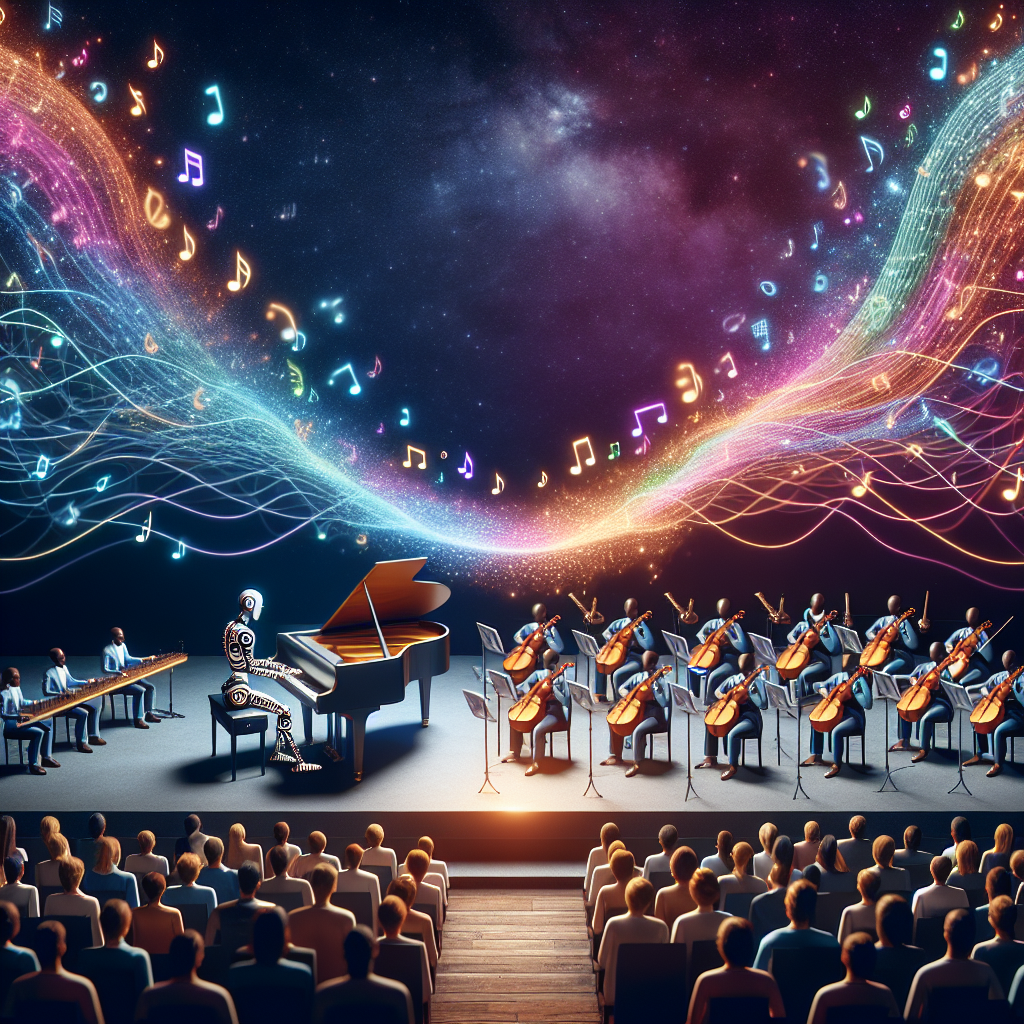
Artificial Intelligence (AI) has been rapidly transforming various industries, and the music industry is no exception. In recent years, AI has started to have a significant impact on live music performances, changing the way musicians create, produce, and perform music. From AI-generated music to AI-powered performances, the integration of AI technology in the music industry is revolutionizing the live music experience.
One of the most significant ways AI is impacting live music performances is through the creation of AI-generated music. AI algorithms are now able to analyze vast amounts of data to create original compositions and melodies. These algorithms can learn from existing music styles and patterns to generate new music that is indistinguishable from human-made music. This technology has enabled musicians to explore new creative possibilities and experiment with different sounds and styles.
AI is also being used to enhance the live music experience for both performers and audiences. For example, AI-powered music production tools can help musicians create high-quality music recordings and live performances. These tools can analyze audio signals in real-time to provide automatic adjustments to sound levels, effects, and mixing. This technology allows musicians to focus more on their performance and less on technical aspects, leading to a more seamless and engaging live music experience.
AI is also being used to personalize live music performances for audiences. AI algorithms can analyze audience data, such as listening preferences and demographic information, to create customized music experiences. For example, AI-powered music recommendation systems can suggest songs and playlists based on individual preferences, creating a unique and personalized music experience for each audience member.
Furthermore, AI is also being used to create immersive and interactive live music performances. AI-powered technologies, such as virtual reality (VR) and augmented reality (AR), can create virtual environments and interactive experiences for live music performances. This technology allows audiences to experience music in new and innovative ways, such as attending virtual concerts or interacting with virtual band members.
Despite the many benefits of AI in live music performances, there are also concerns and challenges associated with its integration. One of the major concerns is the potential loss of human creativity and authenticity in music production. Some critics argue that AI-generated music lacks the emotional depth and creative expression that human musicians bring to their performances. There is also concern that AI technology could replace human musicians and devalue the role of live music performers.
Additionally, there are ethical and legal implications of using AI in live music performances. For example, there are concerns about copyright issues and ownership of AI-generated music. Who owns the rights to music created by AI algorithms? How can musicians protect their intellectual property in an AI-driven music industry? These are important questions that need to be addressed as AI continues to revolutionize the music industry.
Despite these challenges, the integration of AI in live music performances is inevitable, and it has the potential to revolutionize the music industry in many positive ways. AI technology can enhance creativity, improve performance quality, and create unique and personalized music experiences for audiences. As AI continues to evolve and advance, we can expect to see even more innovative and transformative uses of AI in live music performances in the future.
FAQs:
Q: How is AI being used in live music performances?
A: AI is being used in live music performances in various ways, such as AI-generated music, AI-powered music production tools, personalized music experiences, and immersive and interactive experiences.
Q: What are the benefits of using AI in live music performances?
A: The benefits of using AI in live music performances include enhanced creativity, improved performance quality, personalized music experiences, and innovative and interactive experiences for audiences.
Q: What are the challenges of using AI in live music performances?
A: Some of the challenges of using AI in live music performances include concerns about the loss of human creativity and authenticity, ethical and legal implications, and the potential replacement of human musicians by AI technology.
Q: How can musicians protect their intellectual property in an AI-driven music industry?
A: Musicians can protect their intellectual property in an AI-driven music industry by understanding copyright laws, licensing agreements, and ownership rights, and by working with legal professionals to ensure their rights are protected.