
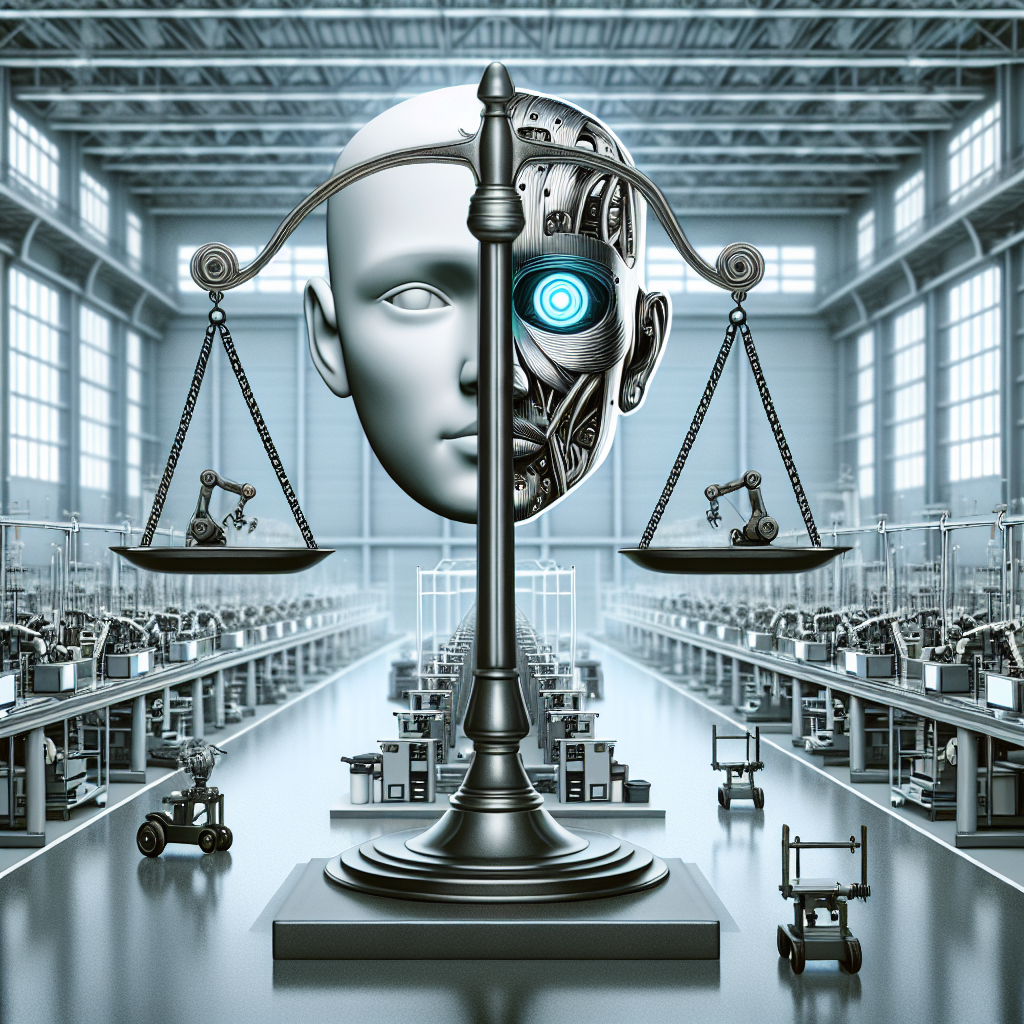
In recent years, artificial intelligence (AI) has played an increasingly prominent role in our lives. From virtual assistants like Siri and Alexa to self-driving cars and automated customer service chatbots, AI technologies have become ubiquitous. As AI continues to advance and become more integrated into various aspects of society, the need for ethical considerations in its development and deployment has become more pressing.
The Age of Automation
The age of automation is upon us, with machines taking over tasks that were once performed by humans. This shift has the potential to greatly improve efficiency and productivity in a wide range of industries, from manufacturing and healthcare to finance and transportation. However, as machines become increasingly intelligent and autonomous, concerns about the ethical implications of their actions have also grown.
One of the key concerns surrounding the rise of AI and automation is the potential loss of jobs. As machines become more capable of performing complex tasks, there is a fear that many traditional jobs will be rendered obsolete. This has led to calls for policies to ensure that workers are not left behind in the age of automation, such as retraining programs and universal basic income initiatives.
Another major concern is the impact of AI on privacy and data security. As AI technologies become more sophisticated, they have the ability to collect and analyze vast amounts of data about individuals. This raises questions about who owns and controls this data, and how it is used. There have been numerous high-profile data breaches and privacy scandals in recent years, highlighting the need for robust ethical guidelines to govern the use of AI technologies.
The Importance of Ethical AI
Ethical AI refers to the practice of developing and using AI technologies in a way that is fair, transparent, and accountable. It involves considering the ethical implications of AI systems at every stage of their development, from design and training to deployment and monitoring. Ethical AI is crucial for ensuring that AI technologies are used in a way that benefits society as a whole, rather than harm individuals or marginalized groups.
There are several key reasons why ethical AI is important in the age of automation:
1. Fairness: AI technologies have the potential to perpetuate and even exacerbate existing inequalities in society. For example, if AI algorithms are trained on biased data, they may produce biased outcomes, such as discriminating against certain groups of people. By incorporating ethical considerations into the design and deployment of AI systems, we can help ensure that they are fair and equitable for all individuals.
2. Transparency: AI systems are often complex and opaque, making it difficult to understand how they reach their decisions. This lack of transparency can lead to distrust and skepticism among users, as well as potential ethical concerns. By designing AI systems with transparency in mind, we can help build trust and accountability in the technology.
3. Accountability: As AI technologies become more autonomous, it becomes increasingly important to establish clear lines of accountability for their actions. Who is responsible when an AI system makes a mistake or causes harm? By incorporating ethical principles into the development of AI systems, we can help ensure that there are mechanisms in place to hold developers and users accountable for their actions.
4. Privacy: AI technologies have the potential to infringe on individuals’ privacy rights, particularly as they become more capable of collecting and analyzing personal data. Ethical AI frameworks can help ensure that individuals’ privacy rights are respected and that their data is used in a responsible and transparent manner.
5. Safety: As AI technologies become more autonomous, there is a growing concern about the potential risks they pose to society. From self-driving cars to autonomous weapons systems, the safety implications of AI technologies are vast. Ethical AI frameworks can help ensure that these technologies are developed and deployed in a way that minimizes risks to individuals and society as a whole.
FAQs
Q: What are some examples of ethical issues related to AI and automation?
A: Some examples of ethical issues related to AI and automation include bias in algorithms, privacy concerns, accountability for AI decisions, and the impact of AI on jobs and inequality.
Q: How can developers ensure that their AI systems are ethical?
A: Developers can ensure that their AI systems are ethical by incorporating principles of fairness, transparency, accountability, and privacy into their design and development processes. This may involve conducting ethical impact assessments, involving diverse stakeholders in the design process, and implementing mechanisms for oversight and accountability.
Q: What role do policymakers play in ensuring ethical AI?
A: Policymakers play a crucial role in ensuring ethical AI by enacting laws and regulations that govern the development and deployment of AI technologies. This may include establishing guidelines for data privacy and security, creating mechanisms for accountability, and promoting transparency in AI systems.
Q: How can individuals protect their privacy in the age of automation?
A: Individuals can protect their privacy in the age of automation by being aware of the data that AI systems collect about them, reading privacy policies and terms of service agreements, and using privacy-enhancing tools and technologies. It is also important to advocate for strong data privacy laws and regulations to protect individuals’ rights.
Q: What are some potential benefits of ethical AI?
A: Some potential benefits of ethical AI include improved fairness and equity in AI systems, increased transparency and accountability, enhanced privacy protections for individuals, and reduced risks to safety and security. Ethical AI can help ensure that AI technologies are used in a way that benefits society as a whole.
In conclusion, the importance of ethical AI in the age of automation cannot be overstated. As AI technologies become more integrated into various aspects of society, it is crucial to ensure that they are developed and deployed in a way that is fair, transparent, and accountable. By incorporating ethical considerations into the design and deployment of AI systems, we can help ensure that these technologies are used in a way that benefits individuals and society as a whole.