
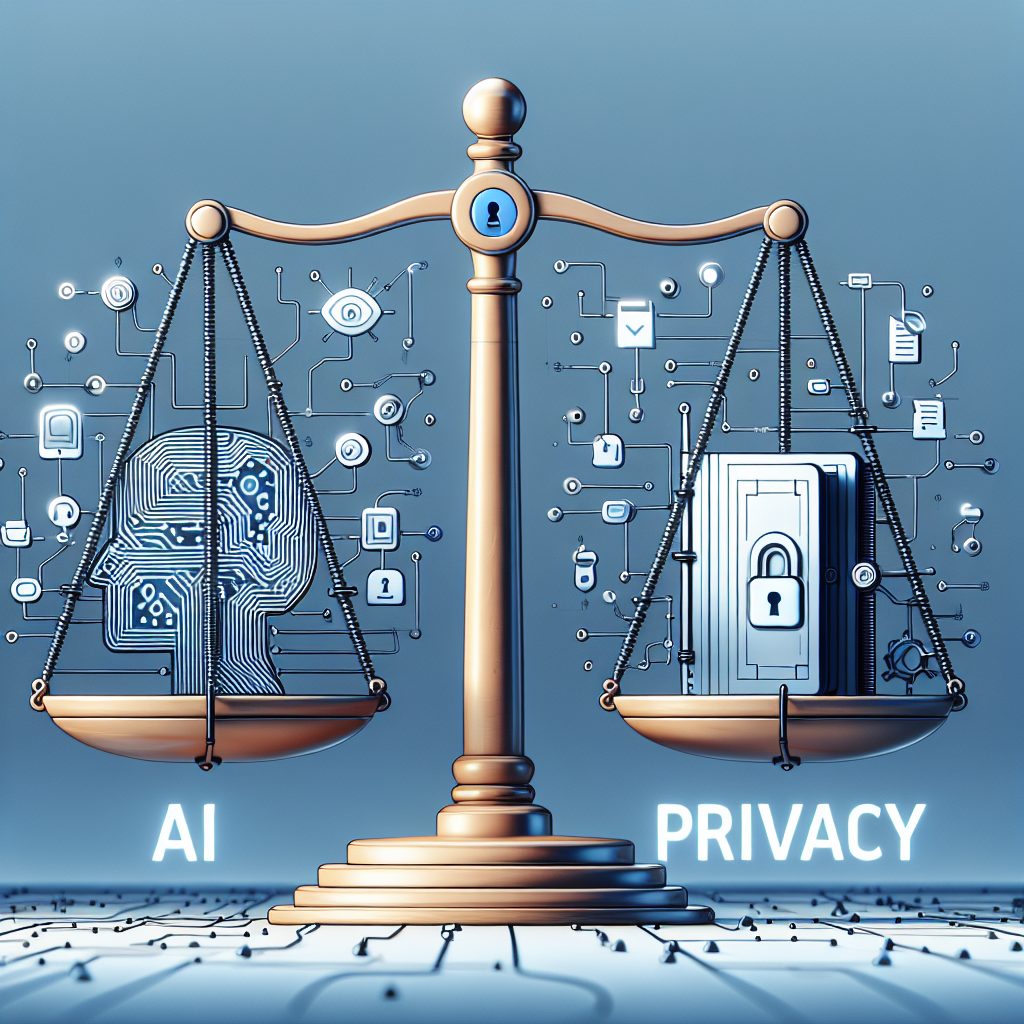
In today’s digital age, the intersection of artificial intelligence (AI) and privacy has become a hot topic of discussion. On one hand, AI has the potential to revolutionize industries, improve efficiency, and enhance user experiences. On the other hand, the use of AI raises concerns about privacy, data security, and potential misuse of personal information. Finding a delicate balance between harnessing the power of AI and protecting individuals’ privacy is crucial for the responsible development and deployment of AI technologies.
AI technologies, such as machine learning and deep learning algorithms, rely on vast amounts of data to train and improve their performance. This data can include personal information, such as names, addresses, and online behaviors. As AI systems become more sophisticated and integrated into various aspects of our lives, the risk of privacy breaches and data misuse also increases.
One of the key challenges in the intersection of AI and privacy is ensuring that individuals have control over their personal data and understand how it is being used. Transparency and accountability are essential principles that companies and organizations must uphold when collecting, storing, and processing data for AI applications. Individuals should be informed about the types of data being collected, the purposes for which it is being used, and the measures taken to protect their privacy.
Another important consideration is data minimization, which involves collecting only the necessary data for a specific purpose and limiting the retention period of data. By implementing data minimization practices, organizations can reduce the risk of data breaches and unauthorized access to personal information. Additionally, data anonymization and encryption can help protect individuals’ privacy by making it more difficult for third parties to identify and trace back to specific individuals.
In the context of AI, privacy-enhancing technologies (PETs) play a crucial role in safeguarding individuals’ privacy while still enabling the development of innovative AI applications. PETs include techniques such as differential privacy, federated learning, and homomorphic encryption, which allow data to be used for AI training and analysis without compromising individuals’ privacy rights. By incorporating PETs into AI systems, organizations can mitigate privacy risks and build trust with users.
Regulatory frameworks, such as the General Data Protection Regulation (GDPR) in the European Union and the California Consumer Privacy Act (CCPA) in the United States, also play a significant role in governing the intersection of AI and privacy. These regulations establish rules and guidelines for how organizations should collect, process, and protect personal data, including data used for AI purposes. Compliance with these regulations is essential for organizations to ensure that they are acting responsibly and ethically when using AI technologies.
In addition to regulatory compliance, ethical considerations are paramount in addressing the intersection of AI and privacy. Ethical AI principles, such as fairness, transparency, and accountability, should guide the design and implementation of AI systems to ensure that they respect individuals’ privacy rights and do not perpetuate biases or discrimination. Organizations should conduct privacy impact assessments and ethical reviews to evaluate the potential risks and implications of their AI applications on privacy and human rights.
Ultimately, achieving a delicate balance between AI and privacy requires a multi-faceted approach that involves technical, legal, and ethical considerations. By prioritizing privacy protection, data security, and ethical AI practices, organizations can leverage the power of AI to drive innovation and improve society while also safeguarding individuals’ privacy rights.
FAQs:
Q: How does AI impact privacy?
A: AI technologies rely on vast amounts of data to train and improve their performance, which can include personal information. This raises concerns about privacy breaches, data security, and potential misuse of personal data.
Q: What are privacy-enhancing technologies (PETs)?
A: PETs are techniques that safeguard individuals’ privacy while still enabling the development of innovative AI applications. Examples include differential privacy, federated learning, and homomorphic encryption.
Q: How can organizations protect individuals’ privacy in AI applications?
A: Organizations can implement data minimization practices, data anonymization, encryption, and transparency and accountability measures to protect individuals’ privacy in AI applications.
Q: What role do regulatory frameworks play in governing AI and privacy?
A: Regulatory frameworks, such as the GDPR and CCPA, establish rules and guidelines for how organizations should collect, process, and protect personal data used for AI purposes. Compliance with these regulations is essential for ensuring privacy rights are respected.