
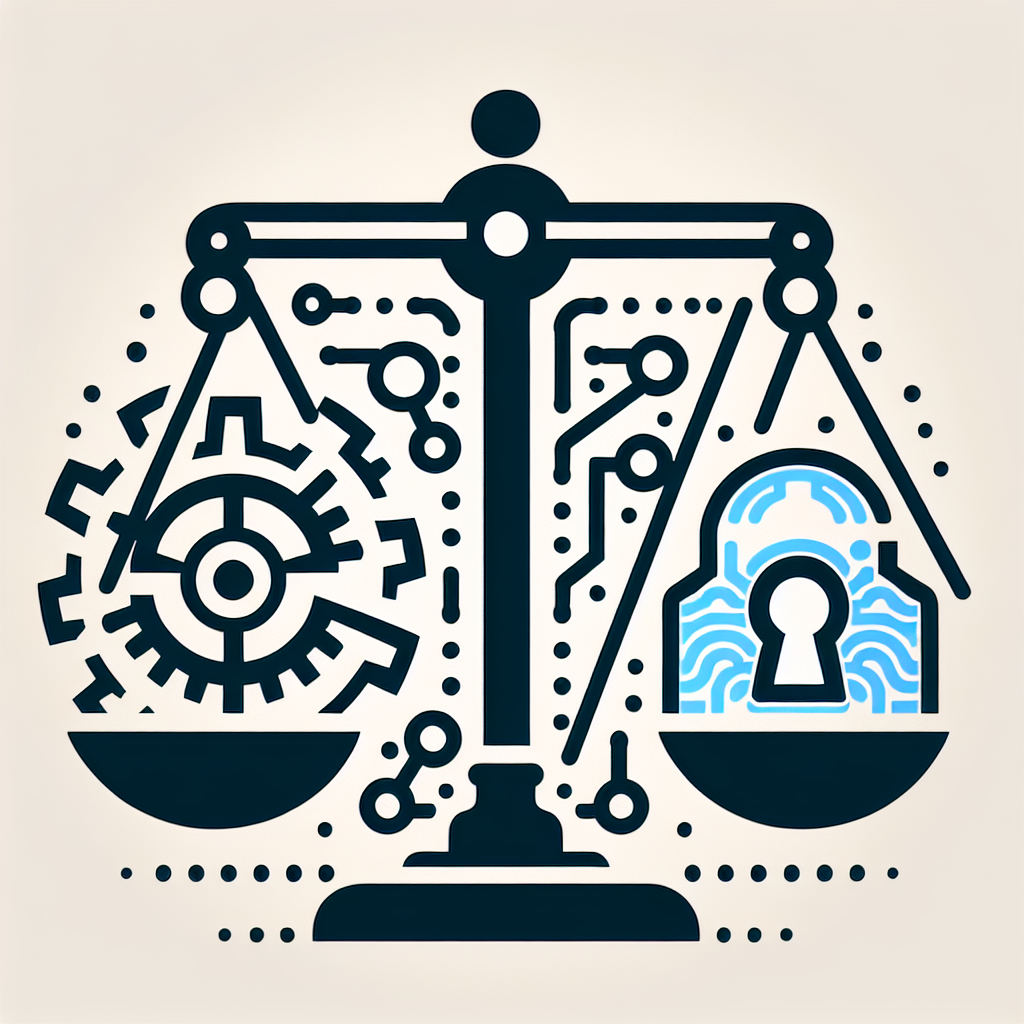
The Privacy Trade-offs of AI Technology
Artificial Intelligence (AI) technology has become an integral part of our daily lives, from virtual assistants like Siri and Alexa to recommendation systems on social media platforms and online shopping websites. While AI has brought about many benefits and advancements, it also raises concerns about privacy and data security. As AI systems collect and analyze vast amounts of personal data, there is a growing debate about the trade-offs between the convenience and efficiency of AI technology and the protection of individual privacy.
Privacy Risks of AI Technology
One of the main privacy risks associated with AI technology is the collection and storage of personal data. AI systems rely on data to learn and improve their performance, which often includes sensitive information about individuals, such as their location, browsing history, and preferences. This data can be used to create detailed profiles of users, which can be exploited for targeted advertising, surveillance, or other purposes without their consent.
Another privacy risk of AI technology is the potential for bias and discrimination. AI algorithms are trained on historical data, which can reflect existing biases and stereotypes. This can lead to discriminatory outcomes, such as in hiring decisions, loan approvals, or predictive policing. In addition, the opaque nature of AI systems makes it difficult to identify and rectify these biases, raising concerns about fairness and accountability.
Furthermore, the use of AI technology in surveillance and monitoring poses a threat to privacy rights. Facial recognition systems, for example, can track individuals in public spaces and identify them without their knowledge or consent. This can have serious implications for civil liberties and freedom of expression, as it enables mass surveillance and the monitoring of dissenting voices.
Privacy Trade-offs of AI Technology
The privacy trade-offs of AI technology are complex and multifaceted, as they involve balancing individual rights with the benefits of technological innovation. On one hand, AI systems have the potential to improve efficiency, productivity, and convenience in various areas, such as healthcare, transportation, and entertainment. For example, AI-powered medical devices can help diagnose diseases more accurately and quickly, while autonomous vehicles can reduce traffic accidents and improve road safety.
On the other hand, the widespread adoption of AI technology raises concerns about the erosion of privacy and autonomy. As AI systems become more pervasive and sophisticated, individuals may have limited control over their personal data and decision-making processes. This can lead to a loss of privacy, agency, and dignity, as their actions and choices are increasingly influenced by algorithms and automated systems.
To address these privacy trade-offs, policymakers, technologists, and society as a whole need to consider the following key principles:
Transparency: AI systems should be transparent and accountable, with clear explanations of how they work and how they use personal data. This can help build trust and confidence among users, regulators, and other stakeholders, while enabling them to make informed decisions about their privacy rights.
Consent: Individuals should have the right to consent to the collection, processing, and sharing of their personal data by AI systems. This requires clear, simple, and meaningful consent mechanisms that allow users to control their data and revoke consent at any time.
Data minimization: AI systems should only collect and use personal data that is necessary for their intended purposes, while minimizing the risk of privacy violations. This can help reduce the potential for data breaches, identity theft, and other privacy harms, while promoting data protection and privacy by design.
Security: AI systems should be secure and resilient against cyber threats, vulnerabilities, and attacks that can compromise the confidentiality, integrity, and availability of personal data. This requires robust encryption, authentication, and access controls to protect sensitive information from unauthorized access or disclosure.
Accountability: AI systems should be held accountable for their actions and decisions, including the impact on individual privacy rights. This can involve establishing clear responsibilities, liabilities, and redress mechanisms for any harm caused by AI systems, while promoting ethical and responsible AI development and deployment.
FAQs about the Privacy Trade-offs of AI Technology
Q: What are the main privacy risks of AI technology?
A: The main privacy risks of AI technology include the collection and storage of personal data, bias and discrimination, and surveillance and monitoring.
Q: How can individuals protect their privacy when using AI technology?
A: Individuals can protect their privacy when using AI technology by being aware of the data being collected, setting privacy preferences, and limiting the sharing of personal information.
Q: What are some best practices for safeguarding privacy in AI systems?
A: Some best practices for safeguarding privacy in AI systems include transparency, consent, data minimization, security, and accountability.
Q: How can policymakers address the privacy trade-offs of AI technology?
A: Policymakers can address the privacy trade-offs of AI technology by enacting regulations, standards, and guidelines that promote transparency, accountability, and data protection in AI systems.
Q: What are the ethical considerations of using AI technology in relation to privacy?
A: The ethical considerations of using AI technology in relation to privacy include respect for individual autonomy, dignity, and rights, as well as the promotion of fairness, transparency, and accountability in AI development and deployment.
In conclusion, the privacy trade-offs of AI technology are a critical issue that requires careful consideration and proactive measures to protect individual rights and freedoms. By promoting transparency, consent, data minimization, security, and accountability in AI systems, we can mitigate the risks of privacy violations and safeguard privacy in the age of artificial intelligence.