
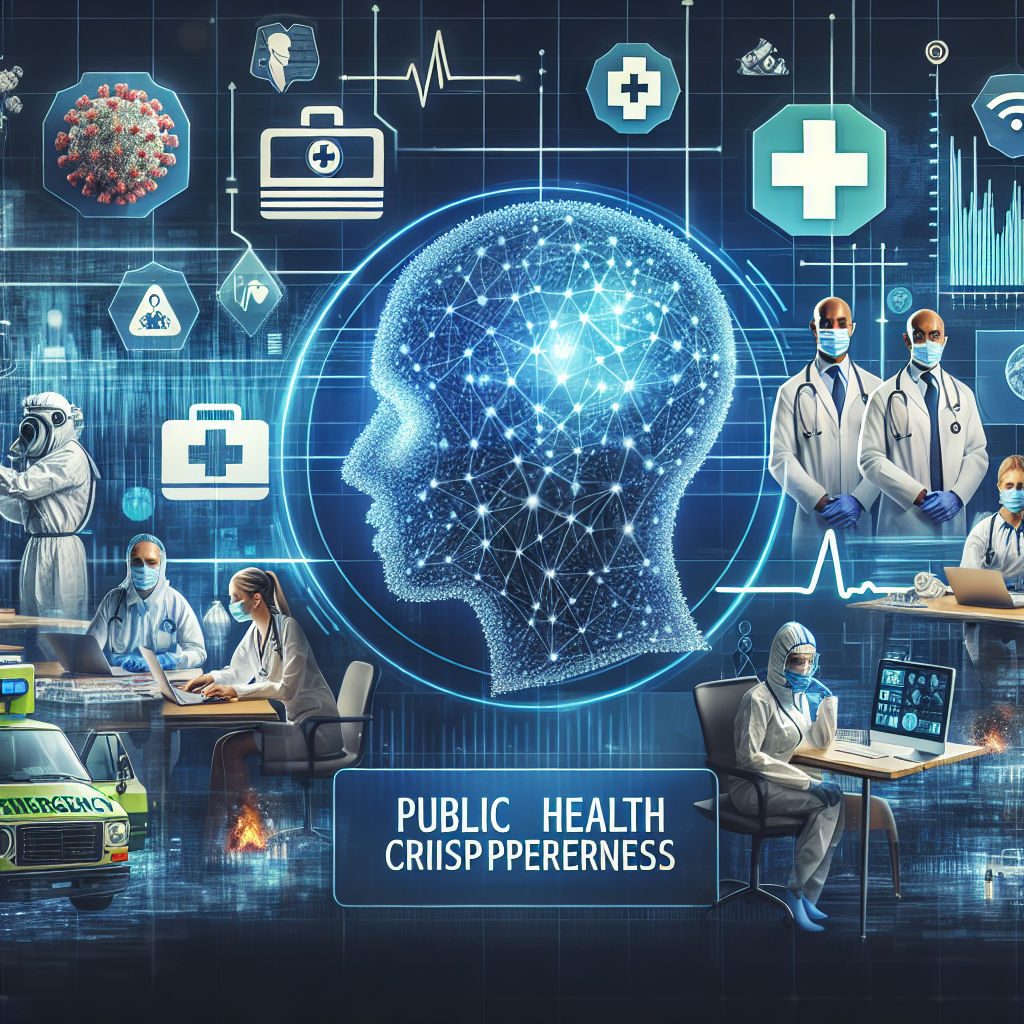
The Role of AI in Public Health Emergency Preparedness
In recent years, the world has seen an increase in public health emergencies, such as the COVID-19 pandemic, natural disasters, and disease outbreaks. These emergencies have highlighted the importance of being prepared and having the necessary tools and resources in place to respond effectively. Artificial Intelligence (AI) has emerged as a critical tool in public health emergency preparedness, helping to improve response times, accuracy, and efficiency in a variety of ways.
AI can play a crucial role in public health emergency preparedness by helping to identify and track outbreaks, predict the spread of diseases, and develop response strategies. AI tools can analyze vast amounts of data quickly and accurately, providing insights that can help public health officials make informed decisions and take timely action.
One of the key ways AI can be used in public health emergency preparedness is through the use of predictive modeling. By analyzing historical data on disease outbreaks, population movements, and other factors, AI can help predict where outbreaks are likely to occur and how they might spread. This information can help public health officials allocate resources more effectively and develop strategies to contain the spread of disease.
AI can also be used to track and monitor outbreaks in real-time. By analyzing data from sources such as social media, news reports, and healthcare systems, AI can help identify early warning signs of outbreaks and track their spread. This information can help public health officials respond quickly and effectively to contain the outbreak before it escalates.
AI can also be used to develop response strategies and optimize resource allocation. By analyzing data on factors such as population density, healthcare infrastructure, and transportation networks, AI can help public health officials develop targeted response strategies that are tailored to the specific needs of a given population. This can help ensure that resources are allocated where they are most needed and that response efforts are as effective as possible.
In addition to predictive modeling, real-time tracking, and response strategy development, AI can also be used to improve communication and coordination during public health emergencies. AI-powered chatbots and virtual assistants can help disseminate information to the public, answer frequently asked questions, and connect individuals with healthcare resources. This can help ensure that accurate information is available to the public and that individuals can access the care they need in a timely manner.
Overall, AI has the potential to revolutionize public health emergency preparedness by providing public health officials with the tools and resources they need to respond quickly and effectively to emergencies. By leveraging the power of AI, public health agencies can improve response times, accuracy, and efficiency, ultimately saving lives and reducing the impact of public health emergencies.
FAQs
Q: How does AI help in predicting disease outbreaks?
A: AI can analyze vast amounts of data on factors such as population movements, healthcare infrastructure, and environmental conditions to predict where outbreaks are likely to occur and how they might spread.
Q: How can AI help track and monitor outbreaks in real-time?
A: AI can analyze data from sources such as social media, news reports, and healthcare systems to identify early warning signs of outbreaks and track their spread in real-time.
Q: How does AI help in developing response strategies?
A: AI can analyze data on factors such as population density, healthcare infrastructure, and transportation networks to help public health officials develop targeted response strategies that are tailored to the specific needs of a given population.
Q: How can AI improve communication and coordination during public health emergencies?
A: AI-powered chatbots and virtual assistants can help disseminate information to the public, answer frequently asked questions, and connect individuals with healthcare resources, improving communication and coordination during emergencies.