
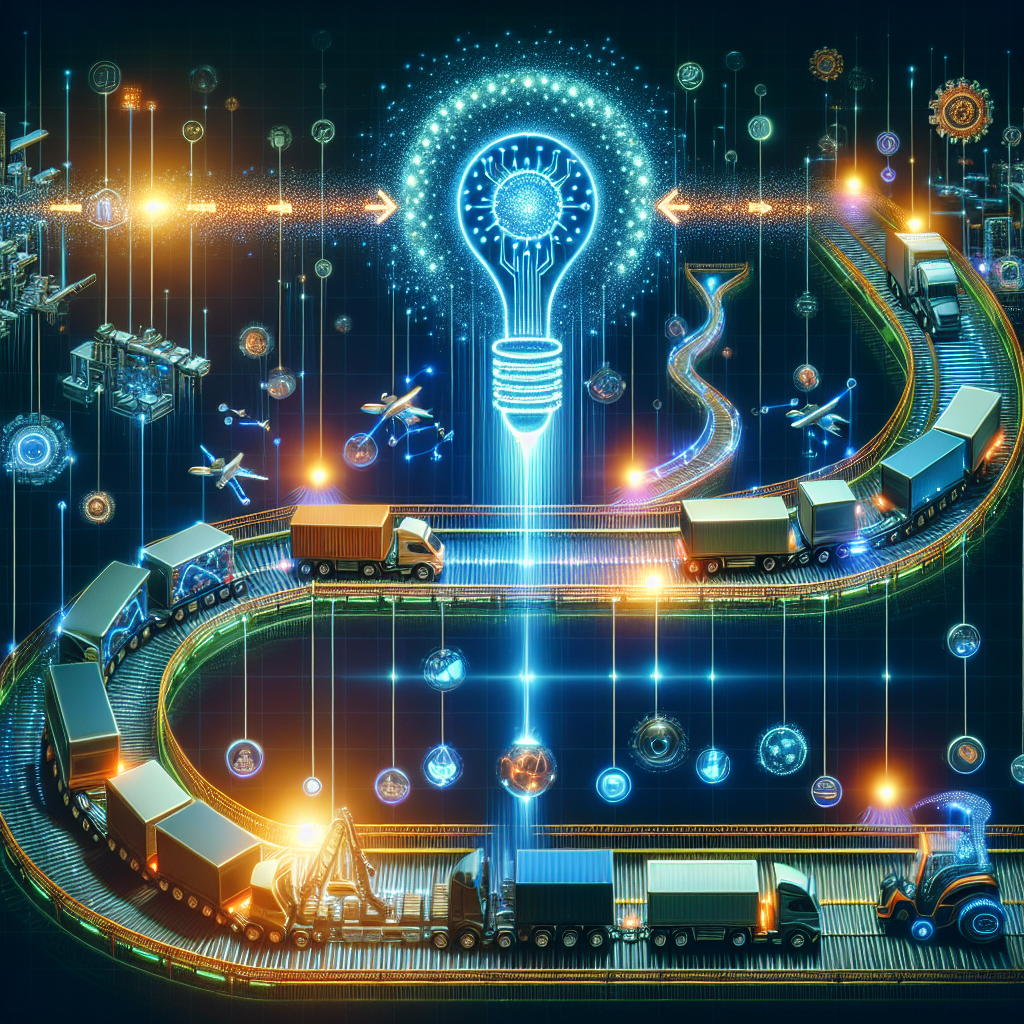
Transforming Supply Chain Visibility with Artificial Intelligence
In today’s fast-paced and highly competitive business environment, supply chain visibility is more important than ever. Companies need to be able to track and monitor their products as they move through the supply chain to ensure timely delivery, minimize disruptions, and optimize efficiency. However, traditional methods of supply chain management can be time-consuming and error-prone, leading to delays and inefficiencies.
Artificial intelligence (AI) is revolutionizing the way companies manage their supply chains, providing real-time visibility and insights that were previously impossible to achieve. By harnessing the power of AI, companies can track their products at every stage of the supply chain, identify potential disruptions before they occur, and make data-driven decisions to optimize their operations.
One of the key ways AI is transforming supply chain visibility is through predictive analytics. By analyzing historical data and identifying patterns and trends, AI can predict potential disruptions in the supply chain before they occur. For example, AI can analyze weather patterns to predict potential delays in shipping routes, or identify supplier issues that could lead to shortages or quality issues.
AI can also improve supply chain visibility by providing real-time tracking and monitoring of products as they move through the supply chain. By using sensors and other IoT devices, companies can track the location, temperature, and condition of their products in real-time, allowing them to quickly identify and address any issues that arise.
Another way AI is transforming supply chain visibility is by automating decision-making processes. AI can analyze vast amounts of data and provide recommendations for optimizing supply chain operations, such as identifying the most efficient shipping routes or optimizing inventory levels. By automating these processes, companies can reduce the risk of human error and make faster, more accurate decisions.
In addition to improving supply chain visibility, AI can also help companies improve collaboration and communication with their suppliers and partners. By providing a shared platform for sharing data and insights, AI can help companies and their partners work together more effectively to optimize supply chain operations and improve overall efficiency.
Overall, AI is revolutionizing supply chain visibility by providing real-time tracking and monitoring, predictive analytics, and automated decision-making processes. By harnessing the power of AI, companies can optimize their supply chain operations, reduce costs, and improve customer satisfaction.
FAQs:
Q: How can AI improve supply chain visibility?
A: AI can improve supply chain visibility by providing real-time tracking and monitoring of products, predictive analytics to identify potential disruptions, and automated decision-making processes to optimize operations.
Q: What are some examples of AI applications in supply chain visibility?
A: Some examples of AI applications in supply chain visibility include using sensors and IoT devices to track products in real-time, analyzing historical data to predict potential disruptions, and automating decision-making processes to optimize operations.
Q: How can companies get started with implementing AI in their supply chain?
A: Companies can start by identifying areas of their supply chain where AI can provide the most value, such as tracking and monitoring products, predicting disruptions, or optimizing operations. They can then work with AI vendors or consultants to develop and implement AI solutions tailored to their specific needs.
Q: What are the benefits of using AI in supply chain visibility?
A: Some benefits of using AI in supply chain visibility include improved tracking and monitoring of products, predictive analytics to identify potential disruptions, automated decision-making processes to optimize operations, and improved collaboration with suppliers and partners.
Q: Are there any challenges or risks associated with using AI in supply chain visibility?
A: Some challenges and risks associated with using AI in supply chain visibility include data privacy and security concerns, the need for specialized expertise to implement and maintain AI solutions, and the potential for AI to make incorrect or biased decisions. Companies should carefully consider these factors when implementing AI in their supply chain.
In conclusion, AI is revolutionizing supply chain visibility by providing real-time tracking and monitoring, predictive analytics, and automated decision-making processes. By harnessing the power of AI, companies can optimize their supply chain operations, reduce costs, and improve customer satisfaction. By embracing AI in their supply chain management processes, companies can stay ahead of the competition and drive success in today’s fast-paced business environment.