
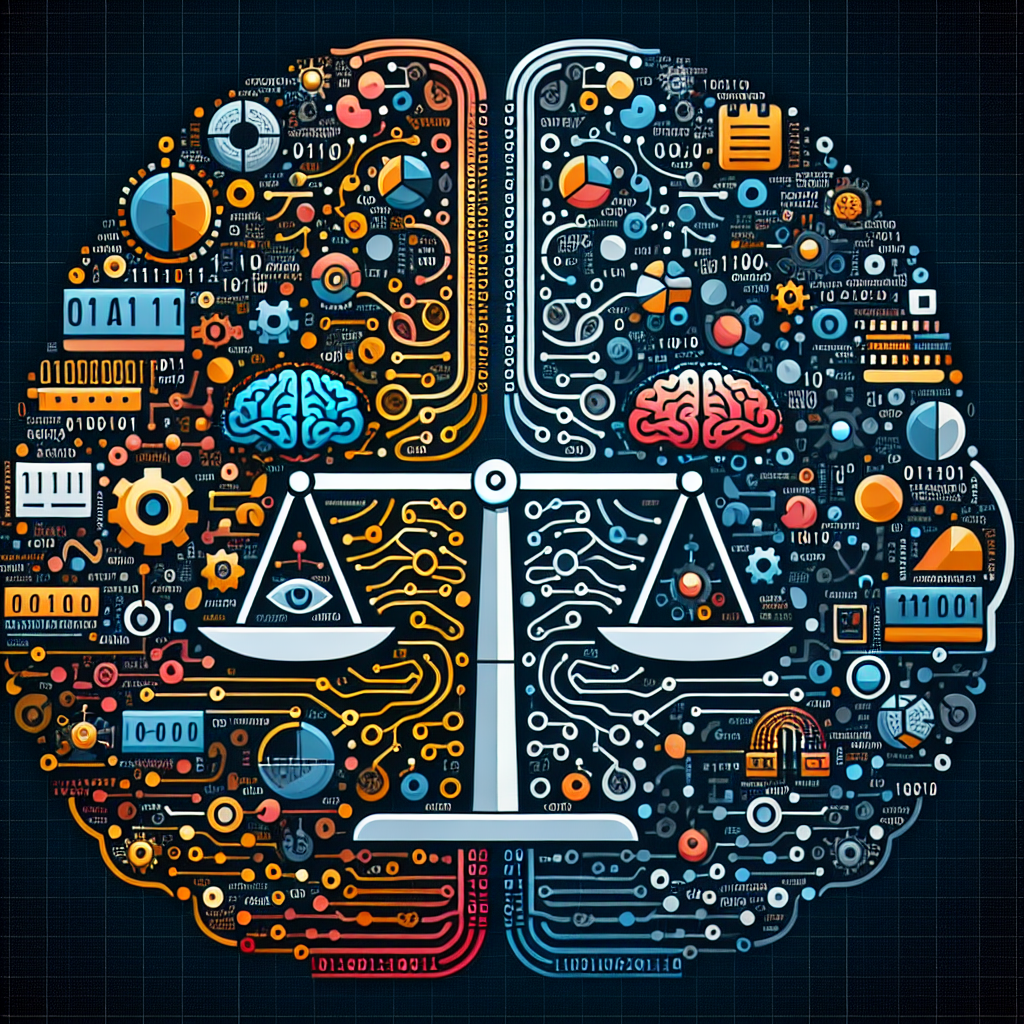
Artificial Intelligence (AI) and Machine Learning (ML) are two of the most talked-about technologies in the world today. Both have the potential to revolutionize industries, improve efficiency, and enhance our everyday lives. But what exactly is the difference between AI and ML? And how close are we to achieving human-level intelligence with these technologies?
AI vs Machine Learning: What’s the Difference?
AI is a broad field of computer science that aims to create machines that can simulate human intelligence. This includes tasks such as understanding natural language, recognizing images, and making decisions based on data. AI can be further divided into two categories: Narrow AI and General AI.
Narrow AI, also known as Weak AI, is designed to perform a specific task or set of tasks. Examples of Narrow AI include speech recognition systems, recommendation engines, and autonomous vehicles. These systems are highly specialized and are not capable of performing tasks beyond their designated scope.
On the other hand, General AI, also known as Strong AI, is the Holy Grail of AI research. General AI would have the ability to understand and learn any intellectual task that a human being can. This would require a machine to possess human-level intelligence, including the ability to reason, learn, and generalize knowledge across different domains.
Machine Learning, on the other hand, is a subset of AI that focuses on building systems that can learn from data. Instead of being explicitly programmed to perform a task, ML algorithms are trained on large datasets to recognize patterns and make predictions. The more data the algorithm is exposed to, the better it becomes at making accurate decisions.
In essence, AI is the overarching field that encompasses the study of intelligent agents, while Machine Learning is a specific approach within AI that focuses on learning from data.
The Quest for Human-Level Intelligence
The ultimate goal of AI research is to achieve human-level intelligence, also known as Artificial General Intelligence (AGI). AGI would be able to perform any intellectual task that a human can, including understanding natural language, recognizing patterns, and solving complex problems.
While we have made significant progress in the field of AI over the past few decades, achieving AGI remains a distant goal. Current AI systems are still far from possessing the level of reasoning and understanding that humans have. For example, while AI can easily recognize a cat in an image, it struggles to understand why the cat is sitting on the couch or what the cat might be feeling.
One of the main challenges in achieving AGI is the lack of common sense reasoning in AI systems. Humans are able to make intuitive leaps and understand context in a way that machines currently cannot. For example, a person can easily infer that a person with a broken leg will not be able to run a marathon, even if they have never seen a broken leg before. AI systems, on the other hand, would struggle to make this inference without explicit training data.
Another challenge in achieving AGI is the ability to transfer knowledge across different domains. Humans are able to apply knowledge learned in one domain to solve problems in another domain. For example, a person who is good at math might also excel in music, as both domains require pattern recognition and problem-solving skills. AI systems, however, are typically trained on specific datasets and struggle to generalize knowledge to new tasks.
Despite these challenges, researchers are making steady progress towards achieving AGI. Breakthroughs in deep learning, reinforcement learning, and natural language processing have brought us closer to building AI systems that can perform complex tasks with human-like accuracy.
FAQs
Q: What is the difference between AI and Machine Learning?
A: AI is the overarching field of computer science that aims to create machines that can simulate human intelligence. Machine Learning is a subset of AI that focuses on building systems that can learn from data.
Q: What is the difference between Narrow AI and General AI?
A: Narrow AI is designed to perform a specific task or set of tasks, while General AI would have the ability to understand and learn any intellectual task that a human being can.
Q: How close are we to achieving human-level intelligence with AI?
A: While we have made significant progress in the field of AI, achieving human-level intelligence remains a distant goal. Researchers are making steady progress towards this goal, but there are still many challenges to overcome.
Q: What are some of the challenges in achieving human-level intelligence with AI?
A: Some of the main challenges include the lack of common sense reasoning in AI systems, the ability to transfer knowledge across different domains, and the difficulty of understanding context and making intuitive leaps.
Q: What are some recent breakthroughs in AI research?
A: Recent breakthroughs in deep learning, reinforcement learning, and natural language processing have brought us closer to building AI systems that can perform complex tasks with human-like accuracy.