
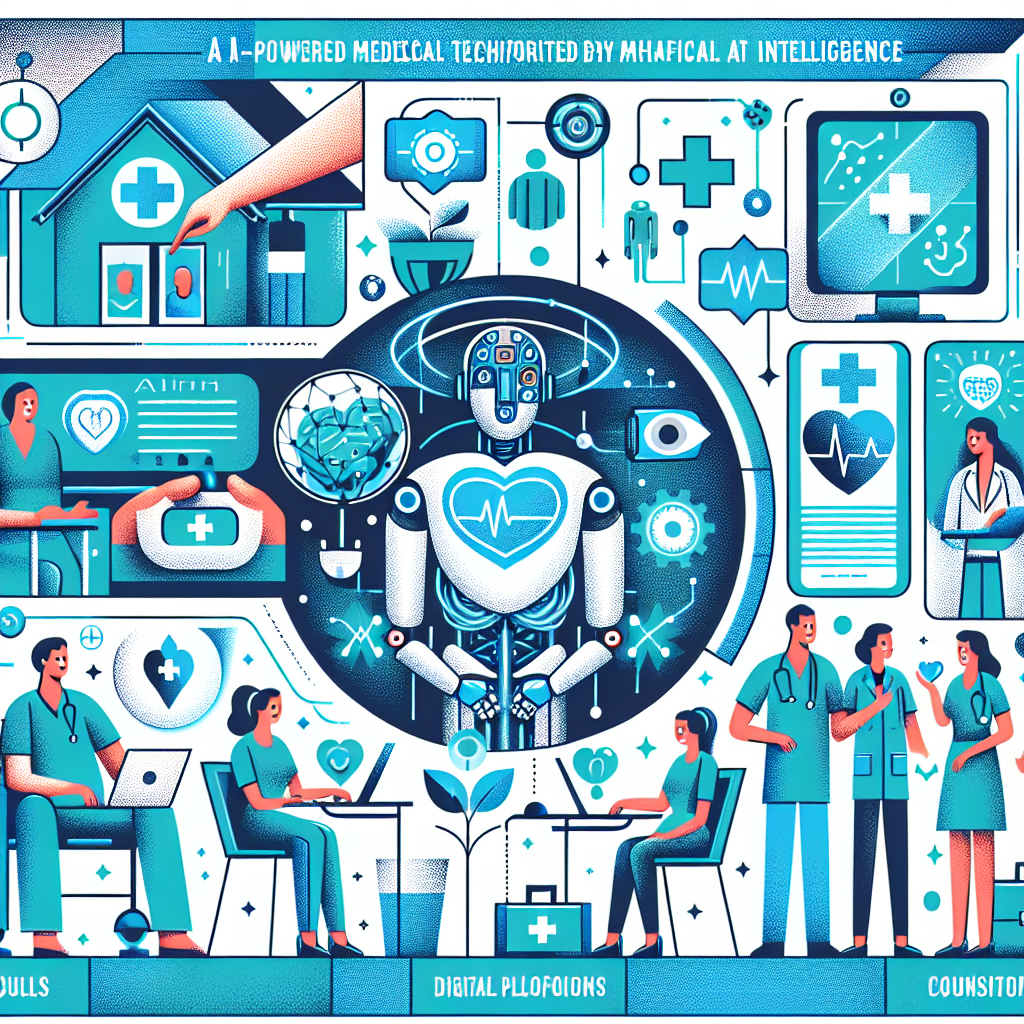
Artificial Intelligence (AI) is revolutionizing the healthcare industry by democratizing access to medical care. With the help of AI technology, healthcare providers are able to offer more efficient, accurate, and personalized care to patients, regardless of their location or socioeconomic status. This article will explore the impact of AI on the future of healthcare and how it is making quality medical care more accessible to people around the world.
AI in Healthcare
AI is transforming the healthcare industry in a variety of ways. One of the most significant ways is through the use of predictive analytics. By analyzing large amounts of data, AI algorithms can predict potential health issues in patients before they become serious. This allows healthcare providers to intervene early and prevent diseases from progressing, ultimately saving lives and reducing healthcare costs.
AI is also being used to improve medical imaging, such as X-rays and MRIs. AI algorithms can analyze images faster and more accurately than human radiologists, helping to detect diseases like cancer at earlier stages. This not only improves patient outcomes but also reduces the burden on healthcare systems by speeding up diagnosis and treatment.
Another area where AI is making a big impact is in personalized medicine. By analyzing a patient’s genetic makeup and medical history, AI can help healthcare providers tailor treatments to individual patients, ensuring they receive the most effective care possible. This is particularly important in the treatment of diseases like cancer, where one-size-fits-all treatments are often ineffective.
Democratizing Access to Medical Care
One of the key benefits of AI in healthcare is its ability to democratize access to medical care. In many parts of the world, access to quality healthcare is limited by factors like geography, cost, and a shortage of healthcare providers. AI technology can help bridge these gaps by providing virtual consultations, remote monitoring, and personalized treatment plans.
Virtual consultations allow patients to connect with healthcare providers through video calls, eliminating the need for in-person visits. This is particularly beneficial for patients in rural areas who may not have easy access to healthcare facilities. Virtual consultations also make it easier for patients with mobility issues or chronic conditions to receive care without having to leave their homes.
Remote monitoring is another way AI is democratizing access to medical care. By using wearable devices and sensors, healthcare providers can track patients’ vital signs and health metrics in real-time, allowing them to intervene quickly if a problem arises. This is especially useful for patients with chronic conditions like diabetes or heart disease, who need regular monitoring to manage their health.
AI is also helping to address the shortage of healthcare providers in many parts of the world. By automating routine tasks and providing decision support tools, AI can help healthcare providers work more efficiently and see more patients in less time. This is particularly important in countries with limited healthcare resources, where AI technology can help stretch existing resources and provide care to more people.
FAQs
Q: Is AI replacing human healthcare providers?
A: AI is not replacing human healthcare providers, but rather complementing their skills and improving the quality of care they can provide. AI technology is being used to automate routine tasks, analyze data more efficiently, and provide decision support tools to help healthcare providers make more informed decisions.
Q: Is AI secure and private?
A: Healthcare providers take patient privacy and data security very seriously when using AI technology. They adhere to strict regulations and guidelines to ensure that patient data is protected and used responsibly. Patients can also choose to opt-out of AI-driven healthcare services if they have concerns about privacy.
Q: Will AI make healthcare more expensive?
A: While there may be some upfront costs associated with implementing AI technology in healthcare, in the long run, it is expected to reduce healthcare costs by improving efficiency, preventing diseases, and reducing the need for costly interventions. AI can help healthcare providers work more efficiently and provide better care to patients, ultimately leading to cost savings for both patients and healthcare systems.
Q: How can patients access AI-driven healthcare services?
A: Patients can access AI-driven healthcare services through their healthcare providers, who may offer virtual consultations, remote monitoring, and personalized treatment plans using AI technology. Patients can also choose to use wearable devices and health apps that leverage AI algorithms to track their health metrics and receive personalized recommendations for improving their health.
In conclusion, AI technology is revolutionizing the healthcare industry by democratizing access to medical care. By leveraging AI algorithms and predictive analytics, healthcare providers can offer more efficient, accurate, and personalized care to patients around the world. Through virtual consultations, remote monitoring, and personalized treatment plans, AI is helping to bridge the gaps in healthcare access and improve patient outcomes. As AI continues to evolve, it is expected to play an even bigger role in transforming the future of healthcare and making quality medical care more accessible to all.