
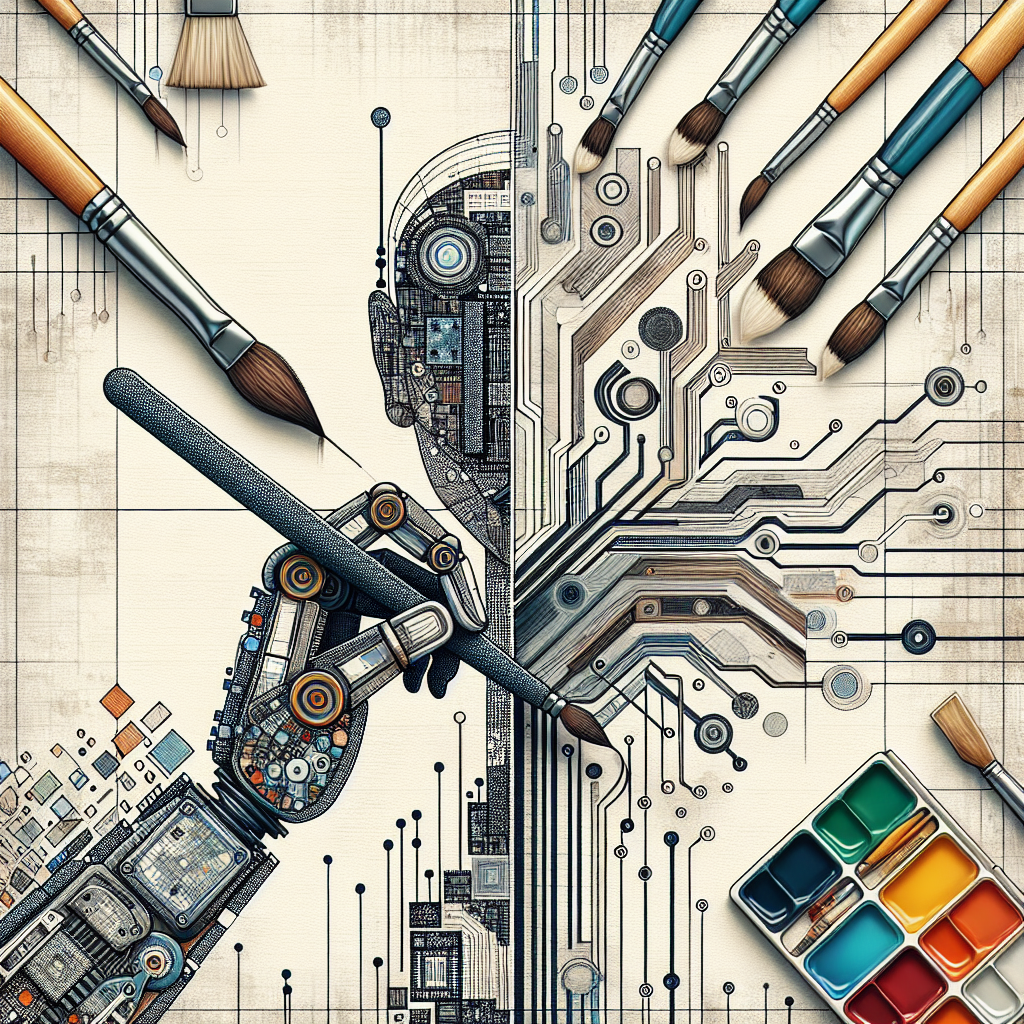
Artificial intelligence (AI) is revolutionizing the way we create and consume art. From generating music and visual art to writing poetry and designing graphics, AI is pushing the boundaries of creativity and challenging our perceptions of what it means to be an artist. The intersection of technology and art is a fascinating space where traditional notions of creativity are being redefined, and new possibilities are emerging.
AI and creativity have long been viewed as separate and distinct realms. While AI has been used for tasks such as data analysis and problem-solving, creativity was considered a uniquely human trait that could not be replicated by machines. However, recent advancements in AI technology have blurred the lines between human and machine creativity, leading to a new era of artistic exploration and innovation.
One of the most exciting applications of AI in the creative realm is the generation of music. AI algorithms can analyze vast amounts of musical data and learn patterns and structures that can be used to compose original pieces of music. Companies like Amper Music and Jukedeck are using AI to create personalized music tracks for videos, commercials, and other media projects. These AI-generated compositions are indistinguishable from those created by human musicians, showcasing the potential of AI to revolutionize the music industry.
Similarly, AI is being used to create visual art that challenges our notions of aesthetics and beauty. Artists like Mario Klingemann and Robbie Barrat are using AI algorithms to generate stunning visual artworks that push the boundaries of traditional art forms. These AI-generated artworks are not limited by human biases and conventions, allowing for the creation of truly unique and innovative pieces that would be impossible to achieve through traditional means.
In the realm of writing, AI is being used to generate poetry, stories, and even entire novels. Companies like OpenAI and Google’s DeepMind have developed AI algorithms that can write compelling and coherent pieces of text, blurring the lines between human and machine creativity. These AI-generated writings have been published in literary magazines and even won awards, demonstrating the potential of AI to revolutionize the world of literature and storytelling.
AI is also being used to create graphic designs and illustrations that push the boundaries of traditional design principles. Companies like Runway ML and Artomatix are using AI algorithms to generate stunning visual designs that challenge our perceptions of what is possible in the world of graphic design. These AI-generated designs are being used in advertisements, branding, and other design projects, showcasing the potential of AI to revolutionize the world of visual communication.
The intersection of AI and creativity is a rich and fertile ground for exploration and innovation. By combining the power of AI algorithms with the creative intuition of human artists, we are able to push the boundaries of traditional art forms and create truly unique and innovative works of art. The possibilities are endless, and the potential for collaboration between humans and machines is truly exciting.
FAQs:
Q: Can AI truly be creative?
A: While AI algorithms are not capable of experiencing emotions or having original ideas in the way that humans do, they are able to generate creative outputs by analyzing patterns and structures in data. AI can be creative in the sense that it can produce novel and innovative works of art that challenge traditional notions of creativity.
Q: Are AI-generated artworks considered art?
A: The question of whether AI-generated artworks can be considered art is a complex and debated topic. While some argue that art must be created by human artists to have meaning and value, others believe that AI-generated artworks can be considered art in their own right. Ultimately, the definition of art is subjective and open to interpretation.
Q: Will AI replace human artists?
A: While AI has the potential to revolutionize the way we create and consume art, it is unlikely to replace human artists entirely. AI algorithms lack the emotional depth and intuition that human artists bring to their work, making them unable to fully replicate the creative process. Instead, AI is more likely to serve as a tool for human artists to enhance their creative output and explore new possibilities.
Q: What are the ethical implications of AI in the creative realm?
A: The use of AI in the creative realm raises a number of ethical concerns, including issues of authorship, ownership, and originality. There are also concerns about the potential for bias and discrimination in AI-generated works, as well as the impact of AI on the job market for human artists. It is important for artists, technologists, and policymakers to consider these ethical implications and work together to ensure that AI is used responsibly and ethically in the creative realm.