
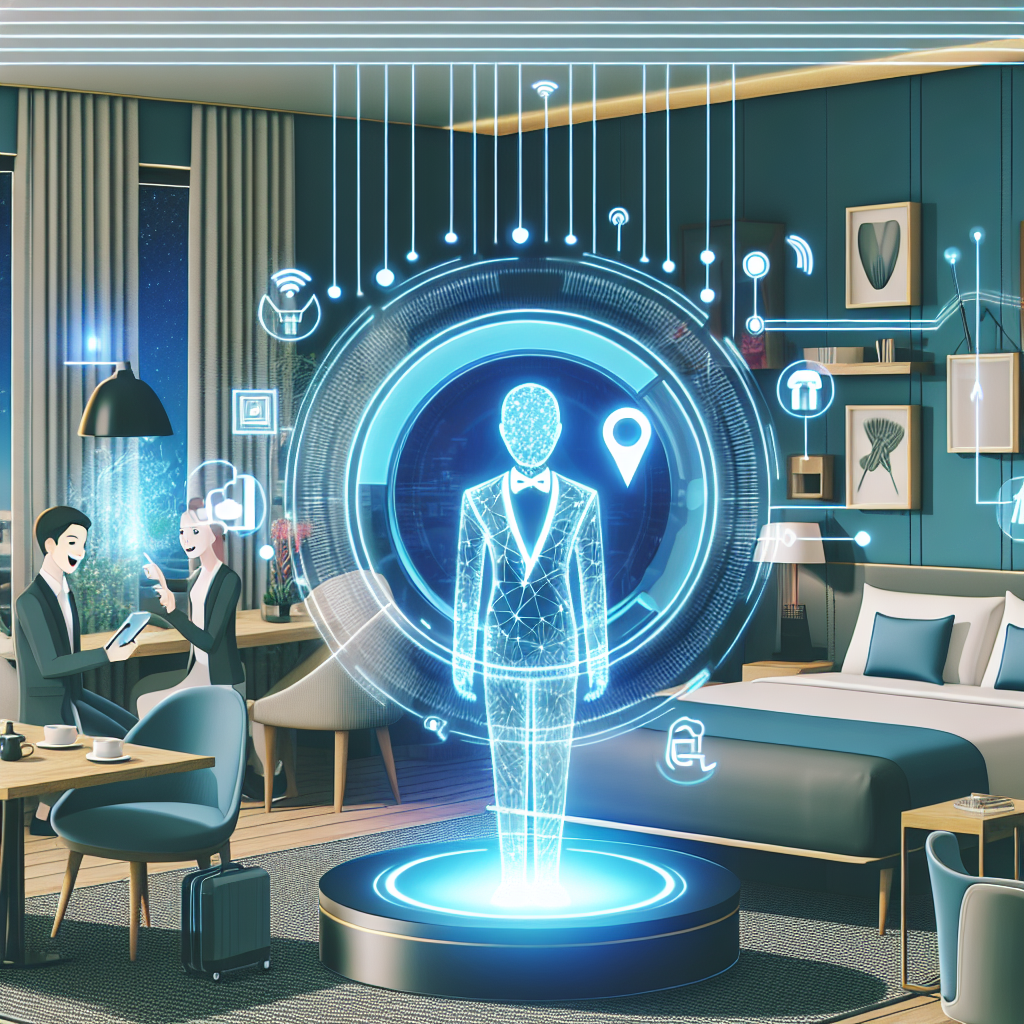
AI and Augmented Reality in Hotel Guest Experiences
The hospitality industry is constantly evolving, with new technologies being introduced to enhance the guest experience. Two of the most exciting developments in recent years are Artificial Intelligence (AI) and Augmented Reality (AR). These technologies are revolutionizing the way hotels interact with their guests, providing personalized and immersive experiences that were once only seen in science fiction movies.
AI in Hotel Guest Experiences
AI is being used in hotels to streamline operations, improve guest services, and enhance overall guest satisfaction. One of the most common applications of AI in the hospitality industry is chatbots. These AI-powered virtual assistants can provide guests with information about the hotel, answer common questions, and even make reservations or bookings. Chatbots are available 24/7, providing guests with instant access to assistance whenever they need it.
Another application of AI in hotels is personalized recommendations. By analyzing guest data and preferences, AI algorithms can suggest personalized offers, promotions, and activities that are tailored to each guest’s individual needs. This not only enhances the guest experience but also increases revenue for the hotel by encouraging guests to spend more during their stay.
AI is also being used to improve operational efficiency in hotels. By analyzing data on room occupancy, guest preferences, and staff availability, AI algorithms can optimize staffing levels, room pricing, and other aspects of hotel operations. This helps hotels to reduce costs, increase revenue, and provide a better overall experience for guests.
Augmented Reality in Hotel Guest Experiences
Augmented Reality is another technology that is transforming the hotel industry. AR overlays digital information onto the real world, providing guests with immersive and interactive experiences that enhance their stay. One of the most common applications of AR in hotels is virtual tours. Guests can use their smartphones or AR glasses to explore the hotel, view different room types, and even see 3D models of amenities and facilities before they arrive. This helps guests to make more informed decisions about their stay and ensures that they have a better overall experience.
AR is also being used to enhance in-room experiences. Guests can use AR apps to access information about the hotel, order room service, control in-room amenities, and even interact with virtual concierge services. This provides guests with a more convenient and personalized experience, as they can access the information and services they need without having to pick up the phone or leave their room.
Another exciting application of AR in hotels is interactive maps and guides. Guests can use AR apps to navigate the hotel, find nearby attractions, and access information about local restaurants, shops, and events. This helps guests to make the most of their stay and ensures that they have a memorable experience while they are in town.
FAQs
Q: How can AI and AR enhance the guest experience in hotels?
A: AI and AR can enhance the guest experience in hotels by providing personalized recommendations, virtual tours, interactive maps, and in-room services that make guests feel more comfortable and informed during their stay.
Q: Are AI-powered chatbots available in all hotels?
A: While not all hotels have implemented AI-powered chatbots, many are beginning to adopt this technology to provide guests with instant access to information and assistance.
Q: How can hotels ensure that guest data is kept secure when using AI and AR technologies?
A: Hotels should implement robust data security measures, such as encryption, secure networks, and access controls, to ensure that guest data is protected when using AI and AR technologies.
Q: What are some of the challenges of implementing AI and AR in hotels?
A: Some of the challenges of implementing AI and AR in hotels include the cost of technology, training staff on how to use the technology, and ensuring that guests are comfortable with using these new tools during their stay.
In conclusion, AI and AR are revolutionizing the way hotels interact with their guests, providing personalized and immersive experiences that enhance the overall guest experience. By leveraging these technologies, hotels can streamline operations, improve guest services, and increase guest satisfaction, ultimately leading to higher revenue and a more loyal customer base. As AI and AR continue to evolve, we can expect to see even more exciting developments in the hospitality industry that will further enhance the guest experience and set new standards for luxury and convenience in hotels around the world.