
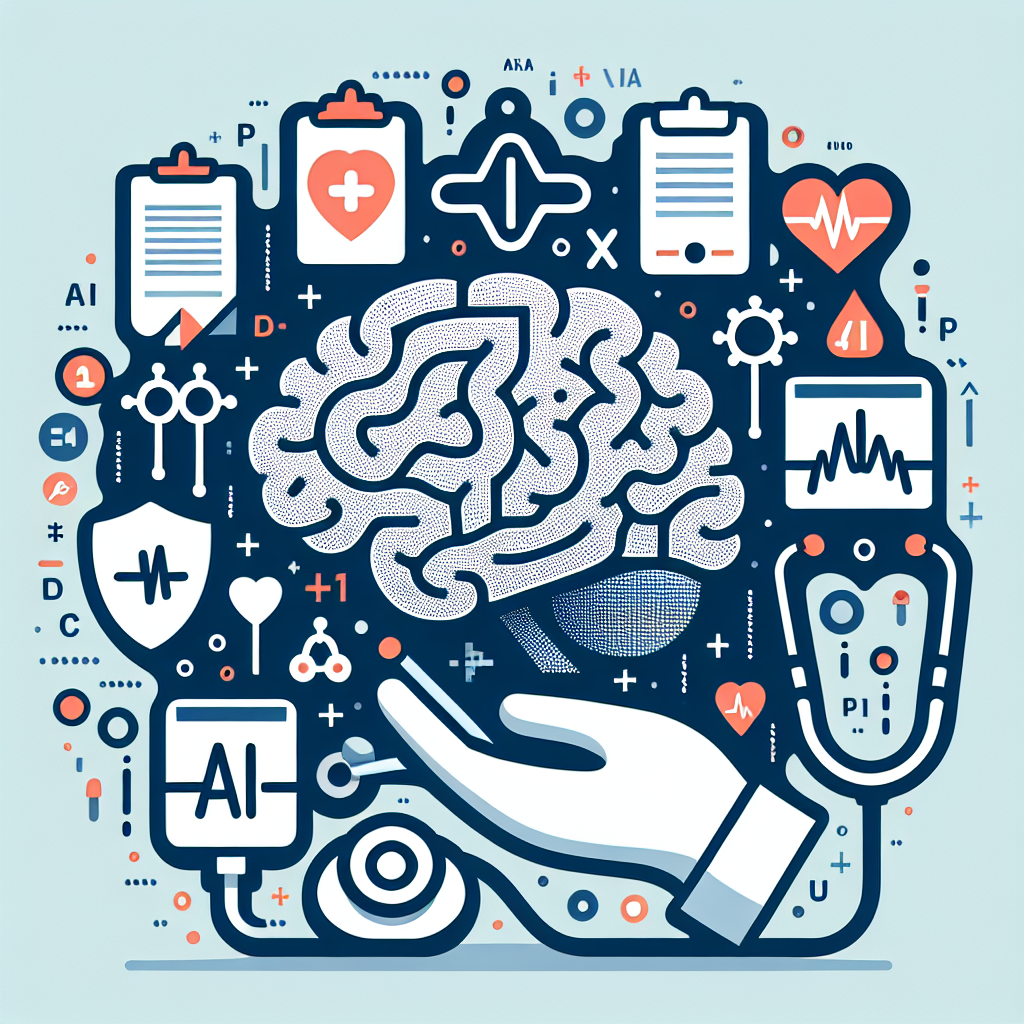
Generative AI: A Key Player in Healthcare Decision-Making
Artificial Intelligence (AI) has revolutionized the healthcare industry in recent years, with its ability to process vast amounts of data and provide valuable insights for decision-making. Generative AI, a subset of AI, is playing a crucial role in healthcare by creating new data and content, such as images, text, and even music. This technology is particularly useful in medical imaging, drug discovery, and personalized medicine, among other areas. In this article, we will explore the role of generative AI in healthcare decision-making and how it is shaping the future of medicine.
Generative AI in Medical Imaging
Medical imaging plays a critical role in diagnosing and treating various medical conditions. Generative AI can enhance medical imaging by generating high-quality images, enhancing image resolution, and reducing noise. This technology can also help healthcare professionals detect abnormalities and make more accurate diagnoses. For example, generative AI can be used to generate synthetic MRI images, which can help improve the training of medical professionals and enhance the accuracy of diagnoses.
Generative AI in Drug Discovery
Drug discovery is a complex and time-consuming process that involves identifying and developing new medications. Generative AI is revolutionizing drug discovery by accelerating the process of identifying potential drug candidates. This technology can generate molecular structures and predict the properties of potential drugs, which can help pharmaceutical companies identify promising candidates more quickly and cost-effectively. Generative AI can also be used to design new molecules with specific characteristics, such as improved efficacy and reduced side effects.
Generative AI in Personalized Medicine
Personalized medicine aims to provide tailored treatments to individual patients based on their genetic makeup, lifestyle, and other factors. Generative AI is playing a key role in personalized medicine by analyzing large datasets and generating personalized treatment plans. This technology can help healthcare professionals predict how patients will respond to specific treatments, identify the most effective interventions, and optimize treatment regimens. Generative AI can also be used to develop personalized medical devices and implants that are customized to meet the unique needs of individual patients.
Generative AI in Healthcare Decision-Making
Generative AI is transforming healthcare decision-making by providing valuable insights and recommendations to healthcare professionals. This technology can analyze complex data sets, generate new data and content, and assist in making evidence-based decisions. Generative AI can help healthcare professionals identify patterns and trends in data, predict outcomes, and optimize treatment plans. This technology can also be used to generate personalized reports and recommendations for patients, improving communication and patient engagement.
FAQs
Q: What is generative AI?
A: Generative AI is a subset of artificial intelligence that focuses on creating new data and content, such as images, text, and music. This technology is based on neural networks that can generate data based on patterns and examples in existing data sets.
Q: How is generative AI used in healthcare?
A: Generative AI is used in healthcare to enhance medical imaging, accelerate drug discovery, and personalize medicine. This technology can generate high-quality images, predict drug properties, and develop personalized treatment plans for individual patients.
Q: What are the benefits of using generative AI in healthcare decision-making?
A: Generative AI can help healthcare professionals analyze complex data sets, predict outcomes, and optimize treatment plans. This technology can provide valuable insights and recommendations to improve decision-making and patient outcomes.
In conclusion, generative AI is a key player in healthcare decision-making, providing valuable insights and recommendations to healthcare professionals. This technology is transforming the healthcare industry by enhancing medical imaging, accelerating drug discovery, and personalizing medicine. As generative AI continues to evolve, it will play an increasingly important role in shaping the future of medicine and improving patient care.