
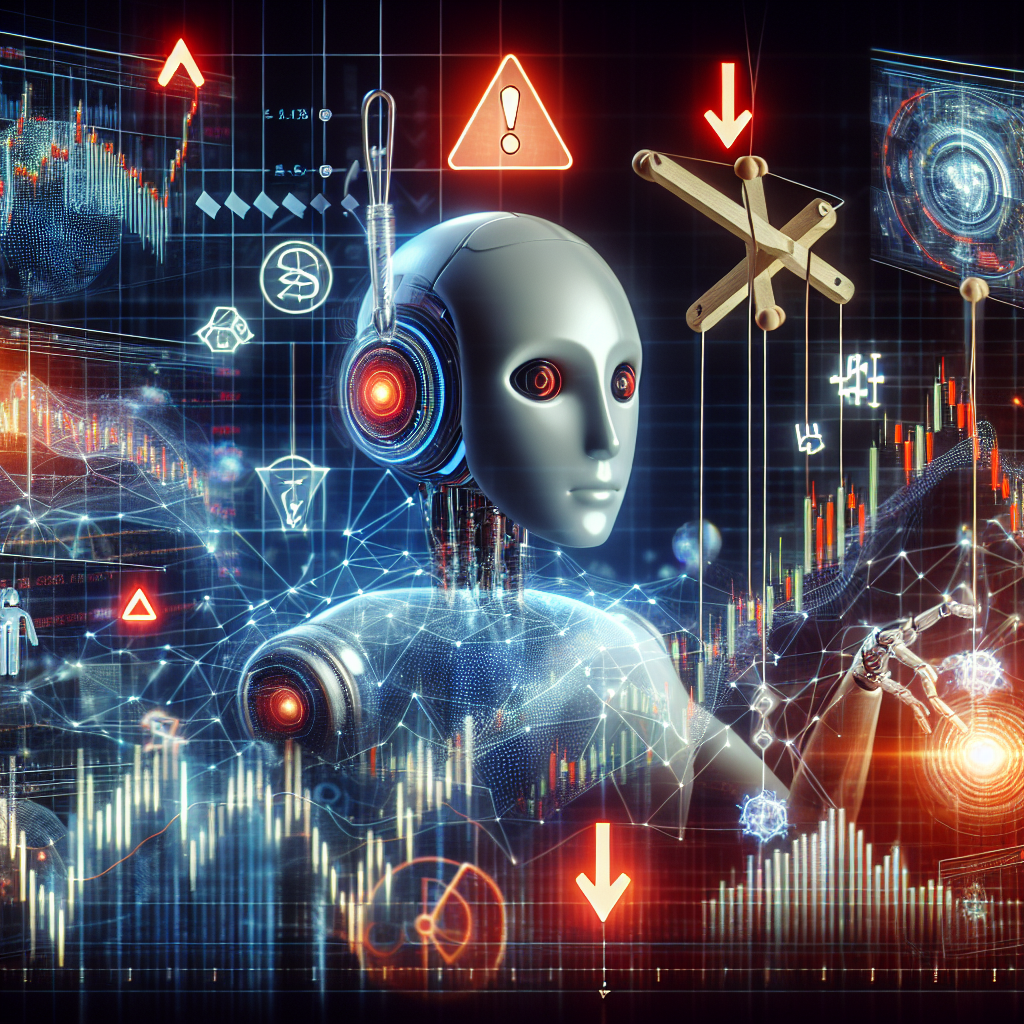
Artificial Intelligence (AI) has revolutionized many industries, including the financial markets. Algorithmic trading, also known as automated trading or algo trading, uses complex algorithms and AI technology to make trading decisions at high speeds. While algorithmic trading can provide many benefits, such as increased efficiency and reduced costs, there are also risks associated with this technology, including market manipulation.
Risks of Algorithmic Trading:
1. Market Manipulation: One of the biggest risks of algorithmic trading is market manipulation. High-frequency trading (HFT) algorithms can execute trades in milliseconds, allowing traders to take advantage of small price discrepancies in the market. This can lead to market manipulation, where traders use algorithms to artificially inflate or deflate the price of a security for their own gain.
2. Flash Crashes: Another risk of algorithmic trading is the potential for flash crashes. These are sudden, severe drops in the price of a security that can happen in a matter of minutes or even seconds. Flash crashes can be caused by a number of factors, including algorithmic trading strategies gone wrong or a lack of liquidity in the market.
3. Systemic Risk: Algorithmic trading can also pose systemic risks to the financial system. If a large number of algorithmic trading systems all follow the same strategy or make similar decisions at the same time, it can create a domino effect that destabilizes the market. This can lead to a cascading series of trades that exacerbate market volatility and potentially trigger a financial crisis.
4. Lack of Transparency: Another risk of algorithmic trading is the lack of transparency in the market. Because algorithms can execute trades at such high speeds, it can be difficult for regulators to monitor and regulate the activities of algorithmic traders. This lack of transparency can make it easier for traders to engage in manipulative practices without being caught.
5. Overreliance on Technology: Finally, there is a risk of overreliance on technology in algorithmic trading. Traders may become too dependent on algorithms to make trading decisions, leading to a loss of human judgment and oversight. This can result in trading strategies that are overly complex or risky, leading to potential losses for investors.
FAQs:
Q: How common is algorithmic trading in the financial markets?
A: Algorithmic trading is becoming increasingly common in the financial markets. According to a report by the Tabb Group, algorithmic trading accounted for 60% of all stock trading in the US in 2019.
Q: How do algorithms work in algorithmic trading?
A: Algorithms in algorithmic trading use mathematical models and historical data to make trading decisions. These algorithms can analyze market trends, news events, and other factors to determine when to buy or sell a security.
Q: What are some examples of algorithmic trading strategies?
A: Some common algorithmic trading strategies include trend following, mean reversion, and arbitrage. Trend following strategies aim to profit from long-term market trends, while mean reversion strategies aim to profit from short-term price fluctuations. Arbitrage strategies involve buying and selling the same security in different markets to profit from price discrepancies.
Q: How can investors protect themselves from the risks of algorithmic trading?
A: Investors can protect themselves from the risks of algorithmic trading by diversifying their portfolios, setting stop-loss orders, and conducting thorough research before investing in algorithmic trading strategies. Additionally, investors should be aware of the potential risks and limitations of algorithmic trading and consult with a financial advisor if needed.
In conclusion, while algorithmic trading can provide many benefits to investors, including increased efficiency and reduced costs, there are also risks associated with this technology. Market manipulation, flash crashes, systemic risk, lack of transparency, and overreliance on technology are all potential risks of algorithmic trading that investors should be aware of. By understanding these risks and taking appropriate precautions, investors can protect themselves from the potential downsides of algorithmic trading in the financial markets.