
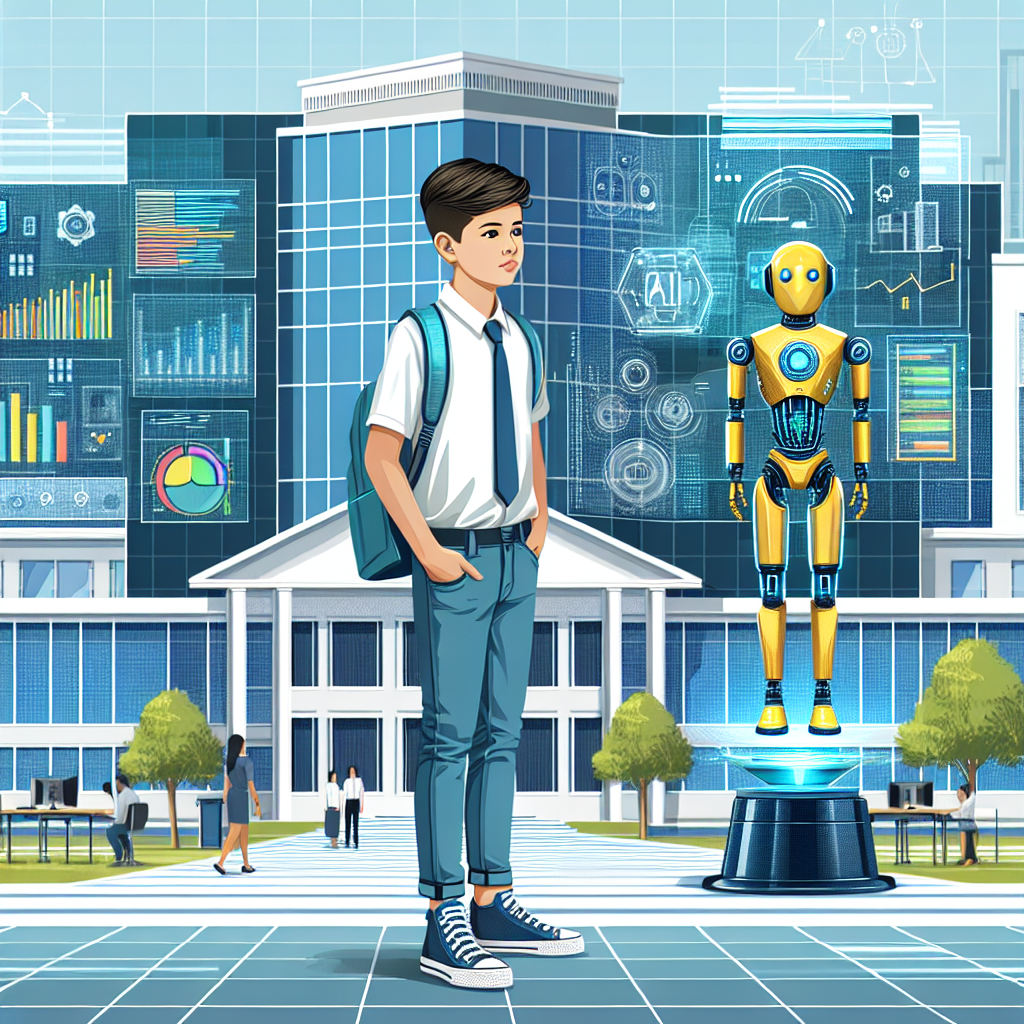
Artificial Intelligence (AI) has become an increasingly important tool in education, promising to revolutionize the way students learn and teachers instruct. One of the key benefits of AI in education is student empowerment, which refers to giving students the tools and resources they need to take control of their own learning and achieve academic success. In this article, we will explore the ways in which AI is empowering students in education and the potential impact it can have on the future of learning.
AI and Student Empowerment
AI technology has the potential to personalize the learning experience for students, allowing them to learn at their own pace and in a way that best suits their individual learning styles. By analyzing data on student performance and behavior, AI systems can provide personalized recommendations for learning materials and activities that are tailored to each student’s needs. This can help students stay engaged and motivated, leading to improved academic outcomes.
AI can also provide students with immediate feedback on their work, allowing them to identify areas where they need to improve and take steps to address them. This real-time feedback can help students make faster progress and build confidence in their abilities. Additionally, AI-powered tutoring systems can provide students with extra support outside of the classroom, offering personalized assistance on specific topics or assignments.
Another way in which AI is empowering students in education is through the use of virtual reality (VR) and augmented reality (AR) technologies. These technologies can create immersive learning experiences that engage students in ways that traditional teaching methods cannot. For example, students can take virtual field trips to historical sites, explore the human body in 3D, or participate in interactive simulations that help them understand complex concepts.
AI can also help students develop important 21st-century skills such as critical thinking, problem-solving, and creativity. By providing students with access to cutting-edge technologies and tools, AI can help them develop the skills they need to succeed in a rapidly changing world. This can give students a competitive edge in the job market and prepare them for the challenges of the future.
In addition to enhancing the learning experience, AI can also help teachers better understand their students and tailor their instruction to meet their needs. By analyzing data on student performance and behavior, AI systems can help teachers identify struggling students early on and provide them with targeted interventions. This can help prevent students from falling behind and ensure that all students have the support they need to succeed.
FAQs
Q: How can AI help students with disabilities?
A: AI technology can help students with disabilities by providing them with personalized support and accommodations. For example, AI-powered text-to-speech software can help students with dyslexia or visual impairments access written materials, while AI-powered translation tools can help students who are learning English as a second language. Additionally, AI-powered assistive technologies can help students with physical disabilities navigate their learning environments and access educational materials.
Q: Is AI replacing teachers in the classroom?
A: While AI technology has the potential to enhance the learning experience for students, it is not intended to replace teachers. Teachers play a critical role in education by providing students with guidance, support, and mentorship. AI technology can complement the work of teachers by providing them with valuable insights into student performance and behavior, allowing them to better tailor their instruction to meet the needs of their students.
Q: How can schools ensure that AI technology is used ethically and responsibly?
A: Schools can ensure that AI technology is used ethically and responsibly by establishing clear guidelines and policies for its use. This includes ensuring that data privacy and security are protected, that AI systems are transparent and accountable, and that decisions made by AI systems are fair and unbiased. Schools should also provide training and support for teachers and students to help them understand how AI technology works and how to use it effectively.
In conclusion, AI technology has the potential to empower students in education by providing them with personalized learning experiences, immediate feedback, and access to cutting-edge technologies. By harnessing the power of AI, schools can help students develop important 21st-century skills and prepare them for the challenges of the future. As AI continues to evolve, it is important for schools to ensure that it is used ethically and responsibly to maximize its benefits for students.