
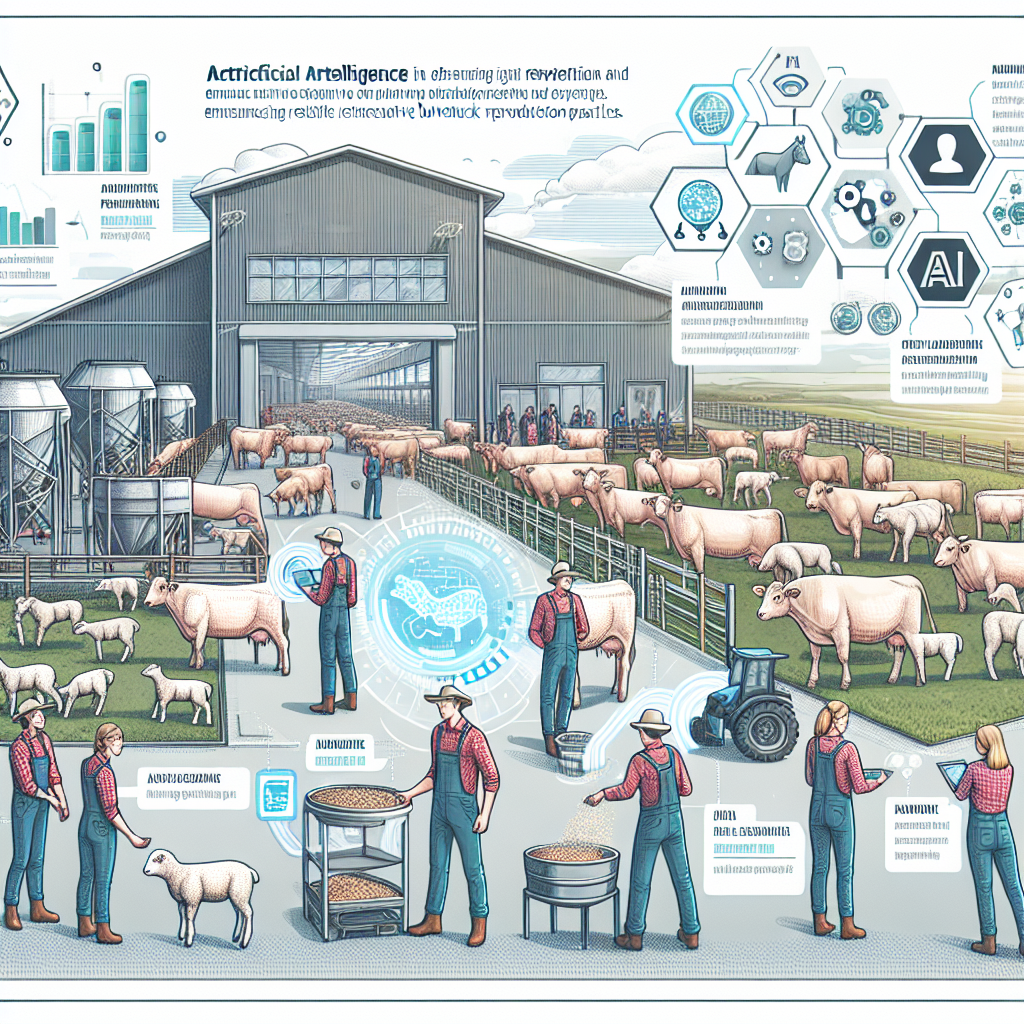
Artificial Intelligence (AI) is revolutionizing various industries, and livestock reproduction practices are no exception. AI applications in this field have the potential to significantly enhance breeding programs, improve animal health, and increase productivity. By leveraging AI technology, farmers and breeders can make more informed decisions, reduce costs, and ultimately achieve better outcomes in their livestock reproduction practices.
One of the key areas where AI is making a significant impact in livestock reproduction is in the field of genetic selection. Traditionally, breeders would rely on pedigree information and visual assessments to select breeding animals. However, AI technologies can now analyze large amounts of genetic data to identify the most desirable traits in animals. By using machine learning algorithms, AI can predict which animals are likely to produce offspring with the desired characteristics, such as improved milk production, disease resistance, or meat quality.
Another important application of AI in livestock reproduction is in the field of reproductive management. AI technologies can help farmers and breeders monitor the reproductive health of their animals, detect estrus cycles, and optimize breeding schedules. For example, AI-powered sensors can be used to track the heat cycles of cows and alert farmers when they are ready for breeding. This can help improve conception rates and reduce the time and costs associated with breeding.
AI can also be used to improve the efficiency of assisted reproductive technologies, such as artificial insemination and in vitro fertilization. By analyzing data on the reproductive performance of animals, AI algorithms can help optimize the timing of insemination or embryo transfer, increasing the chances of successful pregnancies. This can be particularly beneficial for rare or endangered species where every successful reproduction is crucial for conservation efforts.
In addition to genetic selection and reproductive management, AI can also be used to monitor the health and well-being of livestock. By analyzing data from sensors, cameras, and other monitoring devices, AI algorithms can detect early signs of disease, stress, or other health issues in animals. This allows farmers to intervene early, providing timely treatment and preventing the spread of disease within the herd.
Furthermore, AI technologies can also help farmers and breeders optimize feed and nutrition management for their animals. By analyzing data on the nutritional needs of different animals and the composition of feed ingredients, AI algorithms can recommend personalized feeding plans to ensure optimal growth, health, and productivity. This can help reduce feed costs, improve feed efficiency, and ultimately increase the profitability of livestock operations.
Overall, the potential benefits of AI applications in enhancing livestock reproduction practices are vast. By leveraging AI technologies, farmers and breeders can make more informed decisions, improve breeding outcomes, and enhance the overall health and productivity of their animals. As AI continues to advance, we can expect to see even more innovative solutions that will further revolutionize the livestock industry.
FAQs:
1. How can AI help improve genetic selection in livestock breeding programs?
AI can analyze large amounts of genetic data to identify desirable traits in animals and predict which animals are likely to produce offspring with those characteristics. This can help farmers and breeders make more informed decisions when selecting breeding animals, ultimately improving the genetic quality of their herds.
2. How can AI assist in monitoring the reproductive health of livestock?
AI-powered sensors can track the heat cycles of animals and alert farmers when they are ready for breeding. This can help improve conception rates and optimize breeding schedules, leading to more successful pregnancies and increased productivity.
3. How can AI technologies help detect early signs of disease in livestock?
By analyzing data from sensors, cameras, and other monitoring devices, AI algorithms can detect early signs of disease, stress, or other health issues in animals. This allows farmers to intervene early, providing timely treatment and preventing the spread of disease within the herd.
4. How can AI optimize feed and nutrition management for livestock?
AI algorithms can analyze data on the nutritional needs of animals and the composition of feed ingredients to recommend personalized feeding plans. This can help farmers ensure optimal growth, health, and productivity in their animals, while also reducing feed costs and improving feed efficiency.