
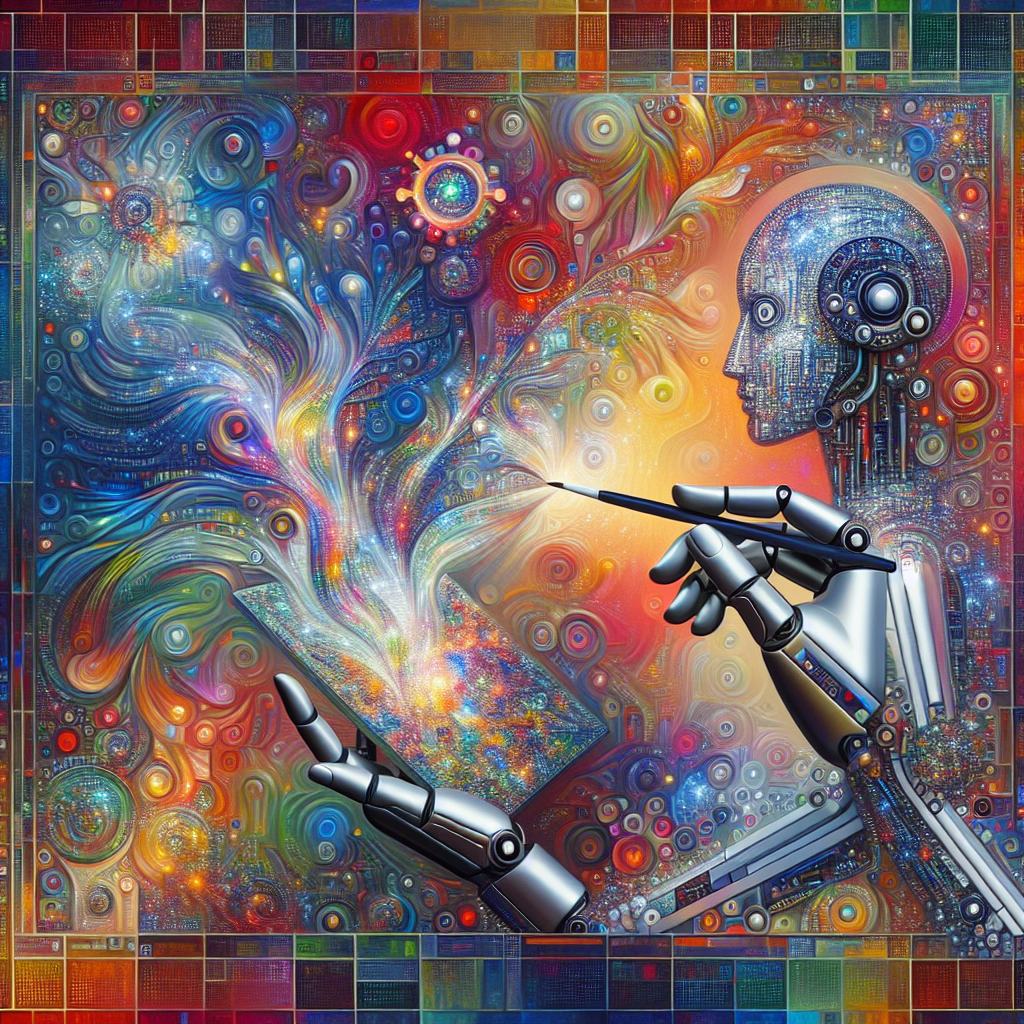
Artificial intelligence (AI) has revolutionized many industries, and the world of art is no exception. AI automation in art has opened up new possibilities for creating innovative masterpieces that were previously unimaginable. With the help of AI algorithms, artists can now explore new creative techniques, generate unique artworks, and push the boundaries of traditional art forms.
AI automation in art involves using machine learning algorithms to analyze data, recognize patterns, and generate new artistic creations. These algorithms can be trained on vast amounts of data, such as images, text, and audio, to learn and mimic the styles of famous artists, create new artistic styles, and even collaborate with human artists to produce original works of art.
One of the most popular applications of AI automation in art is the creation of generative adversarial networks (GANs). GANs are a type of neural network that consists of two competing networks – a generator and a discriminator. The generator network creates new images, while the discriminator network evaluates the images and provides feedback to the generator. Through this iterative process, GANs can generate realistic images that mimic the style of famous artists or create completely new and unique artworks.
Another popular application of AI automation in art is style transfer, which involves applying the style of one image to another image. This technique allows artists to create new and unique artworks by combining different artistic styles. For example, an artist could take a photograph and apply the style of Vincent van Gogh’s “Starry Night” to create a new and original piece of art.
AI automation in art also includes the use of natural language processing (NLP) algorithms to generate art based on text input. Artists can provide a description or a prompt, and the AI algorithm will generate an image based on the text input. This allows artists to explore new creative ideas and generate artworks based on written descriptions or concepts.
AI automation in art has the potential to revolutionize the art world by pushing the boundaries of creativity and innovation. Artists can use AI algorithms to explore new artistic techniques, generate unique artworks, and collaborate with AI to create original masterpieces. AI automation in art is not meant to replace human artists but to enhance and augment their creative abilities, allowing them to explore new possibilities and create innovative artworks that were previously unimaginable.
FAQs:
1. Can AI automation in art replace human artists?
AI automation in art is not meant to replace human artists but to enhance and augment their creative abilities. While AI algorithms can generate unique artworks and explore new artistic techniques, human artists bring a level of creativity, emotion, and intuition that AI cannot replicate. AI automation in art is meant to collaborate with human artists and push the boundaries of creativity and innovation.
2. How can AI automation in art benefit artists?
AI automation in art can benefit artists in several ways. It can help artists explore new artistic techniques, generate unique artworks, and collaborate with AI to create original masterpieces. AI automation in art can also save artists time and effort by automating repetitive tasks and providing new creative tools and inspiration.
3. Is AI automation in art ethical?
AI automation in art raises ethical concerns about the role of AI in the creative process and the potential impact on the art world. Some critics argue that AI-generated artworks lack the emotional depth and human touch of traditional art, while others believe that AI automation in art can enhance creativity and innovation. It is important for artists and researchers to consider the ethical implications of AI automation in art and strive to create artworks that reflect human values and emotions.
4. Will AI automation in art replace traditional art forms?
AI automation in art is unlikely to replace traditional art forms but to complement and enhance them. While AI algorithms can generate unique artworks and explore new artistic techniques, traditional art forms such as painting, sculpture, and photography will continue to play a vital role in the art world. AI automation in art can expand the possibilities of creativity and innovation, allowing artists to explore new artistic techniques and push the boundaries of traditional art forms.
In conclusion, AI automation in art has the potential to revolutionize the art world by creating innovative masterpieces and pushing the boundaries of creativity and innovation. Artists can use AI algorithms to explore new artistic techniques, generate unique artworks, and collaborate with AI to create original masterpieces. While AI automation in art raises ethical concerns and challenges traditional art forms, it also offers new opportunities for artists to explore new creative ideas and push the boundaries of traditional art forms. AI automation in art is not meant to replace human artists but to enhance and augment their creative abilities, allowing them to create innovative artworks that were previously unimaginable.