
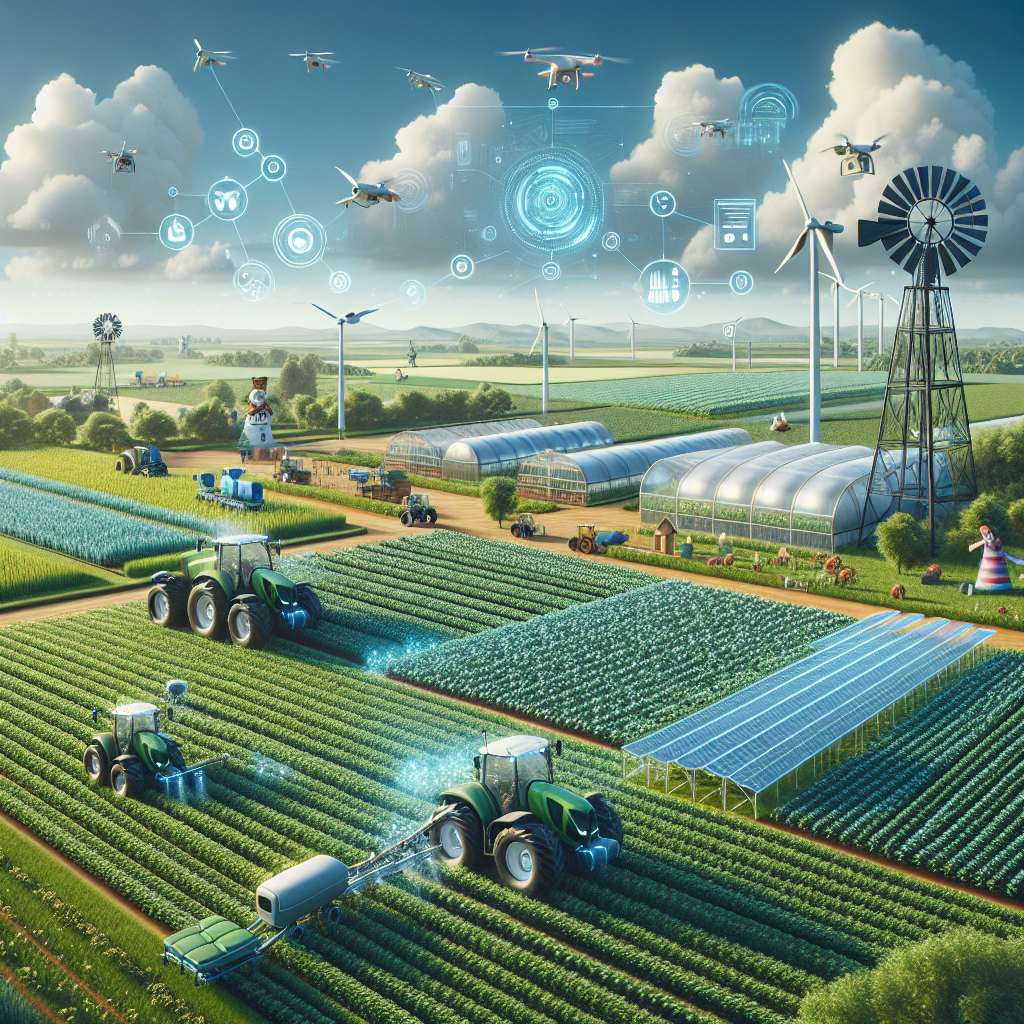
Agriculture is one of the most important sectors in the global economy, providing food and livelihoods for billions of people around the world. However, the agricultural sector is facing increasing challenges due to climate change, water scarcity, and other factors that are impacting crop yields and food security. In order to address these challenges, there is a growing need for innovative solutions that can help farmers adapt to changing conditions and build resilience in their operations.
One of the most promising technologies that is being used to enhance agricultural resilience and adaptation is artificial intelligence (AI). AI-driven solutions have the potential to revolutionize the way farmers manage their crops, livestock, and land, by providing real-time insights and recommendations that can help optimize production and minimize risks. In this article, we will explore some of the ways in which AI is being used in agriculture, and how these technologies can help farmers build resilience and adapt to a changing climate.
AI-driven Solutions for Enhancing Agricultural Resilience and Adaptation
1. Precision Agriculture
One of the key applications of AI in agriculture is precision agriculture, which involves using data and technology to optimize the management of crops and livestock. AI algorithms can analyze satellite imagery, weather data, soil samples, and other types of information to provide farmers with insights into the health of their crops and the best practices for maximizing yields. For example, AI can help farmers identify areas of their fields that are underperforming and suggest targeted interventions, such as adjusting irrigation levels or applying fertilizer more efficiently.
2. Climate Smart Agriculture
Climate change is posing a major threat to agriculture, with rising temperatures, changing rainfall patterns, and extreme weather events making it increasingly difficult for farmers to predict and manage their crops. AI can help farmers adapt to these changing conditions by providing early warning systems for weather events, predicting crop yields based on climate data, and optimizing resource use to minimize the impact of climate change. By using AI to make data-driven decisions, farmers can improve their resilience to climate-related risks and ensure the long-term sustainability of their operations.
3. Disease and Pest Management
Diseases and pests can wreak havoc on crops, leading to significant losses for farmers. AI can help farmers detect and manage diseases and pests more effectively by analyzing data from sensors, drones, and other sources to identify early signs of infestations and recommend appropriate interventions. By using AI-powered tools for disease and pest management, farmers can reduce the use of chemical pesticides, minimize crop losses, and protect the environment.
4. Supply Chain Optimization
AI can also play a key role in optimizing the agricultural supply chain, from farm to table. By analyzing data on market demand, transportation routes, and storage conditions, AI algorithms can help farmers and food producers make more informed decisions about when to harvest, transport, and store their products. This can help reduce food waste, improve the efficiency of the supply chain, and ensure that consumers have access to fresh and nutritious food.
Frequently Asked Questions
1. How can AI help farmers adapt to climate change?
AI can help farmers adapt to climate change by providing real-time insights into weather patterns, soil conditions, and crop health. By analyzing data from sensors, satellites, and other sources, AI algorithms can help farmers make informed decisions about when to plant, irrigate, and harvest their crops. This can help farmers optimize their production practices, reduce risks, and build resilience to the impacts of climate change.
2. Are AI-driven solutions affordable for small-scale farmers?
While AI-driven solutions can be expensive to implement, there are a growing number of companies and organizations that are developing affordable and accessible technologies for small-scale farmers. For example, mobile apps that use AI algorithms to provide crop recommendations are becoming increasingly popular in developing countries, where small-scale farmers may not have access to traditional agricultural extension services. By leveraging the power of AI, small-scale farmers can improve their productivity, reduce risks, and build resilience in their operations.
3. How can farmers ensure the privacy and security of their data when using AI?
Privacy and security are important considerations when using AI-driven solutions in agriculture, as farmers are often dealing with sensitive data about their operations. To ensure the privacy and security of their data, farmers should work with reputable companies that have robust data protection measures in place. Farmers should also be aware of the risks of data breaches and take steps to secure their data, such as using encryption, password protection, and secure storage methods.
4. What are some challenges in implementing AI-driven solutions in agriculture?
While AI has the potential to revolutionize agriculture, there are some challenges in implementing these technologies in the field. One of the main challenges is the lack of infrastructure and connectivity in rural areas, which can limit farmers’ access to AI-powered tools. Additionally, there may be a lack of awareness and training among farmers about how to use AI effectively in their operations. To overcome these challenges, governments, NGOs, and private companies can work together to provide training, support, and access to affordable AI technologies for farmers.
In conclusion, AI-driven solutions have the potential to enhance agricultural resilience and adaptation by providing farmers with real-time insights, recommendations, and predictions that can help optimize production, reduce risks, and improve sustainability. By harnessing the power of AI, farmers can build resilience to climate change, diseases, pests, and other challenges, ensuring the long-term viability of their operations. As AI technologies continue to evolve and become more accessible, it is important for farmers to embrace these innovations and leverage them to improve their productivity and livelihoods.