
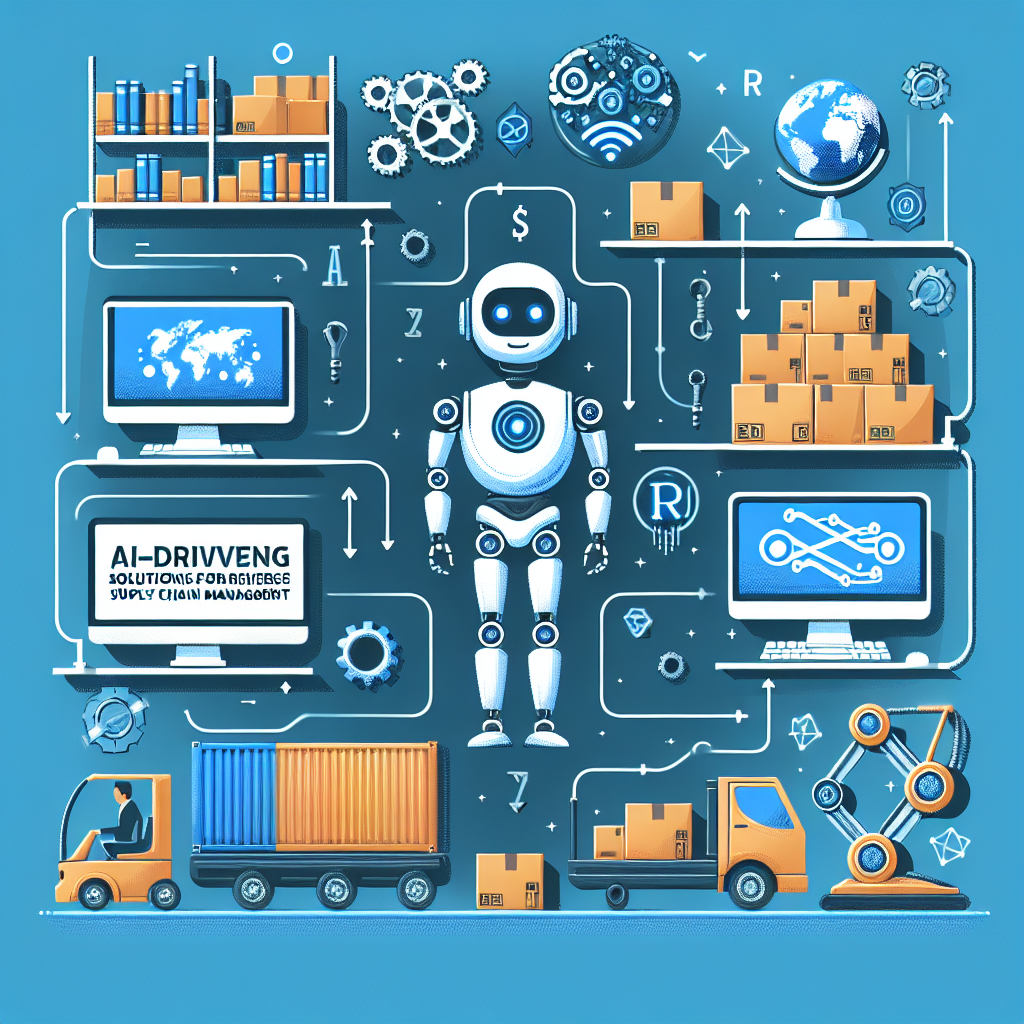
In recent years, there has been a growing emphasis on the importance of reverse supply chain management in the business world. Reverse supply chain refers to the process of moving products from the end user back to the manufacturer or retailer for recycling, remanufacturing, or disposal. This process is crucial for minimizing waste, maximizing resource efficiency, and reducing environmental impact.
One of the key challenges in reverse supply chain management is the complexity and unpredictability of the process. Unlike the forward supply chain, where products move in a linear fashion from the manufacturer to the end user, the reverse supply chain involves multiple stakeholders, uncertain quantities, and varying conditions of returned products. This complexity makes it difficult for companies to optimize their reverse supply chain operations and maximize value from returned products.
This is where AI-driven solutions come into play. Artificial intelligence (AI) technologies such as machine learning, predictive analytics, and natural language processing can help companies streamline their reverse supply chain processes, improve decision-making, and enhance operational efficiency. By leveraging AI-driven solutions, companies can better manage returns, optimize product disposition, reduce costs, and drive sustainability initiatives.
One of the key benefits of AI-driven solutions for reverse supply chain management is their ability to automate decision-making processes. AI algorithms can analyze large volumes of data from various sources, including customer feedback, product specifications, and market trends, to identify patterns and make informed decisions about the disposition of returned products. This can help companies reduce the time and effort required to process returns, improve inventory management, and enhance customer satisfaction.
Another advantage of AI-driven solutions is their ability to optimize product disposition. By analyzing data on product condition, demand, and market value, AI algorithms can recommend the most appropriate disposition strategy for returned products, such as refurbishment, resale, recycling, or disposal. This can help companies maximize the value of returned products, reduce waste, and improve sustainability performance.
Furthermore, AI-driven solutions can enable companies to better predict and plan for returns. By analyzing historical data and market trends, AI algorithms can forecast the volume and timing of returns, allowing companies to optimize their reverse supply chain operations, allocate resources effectively, and reduce costs. This can help companies improve operational efficiency, minimize supply chain disruptions, and enhance overall business performance.
Overall, AI-driven solutions have the potential to transform reverse supply chain management by providing companies with the tools and insights they need to optimize their operations, reduce costs, and drive sustainability initiatives. By leveraging AI technologies, companies can streamline their reverse supply chain processes, improve decision-making, and enhance operational efficiency, ultimately creating value for both the business and the environment.
FAQs:
Q: What are some common challenges in reverse supply chain management?
A: Some common challenges in reverse supply chain management include the complexity and unpredictability of the process, multiple stakeholders involved, uncertain quantities of returned products, varying conditions of returned products, and the need to optimize product disposition.
Q: How can AI-driven solutions help companies overcome these challenges?
A: AI-driven solutions can help companies overcome these challenges by automating decision-making processes, optimizing product disposition, predicting and planning for returns, improving inventory management, reducing costs, and enhancing sustainability performance.
Q: What are some examples of AI-driven solutions for reverse supply chain management?
A: Some examples of AI-driven solutions for reverse supply chain management include machine learning algorithms for analyzing data and making informed decisions, predictive analytics for forecasting returns, natural language processing for extracting insights from customer feedback, and optimization algorithms for recommending the most appropriate disposition strategy for returned products.
Q: What are the benefits of using AI-driven solutions for reverse supply chain management?
A: The benefits of using AI-driven solutions for reverse supply chain management include improved decision-making, streamlined processes, optimized product disposition, reduced costs, enhanced sustainability performance, and increased operational efficiency.