
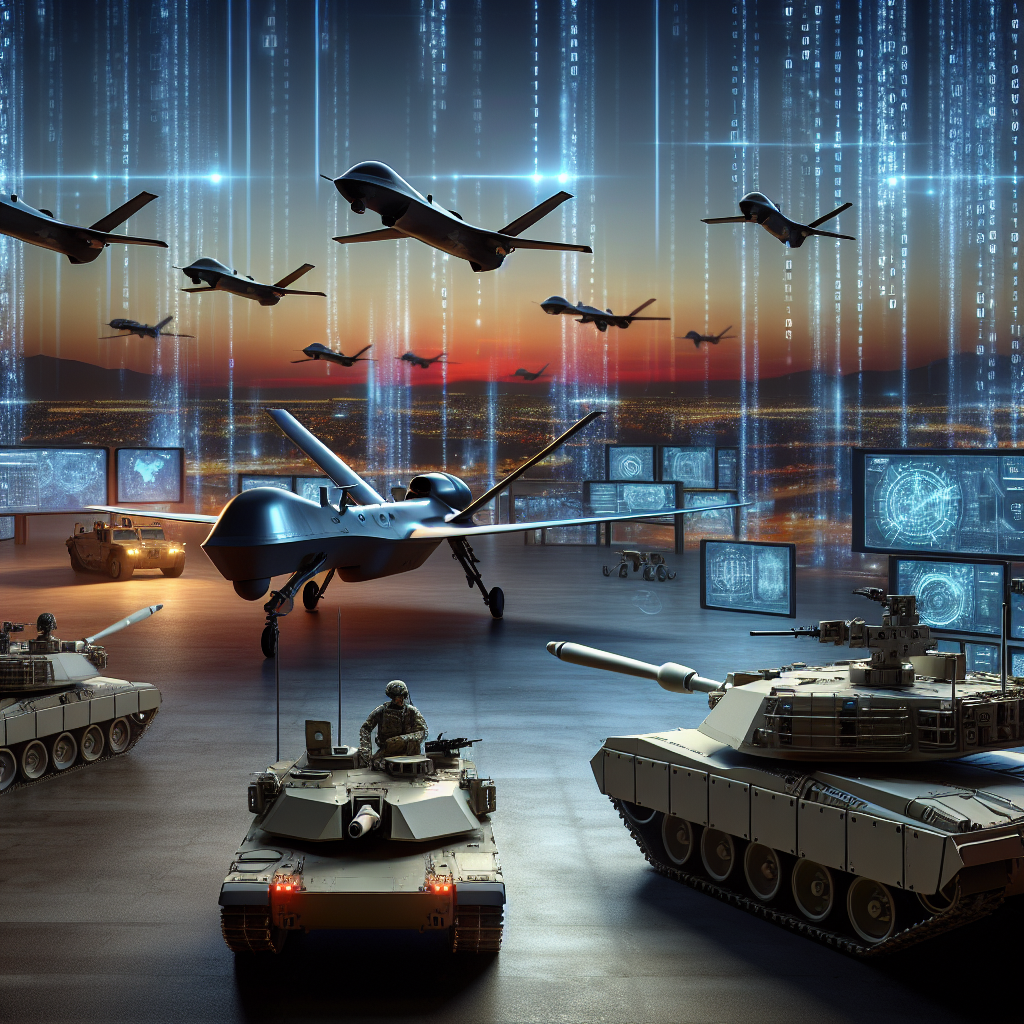
Artificial Intelligence (AI) is rapidly changing the landscape of warfare, with the development of autonomous weapons and military technology. While AI has the potential to revolutionize the way wars are fought, there are also significant risks and ethical concerns associated with the use of autonomous weapons in conflict.
The use of AI in warfare has the potential to greatly enhance military capabilities. AI-powered systems can process vast amounts of data in real-time, making decisions and taking actions much faster than human operators. This can improve the accuracy and efficiency of military operations, as well as reduce the risk to human soldiers on the battlefield.
Autonomous weapons, or “killer robots,” are a specific type of AI-powered system that can independently select and engage targets without human intervention. These weapons have the potential to greatly increase the lethality and effectiveness of military forces, but they also raise serious ethical and legal concerns.
One of the main risks of autonomous weapons is the potential for unintended harm. AI systems are only as good as the data they are trained on, and there is always the risk of bias and errors in the algorithms that power these systems. If an autonomous weapon makes a mistake and attacks civilians or friendly forces, the consequences could be catastrophic.
Another concern is the lack of human oversight and accountability in the use of autonomous weapons. Without human operators in the loop to make decisions and exercise judgment, there is the risk of these weapons being used in ways that violate international laws and norms. This raises questions about who is responsible for the actions of autonomous weapons, and how they can be held accountable for any violations of the laws of war.
There is also the risk of an arms race in AI technology, as countries compete to develop more advanced and powerful autonomous weapons. This could lead to a proliferation of these weapons, increasing the likelihood of conflicts escalating and causing widespread destruction.
Despite these risks, some argue that autonomous weapons could actually make warfare more humane by reducing the risk to human soldiers and minimizing collateral damage. Proponents of autonomous weapons also argue that these systems could make better decisions in high-pressure and chaotic situations than human operators.
However, the risks and ethical concerns associated with autonomous weapons have led to calls for a ban on their development and use. In 2018, over 100 countries called for a ban on lethal autonomous weapons, citing the need to ensure human control and accountability in the use of these weapons.
In response to these concerns, some countries have introduced guidelines and regulations for the development and use of AI in warfare. For example, the United States has established a policy on the ethical use of AI in military operations, which includes principles such as transparency, accountability, and the need for human oversight.
There are also ongoing efforts to develop international norms and regulations for the use of autonomous weapons. The United Nations has established a group of governmental experts to discuss the legal and ethical implications of autonomous weapons, with the goal of developing a framework for their use in accordance with international laws.
Overall, the development of AI in warfare presents both opportunities and risks. While AI has the potential to greatly enhance military capabilities, the use of autonomous weapons raises serious ethical concerns and the need for international regulations to ensure their responsible use.
FAQs:
Q: What are autonomous weapons?
A: Autonomous weapons are AI-powered systems that can independently select and engage targets without human intervention. These weapons have the potential to greatly increase the lethality and effectiveness of military forces, but they also raise serious ethical and legal concerns.
Q: What are the risks of autonomous weapons?
A: The risks of autonomous weapons include the potential for unintended harm, lack of human oversight and accountability, the risk of an arms race in AI technology, and violations of international laws and norms.
Q: Are autonomous weapons currently in use?
A: While there are AI-powered weapons systems currently in use, fully autonomous weapons that can select and engage targets without human intervention are not yet widely deployed. However, there is ongoing development and testing of autonomous weapons by various countries.
Q: What are some ethical concerns with the use of autonomous weapons?
A: Some ethical concerns with the use of autonomous weapons include the lack of human oversight and accountability, the potential for unintended harm, the risk of bias and errors in the algorithms that power these systems, and the potential for violations of international laws and norms.
Q: What efforts are being made to regulate the use of autonomous weapons?
A: There are ongoing efforts to develop international norms and regulations for the use of autonomous weapons. The United Nations has established a group of governmental experts to discuss the legal and ethical implications of autonomous weapons, with the goal of developing a framework for their use in accordance with international laws.
Q: What are some arguments in favor of autonomous weapons?
A: Some arguments in favor of autonomous weapons include the potential for reducing the risk to human soldiers, minimizing collateral damage, and making better decisions in high-pressure and chaotic situations than human operators. However, these arguments are often outweighed by the ethical concerns and risks associated with the use of autonomous weapons.