
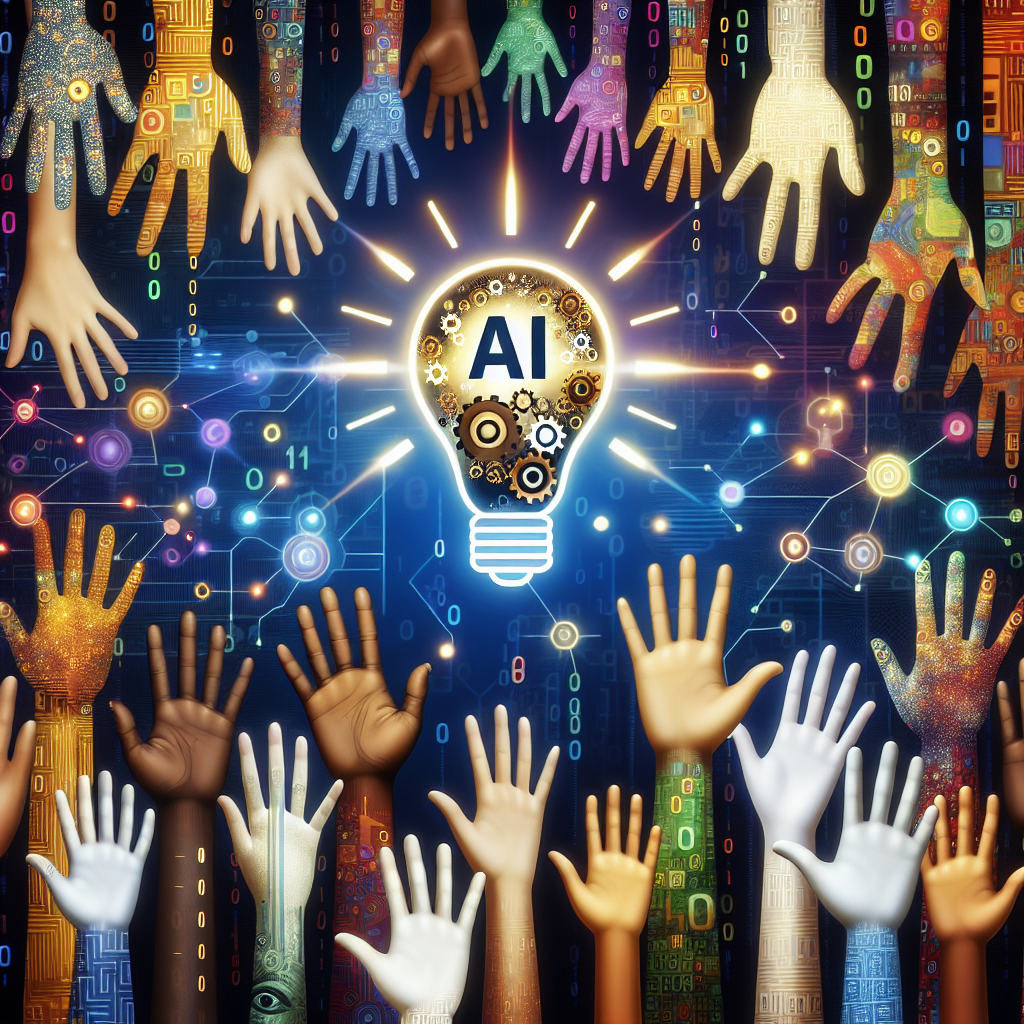
In recent years, artificial intelligence (AI) has been rapidly advancing and becoming more integrated into various aspects of our lives. From smart home devices to autonomous vehicles, AI is shaping the way we live, work, and interact with the world around us. However, as AI becomes more prevalent, there is a growing concern about the lack of diversity and inclusion in the technology industry.
Historically, the technology industry has been dominated by a homogenous group of individuals, primarily white males. This lack of diversity has led to biases and inequalities in AI algorithms, which can have real-world implications on marginalized communities. For example, AI systems used in hiring processes have been found to discriminate against women and people of color. Additionally, facial recognition technology has been shown to have higher error rates for people with darker skin tones.
In order to address these issues, there is a growing movement towards democratizing AI and promoting diversity and inclusion in the technology industry. Democratizing AI means making AI technology more accessible and inclusive to individuals from diverse backgrounds. This can be achieved through initiatives such as increasing representation of women and minorities in AI research and development, creating more inclusive AI algorithms, and promoting ethical AI practices.
One of the key benefits of democratizing AI is that it can help address the biases and inequalities that are present in current AI systems. By increasing diversity in the technology industry, we can ensure that AI algorithms are developed with a more inclusive perspective, which can help reduce bias and discrimination. Additionally, democratizing AI can help promote innovation and creativity by bringing in new perspectives and ideas from individuals with diverse backgrounds.
There are several ways in which we can promote diversity and inclusion in AI technology. One way is to increase representation of women and minorities in AI research and development. This can be done through initiatives such as scholarships, internships, and mentorship programs targeted towards underrepresented groups. By increasing diversity in the AI workforce, we can ensure that a wide range of perspectives and experiences are considered in the development of AI algorithms.
Another way to promote diversity and inclusion in AI technology is to create more inclusive AI algorithms. This involves ensuring that AI systems are trained on diverse datasets and are tested for bias and discrimination. For example, facial recognition technology should be tested on a diverse range of skin tones to ensure that it is accurate for all individuals. Additionally, AI systems should be transparent and accountable, so that users can understand how decisions are being made and challenge any biases that may be present.
In addition to increasing diversity and inclusivity in the technology industry, it is also important to promote ethical AI practices. This involves ensuring that AI algorithms are developed and deployed in an ethical manner, taking into account the potential impact on individuals and society as a whole. For example, AI systems used in healthcare should prioritize patient privacy and data security, and AI systems used in criminal justice should be fair and unbiased. By promoting ethical AI practices, we can ensure that AI technology is used for the benefit of all individuals, regardless of their background.
Overall, democratizing AI and promoting diversity and inclusion in the technology industry is crucial for addressing the biases and inequalities that are present in current AI systems. By increasing representation of women and minorities in AI research and development, creating more inclusive AI algorithms, and promoting ethical AI practices, we can ensure that AI technology is developed and deployed in a fair and equitable manner.
FAQs:
Q: Why is diversity and inclusion important in AI technology?
A: Diversity and inclusion are important in AI technology because they can help address biases and inequalities that are present in current AI systems. By increasing representation of women and minorities in AI research and development, creating more inclusive AI algorithms, and promoting ethical AI practices, we can ensure that AI technology is developed and deployed in a fair and equitable manner.
Q: How can we promote diversity and inclusion in the technology industry?
A: There are several ways to promote diversity and inclusion in the technology industry, including increasing representation of women and minorities in AI research and development, creating more inclusive AI algorithms, and promoting ethical AI practices. Additionally, initiatives such as scholarships, internships, and mentorship programs targeted towards underrepresented groups can help increase diversity in the AI workforce.
Q: What are the benefits of democratizing AI?
A: Democratizing AI can help address biases and inequalities in current AI systems, promote innovation and creativity, and ensure that AI technology is developed with a more inclusive perspective. By increasing diversity in the technology industry, we can ensure that a wide range of perspectives and experiences are considered in the development of AI algorithms.
Q: How can we ensure that AI algorithms are ethical?
A: To ensure that AI algorithms are ethical, it is important to develop and deploy them in a transparent and accountable manner. This involves testing AI systems for bias and discrimination, prioritizing privacy and data security, and ensuring that decisions made by AI systems are fair and unbiased. Additionally, AI systems should be developed with input from a diverse range of individuals to ensure that they are inclusive and equitable.