
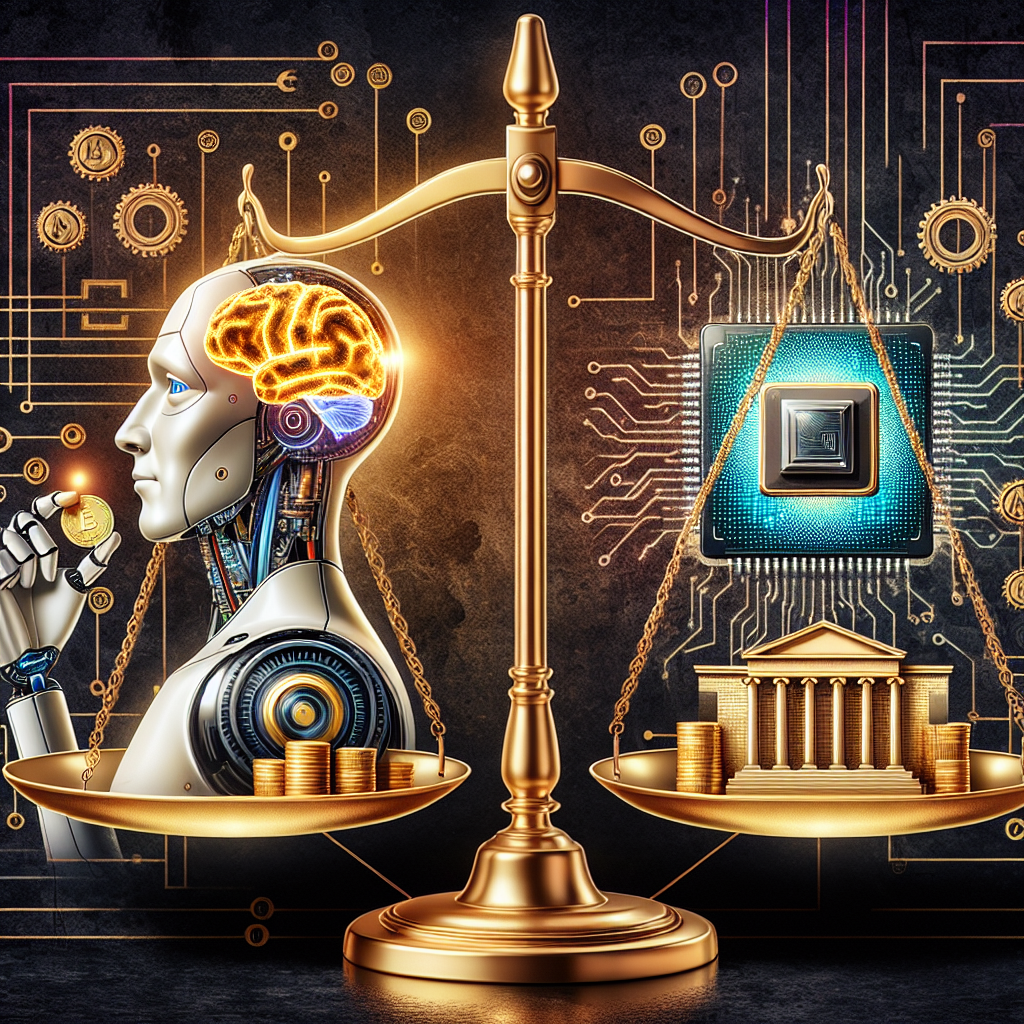
Artificial intelligence (AI) is revolutionizing the banking industry, from customer service chatbots to fraud detection algorithms. While AI offers immense benefits in terms of efficiency, accuracy, and cost savings, it also raises important ethical implications that must be carefully considered.
One of the key ethical concerns surrounding AI in banking is the potential for bias in decision-making. AI algorithms are only as good as the data they are trained on, and if this data is biased, the AI system can perpetuate and even exacerbate existing biases. For example, if a bank’s loan approval algorithm is trained on historical data that reflects discriminatory lending practices, the AI system may inadvertently discriminate against certain groups of people, such as minorities or low-income individuals.
To mitigate this risk, banks must ensure that their AI systems are trained on diverse and representative data sets, and regularly monitor and audit their algorithms for bias. Additionally, banks should implement transparency and explainability measures to ensure that customers understand how AI decisions are made and have recourse if they believe they have been unfairly treated.
Another ethical concern related to AI in banking is privacy and data security. AI systems rely on vast amounts of customer data to make decisions, and there is a risk that this data could be misused or compromised. For example, if a bank’s AI system is hacked, sensitive customer information could be exposed, leading to identity theft or fraud.
To address this concern, banks must prioritize data security and implement robust encryption and access controls to protect customer data. Banks should also be transparent with customers about how their data is being used, and give them the option to opt out of data collection if they choose.
Furthermore, the use of AI in banking raises questions about accountability and liability. When AI systems make decisions that impact customers, who is ultimately responsible for those decisions? Is it the bank, the AI developer, or the individual algorithm itself? As AI systems become more autonomous and make increasingly complex decisions, these questions become even more pressing.
To address this issue, banks should establish clear lines of accountability and liability for AI systems, and ensure that there are mechanisms in place to hold responsible parties accountable for any harm caused by AI decisions. This may involve implementing ethical guidelines and standards for AI development and deployment, as well as creating oversight bodies to monitor and regulate AI use in banking.
In addition to these ethical concerns, there are also broader societal implications of AI in banking. For example, the automation of banking tasks through AI could lead to job displacement for human workers, particularly those in low-skilled or repetitive roles. While AI can create new opportunities for higher-skilled workers, there is a risk that certain segments of the workforce could be left behind.
To mitigate this risk, banks should invest in retraining and upskilling programs for their employees, to help them transition to new roles that are less susceptible to automation. Banks should also engage with policymakers, labor unions, and other stakeholders to develop strategies for managing the impact of AI on the workforce and ensuring a just transition to a more automated banking industry.
Overall, the ethical implications of AI in banking are complex and multifaceted, requiring careful consideration and proactive measures to address. By prioritizing fairness, transparency, privacy, accountability, and societal impact, banks can harness the power of AI to improve their operations and customer service while upholding ethical standards and values.
FAQs:
1. How can banks ensure that their AI systems are free from bias?
Banks can ensure that their AI systems are free from bias by using diverse and representative data sets for training, regularly monitoring and auditing their algorithms for bias, and implementing transparency and explainability measures.
2. What steps can banks take to protect customer data when using AI?
Banks can protect customer data when using AI by implementing robust encryption and access controls, being transparent with customers about how their data is being used, and giving customers the option to opt out of data collection.
3. Who is ultimately responsible for AI decisions in banking?
Responsibility for AI decisions in banking may lie with the bank, the AI developer, or the individual algorithm itself. Banks should establish clear lines of accountability and liability for AI systems to ensure that responsible parties can be held accountable for any harm caused by AI decisions.
4. How can banks address the impact of AI on the workforce?
Banks can address the impact of AI on the workforce by investing in retraining and upskilling programs for employees, engaging with stakeholders to develop strategies for managing the impact of AI on the workforce, and ensuring a just transition to a more automated banking industry.