
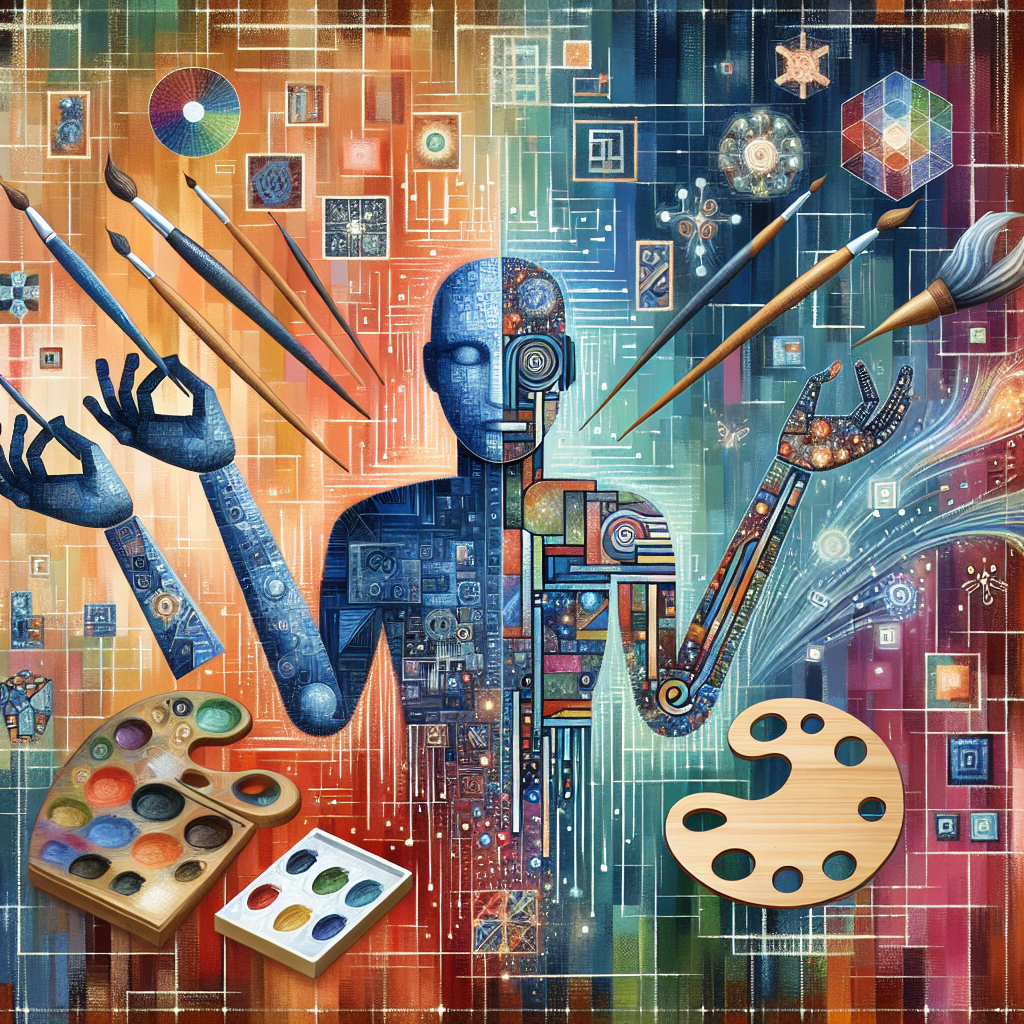
The Evolution of Creativity: AI’s Influence on Artistic Expression
Creativity has always been a defining characteristic of humanity. From the earliest cave paintings to the most intricate works of art, creativity has been at the core of human expression. However, with the rapid advancements in technology, particularly in the field of artificial intelligence (AI), the landscape of creativity is changing.
AI has the potential to revolutionize the way we create and consume art. By analyzing data, generating content, and even making decisions, AI can enhance the creative process and push boundaries in ways that were previously unimaginable. In this article, we will explore the evolution of creativity and the impact of AI on artistic expression.
The Rise of AI in Art
AI has already made significant strides in the world of art. From creating paintings and sculptures to composing music and writing poetry, AI has proven its ability to mimic human creativity. One of the most famous examples of AI in art is the painting “Edmond de Belamy” by the art collective Obvious, which sold for $432,500 at auction in 2018. The painting was created using a type of AI known as a Generative Adversarial Network (GAN), which is capable of generating new images based on a set of inputs.
AI has also been used to compose music, with algorithms like OpenAI’s MuseNet and Google’s Magenta project producing original compositions that rival those of human composers. In the field of literature, AI has even written novels and poems, blurring the line between human and machine creativity.
The Impact of AI on Artistic Expression
While AI has the potential to enhance creativity, it also raises questions about the nature of art and the role of the artist. Some argue that AI is merely a tool that can assist artists in their creative process, while others believe that AI could eventually replace human artists altogether. The truth likely lies somewhere in between.
AI has the ability to analyze vast amounts of data and generate new ideas and concepts that human artists may not have considered. This can lead to new forms of expression and innovation in art. For example, AI can analyze trends in art history and suggest new directions for artists to explore, or it can generate new visual styles that push the boundaries of traditional art forms.
On the other hand, AI lacks the emotional depth and intuition that human artists bring to their work. While AI can mimic certain aspects of creativity, it cannot replicate the human experience or the personal connections that artists make with their work. As a result, AI-generated art may lack the soul and authenticity that is inherent in human-created art.
The Future of Creativity
As AI continues to advance, the future of creativity is likely to be shaped by the collaboration between human artists and AI. Rather than seeing AI as a threat to creativity, artists can embrace AI as a tool to enhance their work and push the boundaries of artistic expression. By leveraging AI’s capabilities in data analysis, content generation, and decision-making, artists can create new and innovative works that would not have been possible otherwise.
In the future, we may see AI and human artists working together to create truly collaborative works of art. AI can assist artists in generating ideas, exploring new styles, and even creating elements of the artwork itself. Human artists, in turn, can bring their unique perspective, emotion, and intuition to the creative process, adding depth and meaning to the final work.
FAQs
Q: Can AI truly be creative?
A: While AI can mimic certain aspects of creativity, such as generating new ideas and concepts, it lacks the emotional depth and intuition that human artists bring to their work. AI can be a useful tool for artists to enhance their creativity, but true creativity is still a uniquely human trait.
Q: Will AI replace human artists?
A: While AI has the potential to create art that rivals that of human artists, it is unlikely to replace them altogether. The human experience and emotional connection that artists bring to their work cannot be replicated by AI. Instead, AI is more likely to be used as a tool to assist artists in their creative process.
Q: How can artists collaborate with AI?
A: Artists can collaborate with AI by using it as a tool to generate ideas, explore new styles, and create elements of their artwork. By leveraging AI’s capabilities in data analysis, content generation, and decision-making, artists can enhance their creativity and push the boundaries of artistic expression.
In conclusion, the evolution of creativity is being shaped by the rise of AI in art. While AI has the potential to enhance creativity and push boundaries in artistic expression, it also raises questions about the nature of art and the role of the artist. By embracing AI as a tool to assist in the creative process, artists can collaborate with AI to create new and innovative works that combine the best of human and machine creativity.