
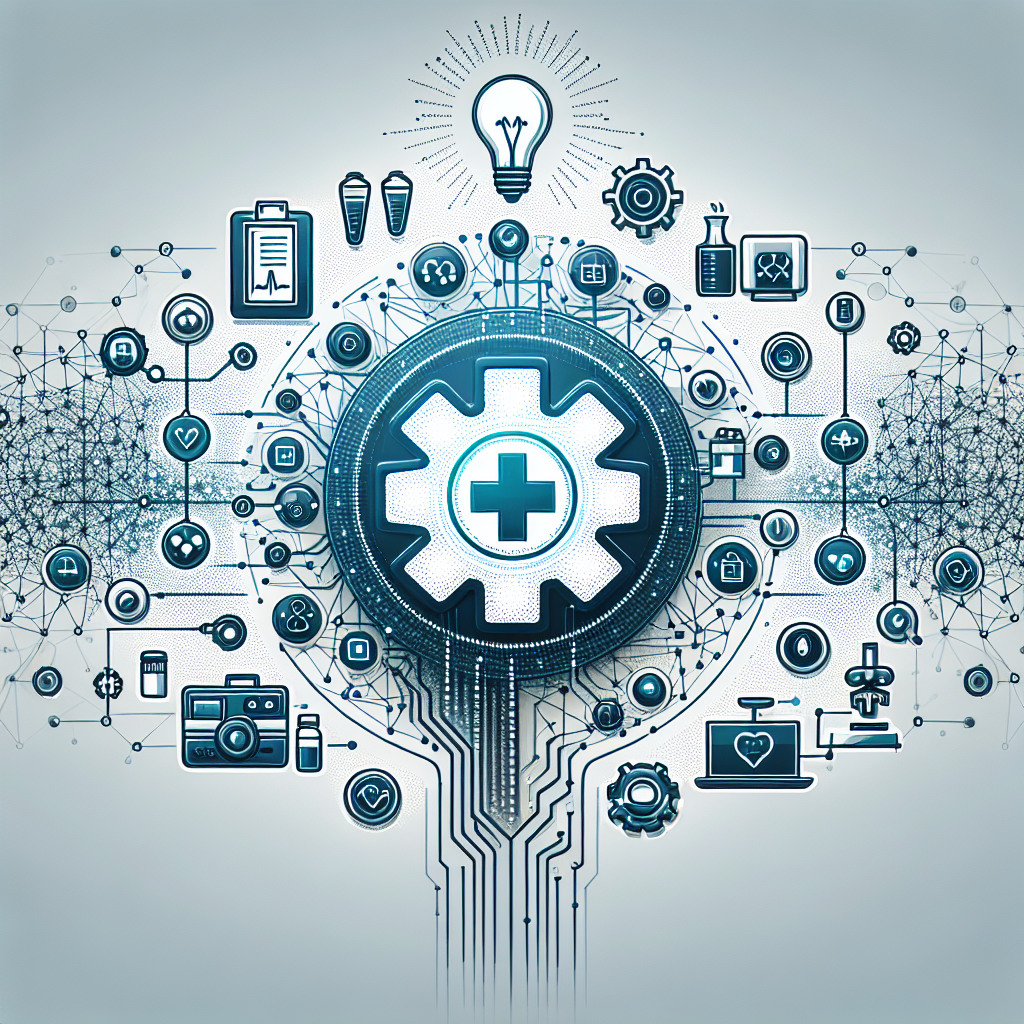
In recent years, the healthcare industry has seen a significant increase in the use of artificial intelligence (AI) platforms to drive innovation and improve patient outcomes. These platforms have the potential to revolutionize the way healthcare is delivered, by enabling more personalized care, faster and more accurate diagnosis, and improved treatment options. In this article, we will explore the impact of AI platforms on healthcare innovation, and discuss how they are transforming the industry.
AI platforms in healthcare are primarily used for tasks such as data analysis, image recognition, and natural language processing. These platforms are able to process vast amounts of data quickly and accurately, allowing healthcare providers to make more informed decisions and deliver better care to patients. AI platforms can also help healthcare organizations streamline their operations and reduce costs, by automating routine tasks and improving efficiency.
One of the key areas where AI platforms are making a significant impact is in the field of medical imaging. AI algorithms are now able to analyze medical images such as X-rays, CT scans, and MRIs, and identify abnormalities with a high level of accuracy. This can help radiologists and other healthcare providers make faster and more accurate diagnoses, leading to better patient outcomes. AI platforms can also help healthcare providers track disease progression over time, and tailor treatment plans to individual patients based on their unique characteristics.
Another area where AI platforms are driving innovation in healthcare is in the field of personalized medicine. By analyzing large amounts of genetic and clinical data, AI algorithms can help healthcare providers identify the most effective treatment options for individual patients. This can lead to more targeted therapies, reduced side effects, and better outcomes for patients. AI platforms can also help healthcare providers identify patients who are at risk for certain conditions, and intervene early to prevent the development of disease.
AI platforms are also being used to improve the patient experience in healthcare. By using chatbots and virtual assistants, healthcare providers can offer patients faster access to information and support, and improve communication between patients and providers. AI platforms can also help healthcare organizations streamline administrative tasks such as appointment scheduling and billing, freeing up time for healthcare providers to focus on patient care.
Despite the many benefits of AI platforms in healthcare, there are also some challenges that need to be addressed. One of the key challenges is ensuring the privacy and security of patient data. Healthcare organizations must take steps to protect patient information and comply with regulations such as the Health Insurance Portability and Accountability Act (HIPAA) to ensure that patient data is kept secure and confidential.
Another challenge is ensuring that AI algorithms are accurate and reliable. Healthcare providers must carefully evaluate the performance of AI platforms before integrating them into clinical practice, to ensure that they are providing accurate and useful information. Healthcare providers must also be trained to use AI platforms effectively, to ensure that they are able to make informed decisions based on the information provided by the platforms.
In conclusion, AI platforms have the potential to revolutionize the healthcare industry by driving innovation and improving patient outcomes. By enabling more personalized care, faster and more accurate diagnosis, and improved treatment options, AI platforms are transforming the way healthcare is delivered. While there are challenges that need to be addressed, the benefits of AI platforms in healthcare are clear, and healthcare providers must continue to explore and leverage the potential of these platforms to improve patient care.
FAQs:
1. What are some examples of AI platforms in healthcare?
Some examples of AI platforms in healthcare include IBM Watson Health, Google Health, and Microsoft Healthcare. These platforms use AI algorithms to analyze data, images, and text to improve patient care and drive innovation in healthcare.
2. How are AI platforms used in medical imaging?
AI platforms are used in medical imaging to analyze images such as X-rays, CT scans, and MRIs, and identify abnormalities with a high level of accuracy. This can help healthcare providers make faster and more accurate diagnoses, leading to better patient outcomes.
3. How can AI platforms improve personalized medicine?
AI platforms can analyze large amounts of genetic and clinical data to help healthcare providers identify the most effective treatment options for individual patients. This can lead to more targeted therapies, reduced side effects, and better outcomes for patients.
4. What are some challenges of using AI platforms in healthcare?
Some challenges of using AI platforms in healthcare include ensuring the privacy and security of patient data, and ensuring that AI algorithms are accurate and reliable. Healthcare providers must carefully evaluate the performance of AI platforms and be trained to use them effectively to ensure that they are providing accurate and useful information.