
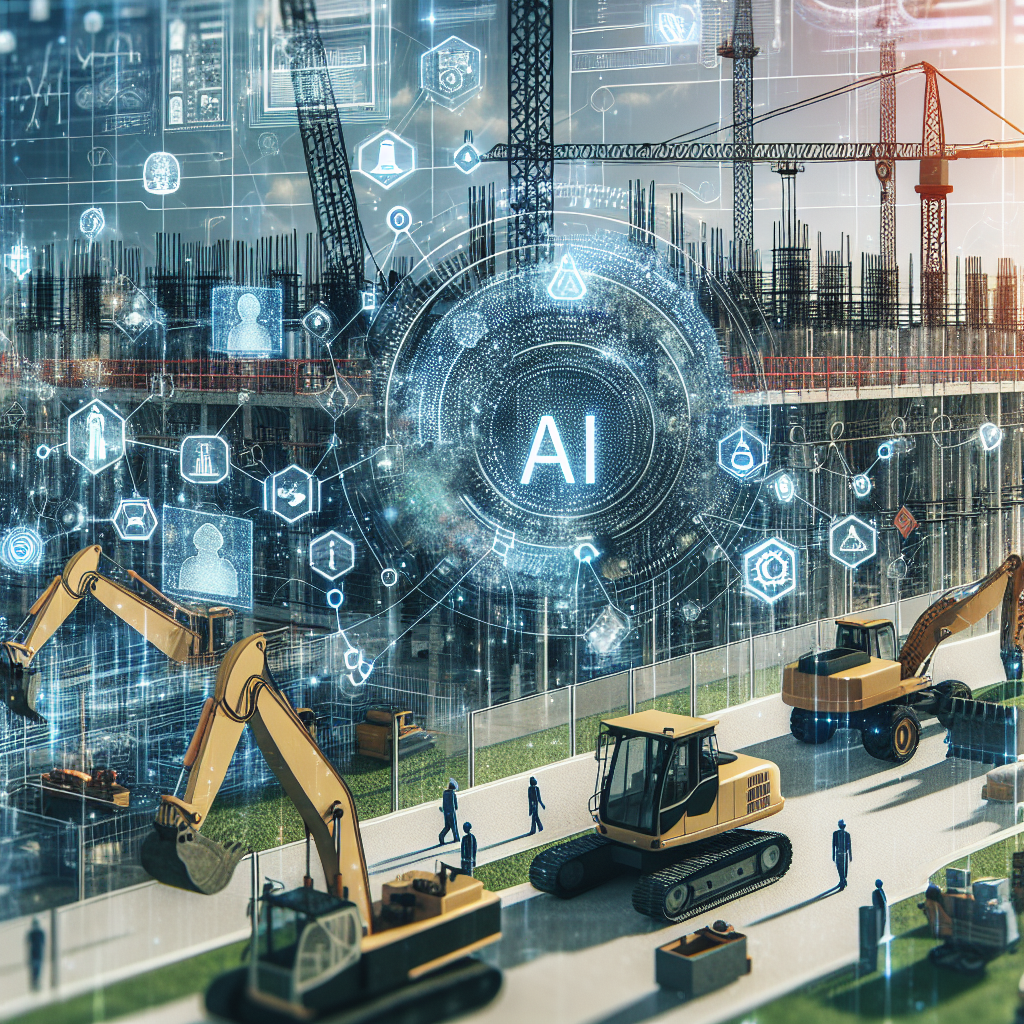
Predictive maintenance is a proactive approach to maintenance that uses data and analytics to predict when equipment is likely to fail, so that maintenance can be performed before a breakdown occurs. This approach can save time and money by reducing downtime and preventing costly repairs. In recent years, artificial intelligence (AI) has emerged as a powerful tool for predictive maintenance in a variety of industries, including construction.
The construction industry is one of the largest and most important sectors of the global economy. It encompasses a wide range of activities, from building and infrastructure projects to maintenance and repair work. Construction projects can be complex and involve a large number of variables, making it challenging to predict when equipment will fail or when maintenance is needed.
AI has the potential to revolutionize the construction industry by enabling more efficient and cost-effective maintenance practices. By analyzing data from sensors and other sources, AI algorithms can identify patterns and trends that indicate when equipment is likely to fail. This allows maintenance teams to take action before a breakdown occurs, reducing downtime and improving overall productivity.
One of the key advantages of using AI for predictive maintenance in construction is the ability to monitor equipment in real-time. Sensors can be installed on equipment to collect data on factors such as temperature, vibration, and usage patterns. This data can then be analyzed by AI algorithms to predict when maintenance is needed. By monitoring equipment in real-time, maintenance teams can identify issues early and take corrective action before they escalate into major problems.
Another advantage of using AI for predictive maintenance in construction is the ability to prioritize maintenance tasks. AI algorithms can analyze data on equipment performance and prioritize maintenance tasks based on factors such as criticality, cost, and impact on project timelines. This allows maintenance teams to focus their efforts on the most important tasks and optimize their resources.
AI can also help construction companies reduce costs by extending the lifespan of equipment. By identifying maintenance needs early and taking proactive action, companies can prevent costly breakdowns and repairs. This can result in significant savings over time and improve the overall efficiency of construction projects.
In addition to predictive maintenance, AI can also be used for other applications in the construction industry, such as project planning, risk management, and quality control. By analyzing data from various sources, AI algorithms can provide insights and recommendations that can help construction companies improve their processes and make better decisions.
Overall, the use of AI for predictive maintenance in the construction industry has the potential to transform the way maintenance is performed and improve the efficiency and reliability of construction projects. By harnessing the power of AI, construction companies can reduce downtime, extend the lifespan of equipment, and optimize their maintenance practices.
FAQs:
Q: How does AI predict when equipment will fail?
A: AI algorithms analyze data from sensors and other sources to identify patterns and trends that indicate when equipment is likely to fail. By monitoring factors such as temperature, vibration, and usage patterns, AI can predict when maintenance is needed.
Q: What are the benefits of using AI for predictive maintenance in construction?
A: The benefits of using AI for predictive maintenance in construction include reduced downtime, cost savings, extended equipment lifespan, and improved overall efficiency of construction projects.
Q: How can construction companies implement AI for predictive maintenance?
A: Construction companies can implement AI for predictive maintenance by installing sensors on equipment to collect data, using AI algorithms to analyze the data, and taking proactive action based on the insights provided by AI.
Q: What other applications can AI be used for in the construction industry?
A: In addition to predictive maintenance, AI can be used for applications such as project planning, risk management, and quality control in the construction industry. By analyzing data from various sources, AI algorithms can provide insights and recommendations to help construction companies improve their processes and make better decisions.