
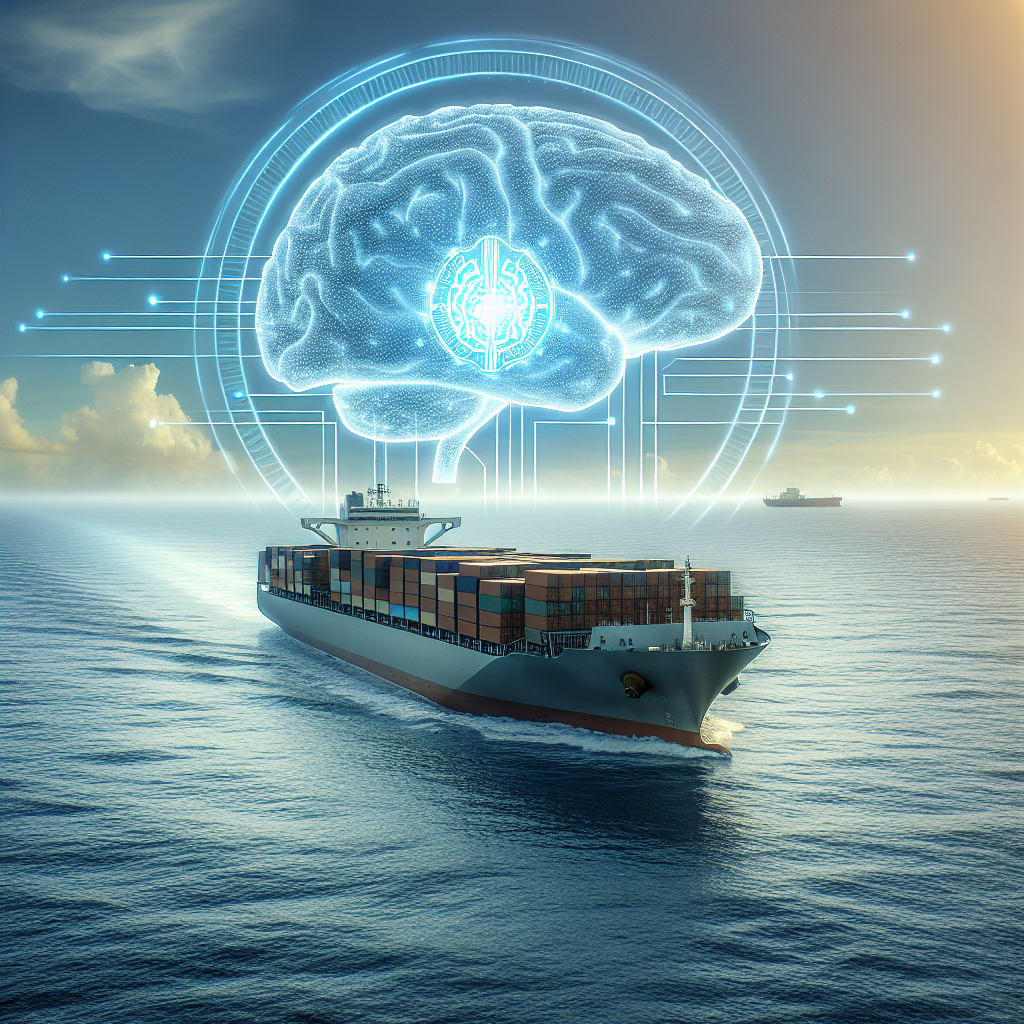
The Role of AI in Autonomous Cargo Ships
Introduction
The shipping industry plays a crucial role in global trade, with over 90% of the world’s trade being carried by sea. With the increasing demand for efficiency and sustainability in the industry, autonomous cargo ships have emerged as a promising solution. These ships are equipped with advanced technologies, including artificial intelligence (AI), to navigate the seas without human intervention. In this article, we will explore the role of AI in autonomous cargo ships and how it is revolutionizing the shipping industry.
AI in Navigation and Collision Avoidance
One of the key areas where AI plays a crucial role in autonomous cargo ships is navigation and collision avoidance. AI-powered navigation systems use a combination of sensors, cameras, and radar to detect obstacles, other ships, and changing weather conditions. These systems analyze the data in real-time and make decisions on the best course of action to avoid collisions and ensure safe navigation.
AI algorithms can predict the movements of other vessels, calculate the most efficient route, and adjust the ship’s speed and course accordingly. This level of automation not only increases the safety of the ship but also improves efficiency by optimizing fuel consumption and reducing the risk of human error.
AI in Cargo Management
AI also plays a significant role in cargo management on autonomous cargo ships. AI algorithms can analyze data on cargo weight, size, and destination to optimize loading and unloading processes. These algorithms can determine the best placement of cargo to ensure stability and balance on the ship, reducing the risk of accidents and damage to the cargo.
AI can also predict maintenance needs based on the condition of the cargo and the ship’s equipment. By analyzing data on wear and tear, AI algorithms can schedule maintenance tasks proactively, reducing downtime and ensuring the ship operates at peak efficiency.
AI in Weather Forecasting
Weather conditions play a crucial role in the safe navigation of cargo ships. AI-powered weather forecasting systems can analyze vast amounts of data from satellites, buoys, and sensors to predict weather patterns with a high degree of accuracy. These systems can provide real-time updates on changing weather conditions, allowing autonomous cargo ships to adjust their course and speed to avoid hazardous conditions.
By using AI in weather forecasting, autonomous cargo ships can minimize the risk of accidents and delays caused by adverse weather, ensuring the safe and timely delivery of cargo.
FAQs
Q: How do autonomous cargo ships differ from traditional cargo ships?
A: Autonomous cargo ships are equipped with advanced technologies, including AI, to navigate the seas without human intervention. Traditional cargo ships rely on human crew members to operate and navigate the ship.
Q: Are autonomous cargo ships safe?
A: Autonomous cargo ships are equipped with advanced safety features, including AI-powered navigation and collision avoidance systems, to ensure safe operation. These systems analyze data in real-time and make decisions to avoid collisions and navigate safely.
Q: How do AI algorithms optimize cargo management on autonomous cargo ships?
A: AI algorithms analyze data on cargo weight, size, and destination to optimize loading and unloading processes. These algorithms determine the best placement of cargo to ensure stability and balance on the ship, reducing the risk of accidents and damage to the cargo.
Q: How do AI-powered weather forecasting systems benefit autonomous cargo ships?
A: AI-powered weather forecasting systems analyze vast amounts of data to predict weather patterns with a high degree of accuracy. These systems provide real-time updates on changing weather conditions, allowing autonomous cargo ships to adjust their course and speed to avoid hazardous conditions.
Conclusion
AI is revolutionizing the shipping industry by enabling the development of autonomous cargo ships. These ships are equipped with advanced technologies that use AI algorithms to navigate the seas, manage cargo, and forecast weather conditions. By leveraging AI, autonomous cargo ships can operate more safely, efficiently, and sustainably than traditional cargo ships. As technology continues to advance, the role of AI in autonomous cargo ships will only grow, shaping the future of the shipping industry.