
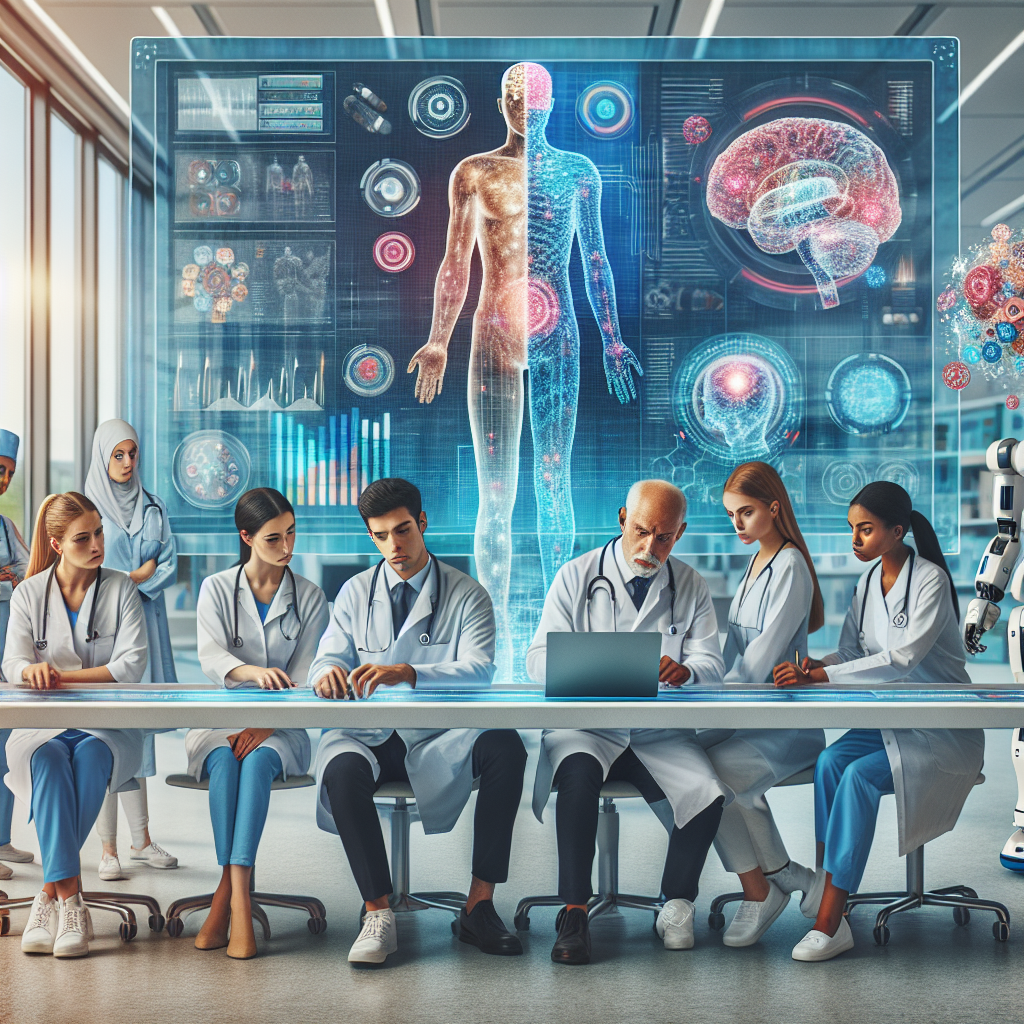
The Role of AI Solutions in Healthcare
Artificial Intelligence (AI) has become a crucial tool in revolutionizing the healthcare industry. With its ability to analyze large amounts of data and make predictions, AI has the potential to improve patient care, streamline processes, and reduce costs. In this article, we will explore the various ways in which AI solutions are being used in healthcare and the impact they are having on the industry.
AI in Medical Imaging
One of the key areas where AI is making a significant impact in healthcare is medical imaging. AI-powered algorithms are being used to analyze medical images such as X-rays, MRIs, and CT scans to assist radiologists in detecting abnormalities and making accurate diagnoses. These algorithms can help identify early signs of diseases such as cancer, stroke, and heart disease, leading to faster treatment and better outcomes for patients.
AI in Diagnostics
AI is also being used in diagnostics to help healthcare providers make more accurate and timely diagnoses. By analyzing patient data such as medical history, symptoms, and test results, AI algorithms can help identify patterns and trends that may indicate a particular disease or condition. This can lead to earlier detection of diseases, more personalized treatment plans, and improved patient outcomes.
AI in Personalized Medicine
Personalized medicine is a rapidly growing field in healthcare, and AI is playing a crucial role in its development. By analyzing genetic data, medical history, lifestyle factors, and other relevant information, AI algorithms can help healthcare providers tailor treatment plans to individual patients. This can lead to more effective treatments, reduced side effects, and better patient outcomes.
AI in Drug Discovery
AI is also being used in drug discovery to help pharmaceutical companies identify new drug candidates more quickly and efficiently. By analyzing vast amounts of data from scientific research, clinical trials, and other sources, AI algorithms can help researchers identify potential drug targets, predict how drugs will interact with the body, and optimize drug formulations. This can lead to the development of new drugs faster and at a lower cost.
AI in Predictive Analytics
Another important application of AI in healthcare is predictive analytics. By analyzing patient data and historical trends, AI algorithms can help healthcare providers predict and prevent adverse events such as hospital readmissions, infections, and complications. This can help improve patient safety, reduce healthcare costs, and optimize resource allocation.
AI in Virtual Health Assistants
Virtual health assistants powered by AI are becoming increasingly popular in healthcare. These virtual assistants can help patients schedule appointments, access medical information, and receive personalized health advice. They can also assist healthcare providers by automating administrative tasks, providing real-time patient data, and offering decision support.
FAQs
Q: How accurate are AI-powered medical imaging algorithms?
A: AI-powered medical imaging algorithms have been shown to be as accurate, if not more accurate, than human radiologists in some cases. However, it is important to note that AI algorithms are not infallible and should be used as a tool to assist healthcare providers rather than replace them.
Q: Are AI solutions in healthcare secure and compliant with regulations?
A: Yes, AI solutions in healthcare are subject to strict security and privacy regulations to ensure patient data is protected. Healthcare organizations must comply with regulations such as HIPAA (Health Insurance Portability and Accountability Act) to safeguard patient information when using AI solutions.
Q: How are healthcare providers adapting to the use of AI solutions?
A: Healthcare providers are increasingly recognizing the value of AI solutions in improving patient care and operational efficiency. Many providers are investing in AI technologies, training their staff to use them effectively, and integrating them into their existing systems to enhance patient outcomes.
Q: What are some challenges in implementing AI solutions in healthcare?
A: Some challenges in implementing AI solutions in healthcare include data privacy concerns, regulatory compliance, integration with existing systems, and staff training. Healthcare organizations must carefully consider these factors when adopting AI solutions to ensure successful implementation.
In conclusion, AI solutions are playing an increasingly important role in transforming the healthcare industry. From medical imaging and diagnostics to personalized medicine and drug discovery, AI is revolutionizing the way healthcare is delivered. By harnessing the power of AI, healthcare providers can improve patient care, reduce costs, and ultimately save lives.