
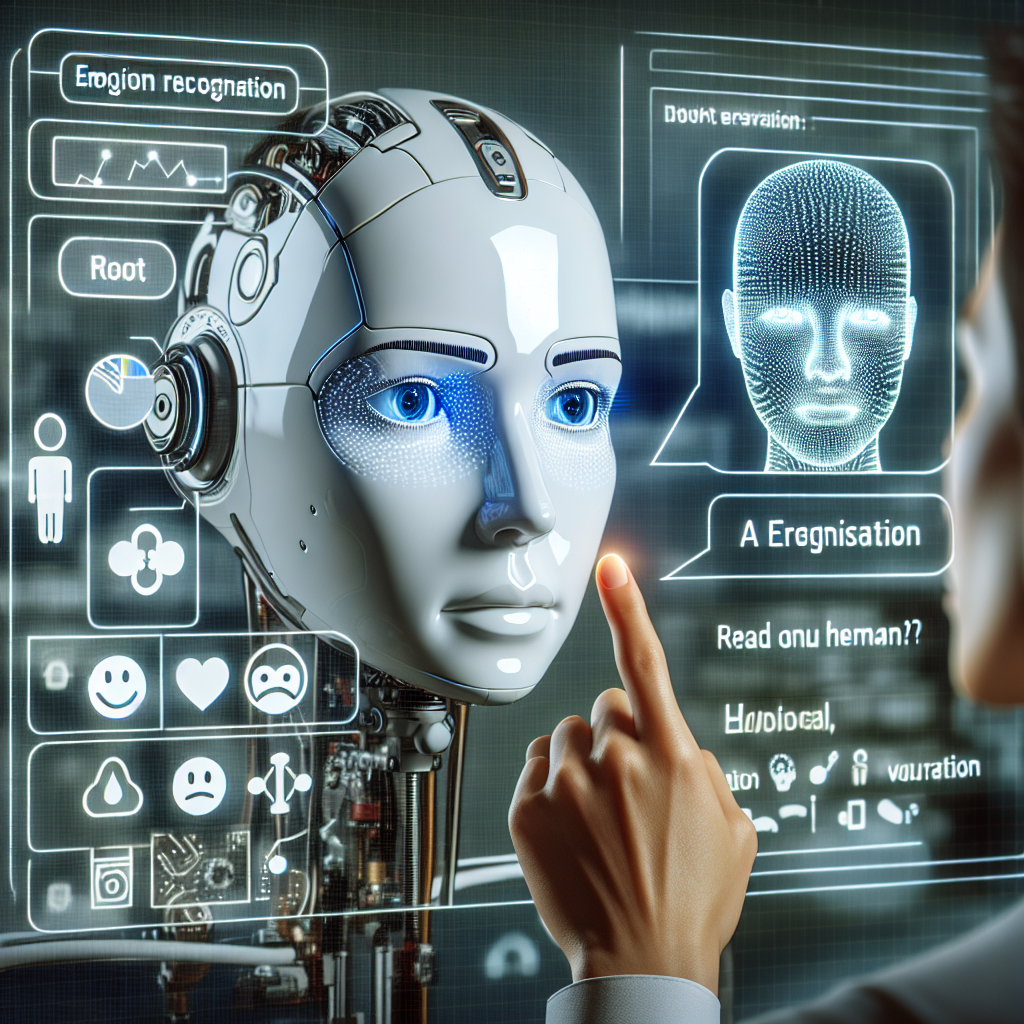
Emotion recognition in conversational AI has become a crucial aspect of creating more human-like interactions between machines and humans. As AI technology continues to advance, understanding and responding to human emotions has become a key component in creating more personalized and effective communication.
Emotion recognition in conversational AI involves using algorithms and machine learning techniques to analyze and interpret human emotions based on verbal and non-verbal cues. By recognizing emotions, AI systems can tailor their responses and actions to better meet the needs and preferences of users. This can lead to more engaging and effective conversations, as well as improved user satisfaction and overall experience.
There are several key ways in which emotion recognition plays a role in conversational AI:
1. Personalized interactions: Emotion recognition allows AI systems to personalize their responses and actions based on the emotional state of the user. For example, if a user is feeling frustrated or upset, the AI system can adjust its tone and language to be more empathetic and understanding, leading to a more positive interaction.
2. Improved user experience: By recognizing emotions, AI systems can provide more relevant and helpful responses to user queries. This can lead to faster and more accurate problem-solving, as well as increased user satisfaction and loyalty.
3. Enhanced communication: Emotion recognition can help AI systems better understand the nuances of human language and communication. By analyzing emotional cues, AI systems can better interpret the meaning behind words and phrases, leading to more accurate and natural conversations.
4. Real-time feedback: Emotion recognition allows AI systems to provide real-time feedback on the emotional state of the user. This can help users become more aware of their own emotions and provide valuable insights for improving communication and relationships.
Overall, emotion recognition plays a crucial role in enhancing the capabilities of conversational AI and creating more human-like interactions between machines and humans.
FAQs:
Q: How does emotion recognition work in conversational AI?
A: Emotion recognition in conversational AI involves using algorithms and machine learning techniques to analyze and interpret human emotions based on verbal and non-verbal cues. These cues can include tone of voice, facial expressions, and language patterns. By recognizing emotions, AI systems can tailor their responses and actions to better meet the needs and preferences of users.
Q: What are the benefits of emotion recognition in conversational AI?
A: Emotion recognition in conversational AI can lead to more personalized interactions, improved user experience, enhanced communication, and real-time feedback. By recognizing emotions, AI systems can provide more relevant and helpful responses to user queries, leading to faster and more accurate problem-solving and increased user satisfaction.
Q: How accurate is emotion recognition in conversational AI?
A: The accuracy of emotion recognition in conversational AI can vary depending on the algorithms and techniques used. However, recent advancements in machine learning and deep learning have led to significant improvements in the accuracy of emotion recognition systems. These systems can now accurately identify a wide range of emotions with high levels of precision.
Q: Are there any privacy concerns related to emotion recognition in conversational AI?
A: Privacy concerns related to emotion recognition in conversational AI can arise from the collection and storage of personal data. It is important for organizations to adhere to strict data protection regulations and ensure that user data is handled securely and ethically. Additionally, users should be made aware of how their data is being used and given the option to opt out of emotion recognition features if they so choose.
In conclusion, emotion recognition plays a crucial role in enhancing the capabilities of conversational AI and creating more human-like interactions between machines and humans. By recognizing emotions, AI systems can provide more personalized and effective communication, leading to improved user experience and overall satisfaction. As technology continues to advance, emotion recognition will undoubtedly play an increasingly important role in shaping the future of conversational AI.