
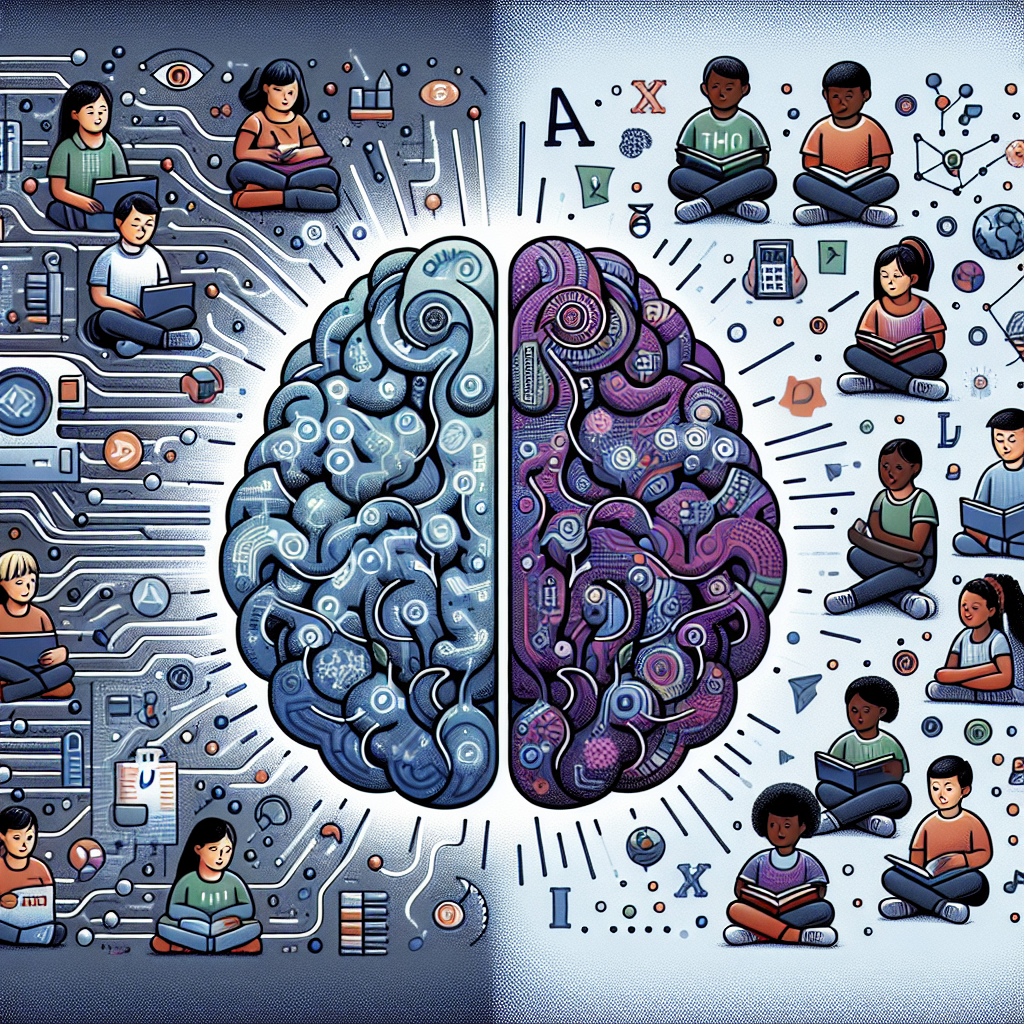
Artificial Intelligence (AI) has become an increasingly important tool in education, offering new ways to support personalized learning and differentiation in the classroom. Differentiated instruction is a teaching approach that seeks to tailor instruction to meet the individual needs of students, taking into account their varied abilities, interests, and learning styles. AI can help teachers implement differentiated instruction more effectively by providing data-driven insights and recommendations, automating routine tasks, and offering personalized learning experiences for students.
One of the key benefits of using AI in education is its ability to analyze large amounts of data to identify patterns and trends that can inform instructional decisions. By collecting and analyzing data from students’ performance on assessments, engagement with learning materials, and interactions with educational software, AI systems can provide teachers with valuable insights into students’ strengths and weaknesses, learning preferences, and areas where they may need additional support. This information can help teachers tailor their instruction to meet the individual needs of each student, ensuring that all students have the opportunity to succeed.
In addition to providing valuable insights into students’ learning needs, AI can also help teachers automate routine tasks, freeing up more time for personalized instruction. For example, AI-powered grading systems can quickly and accurately score assessments, allowing teachers to spend more time providing feedback to students and designing instructional activities. AI can also help teachers track student progress, identify areas where students may be struggling, and recommend resources or interventions to support their learning. By automating these tasks, AI can help teachers focus on what they do best – providing high-quality instruction that meets the needs of all students.
AI can also offer personalized learning experiences for students, allowing them to learn at their own pace and in a way that best suits their individual needs. Adaptive learning systems use AI algorithms to analyze students’ responses to questions and activities, adjusting the difficulty level and content of the material based on their performance. This allows students to work at their own pace, receiving additional support or challenges as needed, and ensuring that they are engaged and motivated to learn. By providing personalized learning experiences, AI can help students develop the skills and knowledge they need to succeed in school and beyond.
Despite the many benefits of AI in education, there are also some challenges and concerns that need to be addressed. One of the main concerns is the potential for bias in AI algorithms, which can lead to unfair or discriminatory outcomes for certain groups of students. For example, if an AI system is trained on data that is biased or incomplete, it may make inaccurate predictions or recommendations that could harm students’ learning experiences. To address this issue, it is important for developers to carefully consider the data they use to train AI algorithms, and to regularly monitor and evaluate the performance of these systems to ensure that they are fair and equitable for all students.
Another challenge is the need for teachers to receive training and support in using AI effectively in the classroom. Many teachers may be unfamiliar with AI technology or unsure of how to integrate it into their instruction. To address this challenge, schools and districts can provide professional development opportunities for teachers to learn about AI and how to use it to support differentiated instruction. By investing in teacher training and support, schools can help ensure that all students have access to high-quality, personalized instruction that meets their individual needs.
Overall, AI has the potential to revolutionize education by providing teachers with valuable insights, automating routine tasks, and offering personalized learning experiences for students. By leveraging the power of AI, teachers can more effectively implement differentiated instruction, supporting the diverse needs of all students and helping them achieve their full potential.
FAQs:
1. How can AI support differentiated instruction in the classroom?
AI can support differentiated instruction by providing teachers with valuable insights into students’ learning needs, automating routine tasks, and offering personalized learning experiences for students.
2. What are some of the benefits of using AI in education?
Some benefits of using AI in education include improved data analysis, automation of routine tasks, and personalized learning experiences for students.
3. What are some challenges of using AI in education?
Some challenges of using AI in education include the potential for bias in AI algorithms and the need for teachers to receive training and support in using AI effectively in the classroom.
4. How can schools and districts support teachers in using AI for differentiated instruction?
Schools and districts can support teachers in using AI for differentiated instruction by providing professional development opportunities, resources, and ongoing support.
5. What steps can teachers take to ensure that AI is used effectively in the classroom?
Teachers can ensure that AI is used effectively in the classroom by carefully selecting AI tools, monitoring their performance, and regularly evaluating their impact on student learning.