
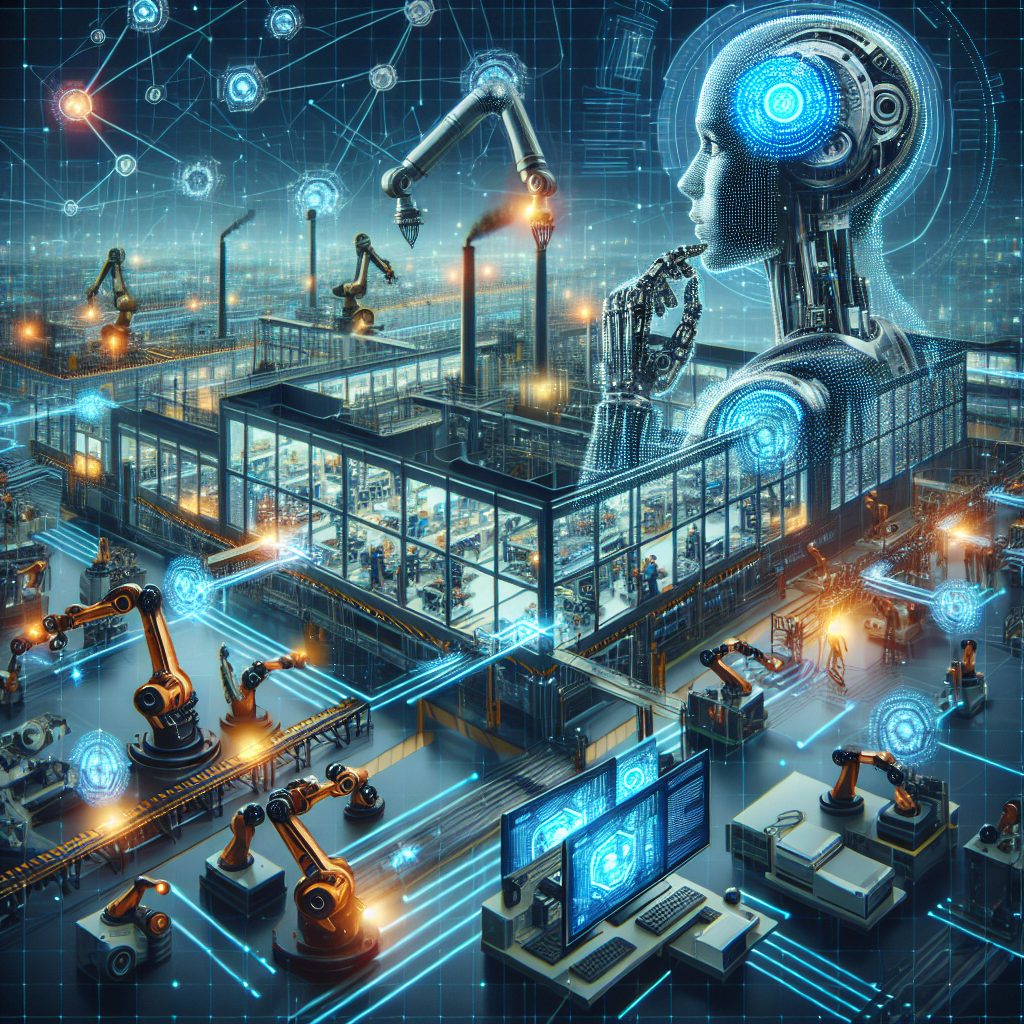
In recent years, the manufacturing industry has undergone a significant transformation with the integration of artificial intelligence (AI) technologies. Smart manufacturing, also known as Industry 4.0, is a concept that leverages AI, machine learning, and the Internet of Things (IoT) to create more efficient and streamlined production processes. One key area where AI is making a big impact is in supply chain management.
Supply chains are the backbone of any manufacturing operation, and ensuring that they are running smoothly is essential for the success of a business. AI has the potential to revolutionize supply chain management by improving forecasting accuracy, optimizing inventory levels, and enhancing overall efficiency. In this article, we will explore the role of AI in smart manufacturing supply chains and how it is reshaping the industry.
AI in Forecasting and Demand Planning
One of the key challenges in supply chain management is accurately forecasting demand for products. Traditional forecasting methods often rely on historical data and manual inputs, which can be prone to errors and inaccuracies. AI technologies, such as machine learning algorithms, can analyze vast amounts of data in real-time to provide more accurate demand forecasts.
By analyzing factors such as historical sales data, market trends, and even weather patterns, AI can help businesses predict demand more accurately and adjust production levels accordingly. This can help reduce excess inventory and stockouts, leading to cost savings and improved customer satisfaction.
AI in Inventory Management
Optimizing inventory levels is another critical aspect of supply chain management. Maintaining the right balance between too much and too little inventory is crucial for ensuring on-time deliveries and minimizing storage costs. AI-powered systems can help businesses make more informed decisions about inventory management by analyzing factors such as lead times, demand variability, and supplier performance.
By using AI to optimize inventory levels, businesses can reduce carrying costs, improve cash flow, and enhance overall supply chain efficiency. AI can also help businesses identify trends and patterns in inventory data that may not be apparent to human analysts, leading to better decision-making and improved performance.
AI in Logistics and Transportation
Another area where AI is making a big impact in supply chain management is in logistics and transportation. AI-powered systems can help businesses optimize routing, scheduling, and delivery processes to reduce lead times and transportation costs. By analyzing factors such as traffic patterns, weather conditions, and driver availability, AI can help businesses make more efficient decisions about transportation logistics.
AI can also help businesses track shipments in real-time, monitor driver performance, and identify potential bottlenecks in the supply chain. By using AI to optimize logistics and transportation processes, businesses can improve delivery times, reduce costs, and enhance overall customer satisfaction.
Challenges and Considerations
While AI has the potential to revolutionize supply chain management, there are also challenges and considerations that businesses need to be aware of. One of the key challenges is data quality and availability. AI algorithms rely on vast amounts of data to make accurate predictions and recommendations, so businesses need to ensure that their data is clean, accurate, and up-to-date.
Another challenge is the need for skilled personnel to develop and implement AI-powered systems. Businesses need to invest in training and hiring employees with the necessary technical skills to build and maintain AI algorithms. Additionally, businesses need to consider the ethical implications of using AI in supply chain management, such as data privacy and security concerns.
FAQs
Q: How can AI improve demand forecasting in supply chain management?
A: AI can improve demand forecasting by analyzing vast amounts of data in real-time to provide more accurate predictions. By considering factors such as historical sales data, market trends, and even weather patterns, AI can help businesses make more informed decisions about production levels and inventory management.
Q: What are the benefits of using AI in inventory management?
A: AI can help businesses optimize inventory levels by analyzing factors such as lead times, demand variability, and supplier performance. By using AI to optimize inventory levels, businesses can reduce carrying costs, improve cash flow, and enhance overall supply chain efficiency.
Q: How can AI help businesses optimize logistics and transportation processes?
A: AI can help businesses optimize routing, scheduling, and delivery processes by analyzing factors such as traffic patterns, weather conditions, and driver availability. By using AI to optimize logistics and transportation processes, businesses can improve delivery times, reduce costs, and enhance overall customer satisfaction.
In conclusion, AI is playing an increasingly important role in smart manufacturing supply chains. By improving demand forecasting, optimizing inventory levels, and enhancing logistics and transportation processes, AI is helping businesses operate more efficiently and effectively. While there are challenges and considerations to be aware of, the benefits of using AI in supply chain management are clear. As technology continues to advance, the role of AI in smart manufacturing supply chains will only continue to grow.